
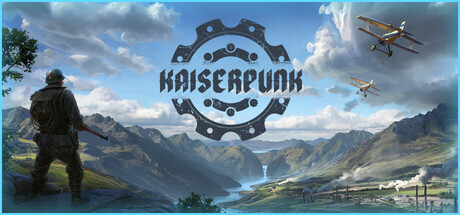
KAISERPUNK
Over 90 interlocked production chains, a global conquest map, and a three-hour tutorial that is not optional, if you like your city builders with spreadsheet depth and geopolitical consequence, this one has teeth.
GamerScout Verdict
Best for Anno or Factorio fans who want geopolitical stakes layered onto their supply chains, and can forgive a thin combat system.
Compare Prices(6 stores)
Every store in this table quotes us in euros, so the EUR figure is the price the seller actually set, not our arithmetic — which is why EUR is also the currency we rank in. We only list an offer here when the store gives us its price in euros, so nothing in this table is a number we invented.
Pick USD, PLN, GBP, CAD or AUD in the header and we convert from EUR at the European Central Bank reference rate — converted amounts are prefixed with ~. Your bank or the store may apply a different rate at checkout. We never hide offers based on where you are: everyone sees this whole table.
We may earn a commission when you buy games through links on this page — at no extra cost to you. It never affects our rankings or verdicts.
Price History
Screenshots & Media
About KAISERPUNK
I have a folder on my desktop labeled 'logistics hell' and Kaiserpunk has earned a permanent spot in it. This is a production-chain city builder where ore flows into a refinery, refined metal feeds an arms factory, the arms factory equips a ground army, and that army marches toward one of more than 100 conquerable world regions, all while your depot network and cargo trikes scramble to keep the whole machine breathing. The moment you understand that rhythm, you will lose several hours without noticing. The production side is where Kaiserpunk genuinely delivers. With over 90 interconnected chains spanning raw agriculture through weapons manufacturing, the city-building layer rewards careful spatial planning: cluster buildings in the same chain and small cargo trikes handle local transport directly, freeing your truck fleet for longer hauls. Factories can be switched between product outputs on the fly, which gives you real mid-game flexibility when your military priorities shift. Development points, earned by operating buildings, unlock new technologies and building upgrades, so your industrial footprint and your research tree are tightly coupled. That is good design. The politics layer adds another wrinkle: as your Town Center levels up you pick policies that push your society left or right on the political spectrum, and changing direction later forces a period of civil anarchy first. That kind of consequence is the sort of thing strategy fans appreciate. The tutorial runs roughly three hours if you read every tooltip, and you should read every tooltip. It is structured as separate scenario chapters rather than a living sandbox introduction, so you cannot carry your tutorial city forward into the main campaign. That is a genuine friction point for newcomers, but the tutorial is thorough enough that anyone who completes it understands the core loops. Where the game respects strategy veterans less is its UI. The research screen packs building unlocks into a dense row of tiny icons, resource thumbnails are difficult to parse, and the game insists on displaying the full resource list at once. It is a recurring annoyance given how much time you spend monitoring supply ratios. The global map is the weaker pillar. Combat resolves as a slow grind where armies line up, exchange fire, and the attacker retreats unless the defender is wiped, closer to a board-game token shuffle than a proper wargame. Every troop movement carries a cooldown timer, and even at the three-times speed setting the pace feels sluggish. Diplomacy is similarly thin: trade resources, share research progress, or go to war. Rival factions lack the personality or treaty complexity that grand-strategy fans expect from games like Hearts of Iron or Crusader Kings. The world-map presentation is charming, units look like miniatures on a table map, but charm does not substitute for depth. If you come in expecting Paradox-level geopolitics, reset those expectations. Steam player sentiment sits at roughly 71 percent positive across hundreds of reviews, which is a fair reflection of an ambitious but uneven release. The production chain and logistics crowd is largely satisfied; the grand-strategy crowd is largely not. For now, Anno 1800 veterans or Factorio fans curious about a militarized alt-history skin will find more to love here than will Hearts of Iron players hoping the city-building is just a backdrop. Play the tutorial, stay patient through the early-game UI friction, and the late-game industrial machine is genuinely satisfying to watch spin up.

Strategy & simulation
Tags
System Requirements
Minimum
- OS
- Windows® 10/11 (64-bit)
- Memory
- 12 GB RAM
- DirectX
- Version 11
- Storage
- 20 GB available space
- Graphics
- NVIDIA GeForce GTX 1050ti / AMD Radeon R7 370
- Processor
- Intel™ Core i5-7400 or AMD Ryzen™ 5 1600
Recommended
- OS
- Windows® 10/11 (64-bit)
- Memory
- 16 GB RAM
- DirectX
- Version 12
- Storage
- 20 GB available space
- Graphics
- NVIDIA GeForce RTX 2060 / AMD Radeon RX 5600 XT
- Processor
- Intel Core i7-9700K / AMD Ryzen 7 3700X
Keep exploring
Community Discussion
Be the first to comment on KAISERPUNK.
Reviews & Ratings
No ratings available
Game Info
- Developer
- Overseer Games
- Publisher
- Overseer Games
- Release Date
- Mar 21, 2025