Josh Journey: Darkness Totems
Stunning hand-drawn art pulled from an animated short film, paired with couch co-op brawling that struggles to match what it looks like. Worth knowing before you click buy.
GamerScout Verdict
Best for couch co-op fans who can round up 2-4 players and appreciate hand-crafted art over mechanical polish.
Compare Prices(5 stores)
Every store in this table quotes us in euros, so the EUR figure is the price the seller actually set, not our arithmetic — which is why EUR is also the currency we rank in. We only list an offer here when the store gives us its price in euros, so nothing in this table is a number we invented.
Pick USD, PLN, GBP, CAD or AUD in the header and we convert from EUR at the European Central Bank reference rate — converted amounts are prefixed with ~. Your bank or the store may apply a different rate at checkout. We never hide offers based on where you are: everyone sees this whole table.
We may earn a commission when you buy games through links on this page — at no extra cost to you. It never affects our rankings or verdicts.
Price History
Screenshots & Media
About Josh Journey: Darkness Totems
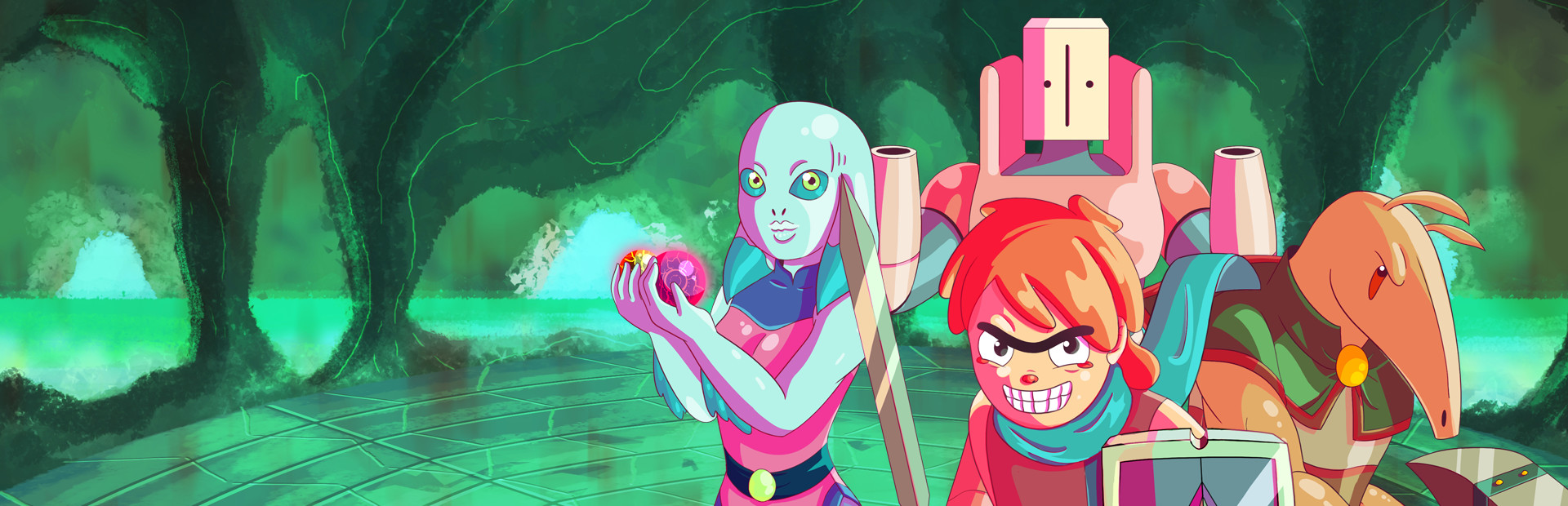
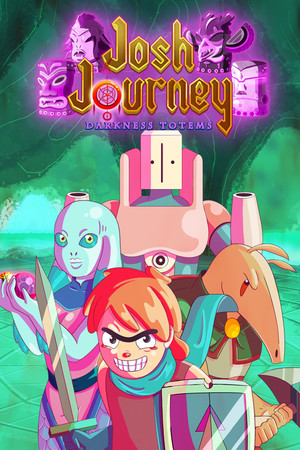
My first impression of Josh Journey: Darkness Totems was straightforward: this thing should not exist as a game, and I mean that as a complicated compliment. Brazilian brothers Iuri and Guilherme Araujo built Provincia Studio around illustration and animation, trained at GOBELINS in Paris, and their craft shows in every frame. The four heroes, Josh, Farquol, Melina, and Z.O.Z., are drawn with the kind of loose expressive line work you associate with Saturday-morning cartoons, and the four provinces, Wind, Water, Desert, and Industrial, each carry their own visual palette and scrolling parallax depth that makes the backgrounds feel alive even when the foreground is chaos. If you put a screenshot next to Adventure Time fan art, you would struggle to tell the difference. That level of handcraft is rare in this price bracket, and I want to acknowledge it plainly before getting into the friction. The core loop is a classic side-scrolling beat-em-up with light RPG bones. Solo players manage all four characters at once, cycling between Josh, Farquol, Melina, and Z.O.Z. using the shoulder buttons or right stick, which opens up the game's best mechanic: chaining abilities across characters mid-fight to build longer combos than any single hero could manage. Each character occupies a distinct combat lane. Josh and Farquol are melee-focused, sword and hammer respectively, while Melina brings ice-based crowd control plus a unique revive clone ability, and Z.O.Z. covers ranged fire with explosive projectiles and environmental hazard tricks. An ability board system lets you unlock special attacks between levels, and character progression is noticeable across the four worlds. On paper, that roster gives you real variety to play with. The problem is that the combat underneath all that variety is brittle. Enemy aggression is tuned high from the first stage, and the game ships with no difficulty options. Block and dodge moves exist for some characters but must be unlocked from the upgrade shop, which means early chapters can feel punishing before your kit opens up. Bosses summon persistent adds throughout the fight, and the respawn timing on those adds creates situations where taking damage feels unavoidable rather than earned. Some reviewers found the balance actively broken at points, comparing the difficulty curve to titles with far deeper mechanical foundations under them. The camera stays pulled back farther than most beat-em-ups, which reduces the visual impact of individual hits and makes it harder to read incoming attacks at a glance. The music, too, has drawn divided responses, with some players finding it mismatched to the game's cartoon energy. The co-op framing is where the game was clearly designed to live. With two to four people on the couch, swapping characters becomes less of a juggling act and more of a coordination game, and the chaos of the encounter design reads differently when each person is responsible for one hero rather than all four. The critical caveat is that there is no online multiplayer, only local. For a game whose strongest argument is shared-screen play, that restriction quietly removes the experience from reach for most adult players who cannot physically gather two to four friends with controllers in the same room on a regular basis. I keep coming back to the origin story here. This started as an animated short film, and the Araujo brothers turned it into a game because their audience asked them to. That impulse is genuine and the love for these characters shows. But the gameplay did not receive the same care and iteration that the art did, and what you get is a title where the visual ambition consistently outpaces the mechanical execution. If you are a beat-em-up enthusiast with a couch full of people and tolerance for uneven difficulty, the art alone makes it worth a look at the right price. If you are buying solo and expecting something in the Castle Crashers lineage with similar polish under the hood, set expectations accordingly.

Indie & narrative
Tags
System Requirements
Minimum
- OS
- Windows 07
- Memory
- 4 GB RAM
- DirectX
- Version 11
- Storage
- 4 GB available space
- Graphics
- NVIDIA GeForce GT625M
- Processor
- Intel(R) Core(TM) i5 - 3337U CPU @ 1.8Ghz
Recommended
- OS
- Windows 10
- Memory
- 6 GB RAM
- DirectX
- Version 11
- Storage
- 4 GB available space
- Graphics
- NVIDIA GeForce GTX 1050
- Processor
- Intel(R) Core (TM) i5 -3230M @ 2.6GHz
Keep exploring
Community Discussion
Be the first to comment on Josh Journey: Darkness Totems.
Reviews & Ratings
No ratings available
Game Info
- Developer
- Provincia Studio
- Publisher
- QUByte Interactive
- Release Date
- Oct 15, 2022