
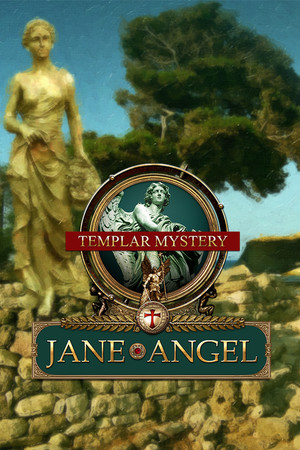
Jane Angel: Templar Mystery
A budget hidden-object relic from 2009 with genuinely clever puzzle mechanics buried under low resolution, wooden dialogue, and a translation that sometimes forgets to make sense.
GamerScout Verdict
Genre completionists hunting for obscure HOG mechanics will find a few bright ideas here; everyone else has better options.
Compare Prices(4 stores)
Every store in this table quotes us in euros, so the EUR figure is the price the seller actually set, not our arithmetic — which is why EUR is also the currency we rank in. We only list an offer here when the store gives us its price in euros, so nothing in this table is a number we invented.
Pick USD, PLN, GBP, CAD or AUD in the header and we convert from EUR at the European Central Bank reference rate — converted amounts are prefixed with ~. Your bank or the store may apply a different rate at checkout. We never hide offers based on where you are: everyone sees this whole table.
We may earn a commission when you buy games through links on this page — at no extra cost to you. It never affects our rankings or verdicts.
Price History
Screenshots & Media
About Jane Angel: Templar Mystery
I have a soft spot for the overlooked corners of the hidden-object genre, the games that nobody put on a magazine cover but somebody quietly poured craft into anyway. Jane Angel: Templar Mystery sits in that space, though not without friction. It is an old-school HOG built around a Knights Templar conspiracy plot, and its ambitions are more interesting than its execution. The structure takes you through five geographic chapters spanning Los Angeles, Colombia, England, Scotland, and Malta, each carrying its own visual theme. Within those chapters the game mixes seven mini-game types including 3D puzzles, hexagonal line connectors, and word-and-code challenges alongside the core hidden-object scenes. What genuinely surprised me were the three non-standard HOG mechanics: puzzle-then-seek (assemble a jigsaw, then hunt objects across the completed image), find-the-difference scenes where you physically drag items to their correct positions, and the historical-hidden mode where you spot anachronisms like a modern aircraft planted in a medieval setting. That last one is a neat idea and I wish more games in the genre used it. The scenes themselves are wide, horizontally scrollable panels that expand their object lists as you clear items, and a second playthrough will serve up a randomised set, giving thin but real replay value. The problems are real and hard to paper over. The photo-realistic art style, already a compromise at the time of original release, has aged into something that reads as muddy and cheap on modern screens. Objects were clearly composited onto photographs and the seams show. The localisation is rough enough that the story regularly dissolves into confusion, and one reviewer put it bluntly: the narrative turns out to be something close to a wild goose chase, a conclusion that lands particularly hard when the ending itself is abrupt. There are also no Steam achievements, trading cards, or soundtrack extras, and the ambient soundscape, ringing phones, typewriter clatter, radio static, replaces actual music in a way that feels less atmospheric than unfinished. The Steam community rating sits at a mixed 50 percent, which is about right. Who is this actually for? Dedicated HOG collectors who have cleared their backlog of the genre's stronger entries and want something that, at least mechanically, tried a few things the big studios were not doing. The puzzle-then-seek and historical-hidden modes alone are worth a curious look from genre fans, even if the surrounding game does not hold up. Everyone else should manage expectations carefully. This is a time capsule, not a hidden gem.

Indie & narrative
Tags
System Requirements
Minimum
- OS
- Windows Vista / 7 / 8 / 10
- Memory
- 512 MB RAM
- DirectX
- Version 9.0
- Storage
- 300 MB available space
- Graphics
- DirectX: 9.0
- Processor
- 800 Mhz
- Sound Card
- DirectX compatible sound device
Recommended
- OS
- Windows Vista / 7 / 8 / 10 / 11
- DirectX
- Version 9.0
- Storage
- 300 MB available space
- Graphics
- DirectX: 9.0
- Processor
- 1 GHz or higher
- Sound Card
- DirectX compatible sound device
Keep exploring
Community Discussion
Be the first to comment on Jane Angel: Templar Mystery.
Reviews & Ratings
No ratings available
Game Info
- Developer
- iMaxGen
- Publisher
- HH-Games, Shaman Games Studio
- Release Date
- Sep 17, 2014