
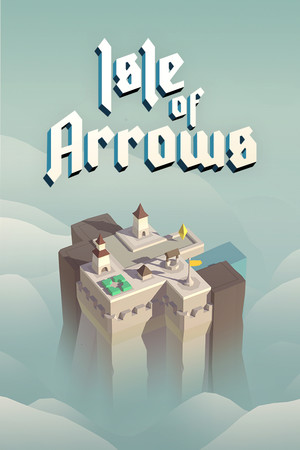
Isle of Arrows
Tower defense stripped down to its sharpest decision: place this tile here, or pay to skip it and gamble on the next draw. Elegant, unforgiving, and quietly brilliant.
GamerScout Verdict
Worth it for players who enjoy adapting to constraints, not for those who need full strategic control over their build.
Compare Prices(4 stores)
Every store in this table quotes us in euros, so the EUR figure is the price the seller actually set, not our arithmetic — which is why EUR is also the currency we rank in. We only list an offer here when the store gives us its price in euros, so nothing in this table is a number we invented.
Pick USD, PLN, GBP, CAD or AUD in the header and we convert from EUR at the European Central Bank reference rate — converted amounts are prefixed with ~. Your bank or the store may apply a different rate at checkout. We never hide offers based on where you are: everyone sees this whole table.
We may earn a commission when you buy games through links on this page — at no extra cost to you. It never affects our rankings or verdicts.
Price History
Screenshots & Media
About Isle of Arrows
My spreadsheet instincts kicked in about ten minutes after my first run ended in a messy death spiral. Isle of Arrows is not a traditional tower defense where you memorize a map and optimize a fixed build order. The entire map is the variable. Each round you draw a tile from a randomized deck and place it on a small floating island, slowly constructing the very battlefield you are trying to defend. Roads extend enemy paths, flag tiles grow the island footprint, taverns buff adjacent archery towers, gardens generate passive coin income, and actual combat towers come in a range that includes cannon, poison trap, and archery variants. The decision every turn is not just where to place the tile, but whether it is worth spending scarce gold to cycle past a tile you cannot use right now. The design pedigree here matters. Gridpop is a one-person studio run by Daniel Lutz, the creative director behind Hitman GO and Lara Croft GO, and that board-game-first design sensibility is all over Isle of Arrows. The luck-of-the-draw mechanics feel intentional rather than lazy, mimicking the constraint management of games like Carcassonne more than anything Bloons-adjacent. Three campaigns each span 40 waves, and progress through campaign mode is what unlocks tiles and modifiers for other modes, including Gauntlet and the Daily Defense, which serves a fixed shared seed to all players each day. That last mode is where the competitive side of the community lives, and it gives the game a reason to return beyond pure personal mastery. The RNG is also the game's most divisive element, and it earns that reputation. Community feedback is consistent: runs can occasionally feel decided before you have meaningful agency, particularly when the draw serves up five towers across twenty waves and refuses to give you road tiles to extend enemy path length. The gold-cycling mechanic, which lets you skip unwanted tiles, is theoretically the valve that manages variance, but it tanks your economy fast if leaned on too heavily. There is a genuine tension in knowing that hoarding gold raises your passive income while also watching your defense crumble for want of one corner-piece tile. Experienced players will recognize the Tetris-brain required here. Newcomers should expect several failed runs before patterns click. For players willing to sit through that learning curve, the Campaign mode front-loads enough scaffolding to make the early waves forgiving. Enemies start with basic stats and escalate gradually into shielded, armored, and high-health variants that force you to rethink tower placement relative to path geometry. The visual design is clean and minimal enough that enemy types read at a glance, though some buildings share similar silhouettes and require a tap to confirm their function. Performance on PC is flawless, and the audio does smart work, shifting from ambient wind and construction sounds during the placement phase to drum-driven tension once a wave begins. The game reached a Mostly Positive rating on Steam from over a thousand reviews, which is an accurate summary of where it lands: good enough that most people recommend it, imperfect enough that the RNG complaints fill the discussion boards. The honest caveat for strategy players who want agency-dense decisions throughout an entire session: Isle of Arrows is closer to a puzzle that adapts to your draw than a system you fully command. If card-game variance frustrates you, this will too. If you can treat a bad draw as a constraint to route around rather than a reason to quit, the placement puzzle underneath is genuinely satisfying and one of the more original takes on the tower defense formula in recent memory.

Strategy & simulation
Tags
System Requirements
Minimum
- OS
- Windows 7 (SP1+), Windows 10 and Windows 11
- Memory
- 2 GB RAM
- Storage
- 500 MB available space
- Graphics
- GeForce GT 630 / 640M or AMD Radeon HD 7450 equivalent
- Processor
- Dual-core CPU @ 2GHz
- Sound Card
- –
Recommended
- OS
- Windows 7 (SP1+), Windows 10 and Windows 11
- Memory
- 4 GB RAM
- Storage
- 500 MB available space
- Graphics
- GeForce GTX 1080 equivalent
- Processor
- Quad-core CPU @ 2.3GHz
- Sound Card
- –
Keep exploring
Community Discussion
Be the first to comment on Isle of Arrows.
Reviews & Ratings
No ratings available
Game Info
- Developer
- Gridpop
- Publisher
- Gridpop
- Release Date
- Sep 8, 2022