
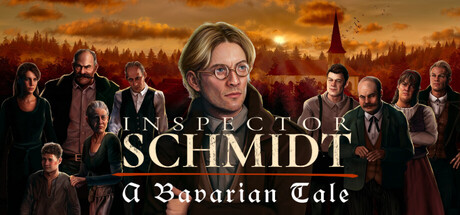
Inspector Schmidt - A Bavarian Tale
A hand-crafted historical murder mystery that earns its slow burn, set in a 19th-century Bavarian village where every NPC has something to hide and the atmosphere alone is worth the price of entry.
GamerScout Verdict
Best for patient players who want a handcrafted historical mystery with real narrative stakes, and can forgive a rough UI and occasional dialogue jank.
Compare Prices(4 stores)
Every store in this table quotes us in euros, so the EUR figure is the price the seller actually set, not our arithmetic — which is why EUR is also the currency we rank in. We only list an offer here when the store gives us its price in euros, so nothing in this table is a number we invented.
Pick USD, PLN, GBP, CAD or AUD in the header and we convert from EUR at the European Central Bank reference rate — converted amounts are prefixed with ~. Your bank or the store may apply a different rate at checkout. We never hide offers based on where you are: everyone sees this whole table.
We may earn a commission when you buy games through links on this page — at no extra cost to you. It never affects our rankings or verdicts.
Price History
Screenshots & Media
About Inspector Schmidt - A Bavarian Tale
My first hour in Wolpertshofen I just walked around listening. That may sound like a strange endorsement, but the environmental sound design here does something quietly remarkable: birds across fields, leaves rustling underfoot, the low murmur of locals at the inn. Active Fungus Studios is a small Munich team and they put that intimacy directly into the world. The soft acoustic score complements an 1866 Bavaria rendered in gentle, lived-in detail, and the result is a setting that feels genuinely handcrafted rather than procedurally adequate. The core loop is dialogue-first detective work. You play as Valentin Schmidt, a young man who arrives in the village on a mundane errand and immediately finds himself tangled in a murder investigation that the community would very much prefer to stay buried. Progression works through conversations, clue-gathering, and pen-and-paper-style skill checks: you invest points into freely chosen abilities and then use them in specific dialogue branches or physical confrontations. The system rewards attentiveness. Talking to a farmer about his livestock can quietly unlock a later interrogation option you would otherwise miss entirely. When it clicks, it feels like a genuine tabletop session translated to a third-person RPG, complete with the sense that information is currency and trust is scarce. The game also offers stealth, basic fist fights, and a light crafting system for improvised tools, giving players who want a bit more agency some room to breathe beyond dialogue trees. The honest caveat is that execution is uneven in places. The UI communicates its intentions poorly and takes patience to parse. Camera angles feel slightly cramped, cutting off peripheral space in ways that occasionally make the world feel smaller than it actually is. More frustratingly, the voice acting and subtitles occasionally drift out of sync, which stings in a game where reading NPC reactions carefully is part of how you play. The dialogue itself sometimes sits a little stiff on the page, and stilted exchanges with villagers can deflate scenes that should carry real weight. These are rough edges from a small debut studio, and they are real, but they sit alongside something the community has genuinely responded to: the game holds a mostly positive reception on Steam, and its story earned the GDD Indie Award for Best Story in 2024. Who is this for, practically speaking? People who loved the quieter side of Pentiment, anyone who has played pen-and-paper RPGs and wants to feel that cadence in a solo digital setting, and players who find historical specificity inherently interesting. At roughly ten hours across eleven possible endings, the game knows its scope and respects it. A slow opening is not a flaw here; it is the game calibrating your trust in the village before it starts pulling the rug. The payoff, for patient players, is real. The sequel, The Ebbing, already exists, which tells you the formula landed well enough to carry forward.

Indie & narrative
Tags
System Requirements
Minimum
- OS
- Windows 10
- Memory
- 8 GB RAM
- DirectX
- Version 12
- Storage
- 20 GB available space
- Graphics
- Radeon RX 590 / GeForce GTX 1660
- Processor
- AMD 1600X / Intel i5 3rd Gen
Recommended
- OS
- Windows 10
- Memory
- 16 GB RAM
- DirectX
- Version 12
- Storage
- 20 GB available space
- Graphics
- Radeon 5700 XT / GeForce 2070 Super
- Processor
- AMD 3600X / Intel i7 6th Gen
Keep exploring
Community Discussion
Be the first to comment on Inspector Schmidt - A Bavarian Tale.
Reviews & Ratings
No ratings available
Game Info
- Developer
- Active Fungus Studios
- Publisher
- Active Fungus Studios
- Release Date
- Feb 2, 2023