
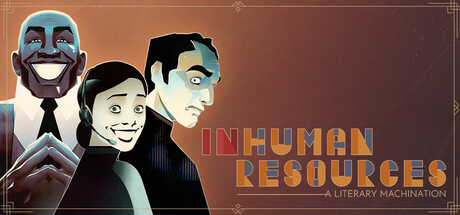
Inhuman Resources: A Literary Machination
Corporate horror that asks how far you'll bend before you break, wrapped in the DNA of a choose-your-own-adventure novel and the dread of a job you can never quite quit.
GamerScout Verdict
For patient readers who want their corporate dread served as a novel you can't put down and can't take back.
Compare Prices(6 stores)
Every store in this table quotes us in euros, so the EUR figure is the price the seller actually set, not our arithmetic — which is why EUR is also the currency we rank in. We only list an offer here when the store gives us its price in euros, so nothing in this table is a number we invented.
Pick USD, PLN, GBP, CAD or AUD in the header and we convert from EUR at the European Central Bank reference rate — converted amounts are prefixed with ~. Your bank or the store may apply a different rate at checkout. We never hide offers based on where you are: everyone sees this whole table.
We may earn a commission when you buy games through links on this page — at no extra cost to you. It never affects our rankings or verdicts.
Price History
Screenshots & Media
About Inhuman Resources: A Literary Machination
I've read a lot of interactive fiction, and the ones that stick with you are the ones that make you feel genuinely complicit. Inhuman Resources: A Literary Machination is exactly that kind of experience. You play as a cash-strapped woman pressured by a landlord-aunt into interviewing at SMYRNACORP, a retro-futuristic HR firm that wears its sinister agenda behind a smile that never reaches its eyes. From that first phone call, something is wrong. The wrongness never leaves. FinneganMotors built this on a custom engine, and it shows in how the whole interface feels like a document you're not supposed to be reading. The UI is five tabbed screens: a chapter log, an inventory that holds both physical objects and personality traits you accumulate through choices, the main reading pane where everything happens, a map, and a codex that expands the world's lore. Character portraits rendered in high-contrast black and white shift expression with the tone of each scene, and when things get dangerous, the background bleeds into red. The vintage typewriter font, the overhead-hum ambience, the way silence is used as punctuation in the sound design, all of it is intentional and precise. The jazz-inflected score sits low in the mix and knows when to step back entirely, letting the quiet do the heavy lifting. The core mechanic that sets it apart from standard visual novels is the hold-to-confirm choice system. You press and hold an option, watching it fill like a slow breath before it locks. There is no manual save, no rewind. Your choices unlock skills and personality traits, open or foreclose branching paths, and shape which of the multiple endings you reach. The game's departments each come with a certification mini-game, things like scrubbing grainy surveillance footage for a precise timestamp, cracking safes, or hacking terminals, and while none are difficult, they break up the prose rhythm and give real texture to the feeling that you are performing labor for an entity that does not deserve your loyalty. The puzzles are infrequent enough that some players will wish there were more of them, and the interactive layer is thin enough that if you arrive expecting something closer to a traditional RPG, you will need to recalibrate. This is a book that occasionally asks you to do the dirty work yourself. The writing is the reason to be here. The corporate language is pitch-perfect in its horror, the kind of dialogue that sounds like a wellness initiative and reads like a threat. Characters like the supervisor whose warmth functions as a control mechanism are both funny and genuinely unsettling. There are occasional moments where dialogue continuity slips if you reorder tasks, a minor bug that reviewers noted at launch and that hopefully has since been patched. There are also stretches where the path to your eventual destination converges regardless of your choices, which dilutes the sense of agency if you replay. Still, the branching is broad enough, with hundreds of possible routes and several distinct endings, that a second run through a different specialization genuinely changes the texture of what you experience. This one is for the reader who keeps a tab open on Cohost arguing about Disco Elysium's prose rhythm. It is for anyone who finished Severance season two and needed somewhere to put that dread. It rewards patience, close reading, and a willingness to sit with discomfort. It does not reward button-mashing or completionist impulses. At roughly four to five hours for a single run, it knows exactly when to end, which is a discipline that most games twice its length never learn. Finnegan Motors built something small, handcrafted, and quietly brave with their first release, and I want to keep watching what they do next.

Indie & narrative
Tags
System Requirements
Minimum
- OS
- Windows 10 version 21H1 or newer
- Memory
- 4 GB RAM
- DirectX
- Version 10
- Storage
- 1 GB available space
- Graphics
- DX10 or newer capable GPU
- Processor
- 2.4 GHz dual core CPU or better
Recommended
Requires a 64-bit processor and operating system
Keep exploring
Community Discussion
Be the first to comment on Inhuman Resources: A Literary Machination.
Reviews & Ratings
No ratings available
Game Info
- Developer
- Finnegan Motors
- Publisher
- Indie Asylum
- Release Date
- Apr 16, 2025