
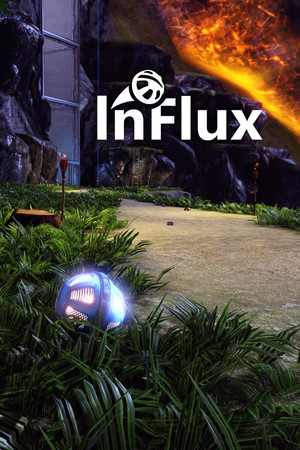
InFlux
Quiet, handcrafted, and easy to miss on a crowded Steam page - InFlux rewards anyone willing to slow down and let a deserted island work on them for a few hours.
GamerScout Verdict
Best for patient players who want a wordless, atmospheric puzzle-explorer and can forgive an older engine's rough edges.
Compare Prices(6 stores)
Every store in this table quotes us in euros, so the EUR figure is the price the seller actually set, not our arithmetic — which is why EUR is also the currency we rank in. We only list an offer here when the store gives us its price in euros, so nothing in this table is a number we invented.
Pick USD, PLN, GBP, CAD or AUD in the header and we convert from EUR at the European Central Bank reference rate — converted amounts are prefixed with ~. Your bank or the store may apply a different rate at checkout. We never hide offers based on where you are: everyone sees this whole table.
We may earn a commission when you buy games through links on this page — at no extra cost to you. It never affects our rankings or verdicts.
Price History
Screenshots & Media
About InFlux
My instinct with tiny one-person games from 2013 is to temper expectations before I hit play. InFlux dissolved those expectations fairly quickly. It is a ball-rolling puzzle-explorer built around a rhythm of two distinct spaces: a naturalistic island overworld full of beaches, dark caves, hilltops, and forests, and a series of glass-and-steel glasshouse chambers that appear as strange geometric intrusions on that organic world. You alternate between them throughout the whole game, and that contrast is the entire design thesis, stated without a word of dialogue or a single cutscene. The core movement toolkit is lean but purposeful. You roll the sphere directly, and a charge-and-boost ability lets you build speed or cross gaps since the ball cannot jump conventionally. Two magnetic abilities, attract and repel, are used to collect glowing orbs scattered through the overworld - those same orbs power the pedestals that unlock the next glasshouse. Inside a chamber, the same attract and repel mechanics shift into puzzle mode: drag or push colored balls into matching goal zones, trigger fans that throw you airborne for platform sections, hit buttons that rotate the entire structure around you. Nothing here is wildly inventive, but the pieces talk to each other cleanly. The glasshouse puzzles sit at a gentle-to-moderate difficulty band. You will not feel humiliated, but a few rotating-structure rooms do require a second read before the solution surfaces. The atmosphere is where InFlux earns its defenders. Jonathan Yandel's soundtrack is doing real heavy lifting throughout. Inside the chambers, digital synth and bass push you forward with a kind of focused urgency. Step back out into the overworld and the score dissolves into environmental audio - crashing waves, birds, rustling leaves - that makes the island feel genuinely inhabited by something, even though you never meet another living thing. That tonal shift between the artificial and the natural happens every few minutes and never gets old. There is also a sequence involving a humpback whale that, without any fanfare, becomes one of the most unexpectedly affecting moments in the game. I will not explain it further. Fairness demands flagging the real problems. The original 2013 build ran poorly on hardware of its era, with reported frame-rate drops, memory leaks, and save-system quirks that could roll back progress without warning. These are well-documented issues from launch-era reviews. Some players found the overworld traversal sluggish, the controls feeling like you're coaxing the ball rather than driving it with confidence. The game is also short - a few hours at most - and strictly linear beneath its open-feeling hub areas. If you need a game that respects your time by being loud about what to do next, InFlux will frustrate. There are no tutorials. Mechanics arrive without annotation. That is a deliberate choice, and I think it is the right one, but it is not for everyone. It is also worth noting that a remake, InFlux Redux, was released in 2024 on Unreal Engine 5 with overhauled physics and graphics - if performance on the original build concerns you, that version may be the more practical entry point. Still, something about the original has a particular handmade texture that I find hard to dismiss. The deserted-island mystery never resolves into exposition. The game simply ends - the sphere returns to the sky - and you are left to sit with whatever you read into it. For a certain kind of player, that restraint is exactly the point.

Indie & narrative
Tags
System Requirements
Minimum
- OS
- Windows XP SP3/Vista/7/8
- Memory
- 2 GB RAM
- DirectX
- Version 9.0
- Storage
- 2 GB available space
- Graphics
- SM3-compatible video card
- Processor
- 2.0+ GHz processor
Recommended
- OS
- Windows XP SP3/Vista/7/8 64-bit
- Memory
- 4 GB RAM
- DirectX
- Version 9.0
- Storage
- 2 GB available space
- Graphics
- ATI Radeon 3870 or higher, Nvidia GeForce 8800 GT or higher. 1024MB VRAM
- Processor
- 2.0+ GHz multicore processor
Keep exploring
Community Discussion
Be the first to comment on InFlux.
Reviews & Ratings
No ratings available
Game Info
- Developer
- Impromptu Games
- Publisher
- Impromptu Games
- Release Date
- Sep 18, 2013