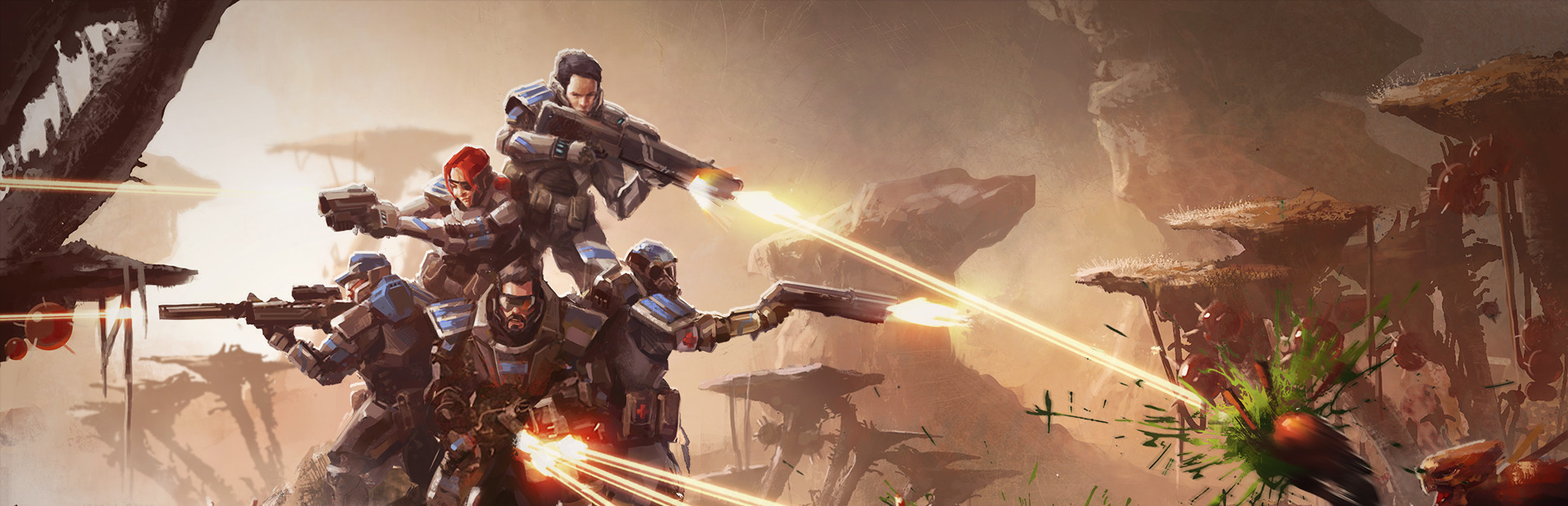
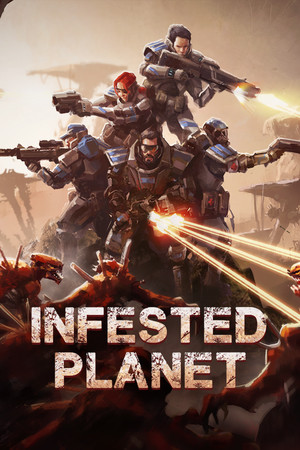
Infested Planet
Five marines, a hundred thousand bugs, and an AI that punishes your comfort zone every time you take ground. Expect your clever build order to be obsolete by the third hive capture.
GamerScout Verdict
Best for strategy players who want a lean, punishing RTS that forces build-order flexibility every few minutes rather than rewarding one dominant strategy.
Compare Prices(0 stores)
Loading prices...
We may earn a commission when you buy games through links on this page — at no extra cost to you. It never affects our rankings or verdicts.
Price History
Screenshots & Media
About Infested Planet
I have a colour-coded spreadsheet tracking RTS systems that actually respect the player's intelligence, and Infested Planet earned a row on it fast. The core loop sounds simple on paper: command a squad of five marines, push across a top-down map, destroy alien hives one by one until the swarm collapses. What makes it interesting is what happens between each hive capture. Every base you take triggers a mutation in the alien swarm, and those mutations are deliberately designed to counter whatever you just did. Lean on flamethrowers to hold a chokepoint? Expect a knockback upgrade on enemy turrets that shoves your squad out of range. Pivot to snipers to counter that? Walls start appearing around hive structures to block line of sight. The counter-escalation loop is the game's entire personality, and it runs on 33 possible mutations drawn from a randomised pool, which means no two missions play out the same way. Squad composition is where the real decision-making lives. You start with basic riflemen and unlock specialists over the campaign: snipers for picking off towers and spawner structures at range, flamethrowers for holding captured nodes against swarm rushes, scouts for fast hive runs when paired with a clear path, officers that push speed and fire rate buffs to every marine nearby, minigunners for raw sustained output into dense crowds. The campaign's 17 missions drip-feed these unlocks at a reasonable pace, and crucially you keep earning resources even after a failed mission, so struggling players can buy better-equipped marines before retrying. That is a genuinely newcomer-respectful decision. The tutorial is lean but functional, and the early missions operate almost like an extended practical guide before the mutation pressure ramps up hard in the back half. Anyone who bounced off StarCraft 2 because of APM requirements will find this much more approachable: you can pause mid-mission and completely rebuild your squad loadout with no penalty, which turns frantic firefights into something closer to a turn-based puzzle at the moments that matter most. The real-time-with-pause design also exposes where the game is most satisfying and most repetitive. At its best, Infested Planet operates like a back-and-forth territorial dance: you secure nodes for build points, spend those points on turrets and structures to defend what you've taken, then push forward and watch the swarm adapt. The give-and-take tension is well maintained across the campaign. The weak point is the Planetary Campaign DLC mode, where the morale system and restricted early toolkit heavily incentivize conservative play, stripping out the experimental risk-taking that makes the main missions feel alive. The custom mission builder helps here: you can adjust map size, respawn timers, enemy defenses, and even lock in specific mutations for a run, which gives min-maxers and replayability hunters a decent toolbox to work with. Weekly challenge leaderboards add a competitive angle without requiring multiplayer infrastructure, though the player base in 2025 is thin enough that chasing top spots is a niche pursuit. There are genuine criticisms worth flagging for strategy veterans. Enemy unit visual variety is limited, and the swarm quickly becomes a sea of near-identical sprites at high density. The story framing is perfunctory at best, and some late campaign missions tip past the line between hard and frustrating in a way that feels like difficulty-by-numbers rather than design. The Planetary Campaign's strategic map lacks meaningful terrain differentiation, so node choices feel interchangeable outside of chokepoints. None of these are deal-breakers, but they place a ceiling on how far above its Metacritic 75 this game could reasonably score. What it does well, it does with unusual intelligence for a solo-dev indie: the adaptive AI is the star, and after a decade it still holds up as one of the more creative examples of an enemy system that genuinely responds to player habits rather than just scaling numbers upward.

Strategy & simulation
Tags
System Requirements
Minimum
- OS
- Windows XP or later
- Memory
- 1 GB RAM
- Graphics
- 256MB OpenGL 2.1 Compartible
- Processor
- 2.2 GHz
- Hard Drive
- 300 MB HD space
Recommended
- Memory
- 4 GB RAM
- Graphics
- 1024MB OpenGL 2.1 Compartible
- Processor
- 2.4 GHz Quad Core
DLC & Add-ons for Infested Planet1
Expansions, DLC packs and add-on content for this game. Click any item to see store offers.
Keep exploring
Community Discussion
Be the first to comment on Infested Planet.
Reviews & Ratings
Game Info
- Developer
- Rocket Bear Games
- Publisher
- Rocket Bear Games
- Release Date
- Mar 6, 2014