In Celebration of Violence
Punishing, secretive, and built by one person who clearly had something to prove, this is the roguelike for players who find most roguelikes too polite.
GamerScout Verdict
Worth it for Souls-obsessed roguelike veterans willing to invest five hours before the game reveals what it actually is.
Compare Prices(6 stores)
Every store in this table quotes us in euros, so the EUR figure is the price the seller actually set, not our arithmetic — which is why EUR is also the currency we rank in. We only list an offer here when the store gives us its price in euros, so nothing in this table is a number we invented.
Pick USD, PLN, GBP, CAD or AUD in the header and we convert from EUR at the European Central Bank reference rate — converted amounts are prefixed with ~. Your bank or the store may apply a different rate at checkout. We never hide offers based on where you are: everyone sees this whole table.
We may earn a commission when you buy games through links on this page — at no extra cost to you. It never affects our rankings or verdicts.
Price History
Screenshots & Media
About In Celebration of Violence
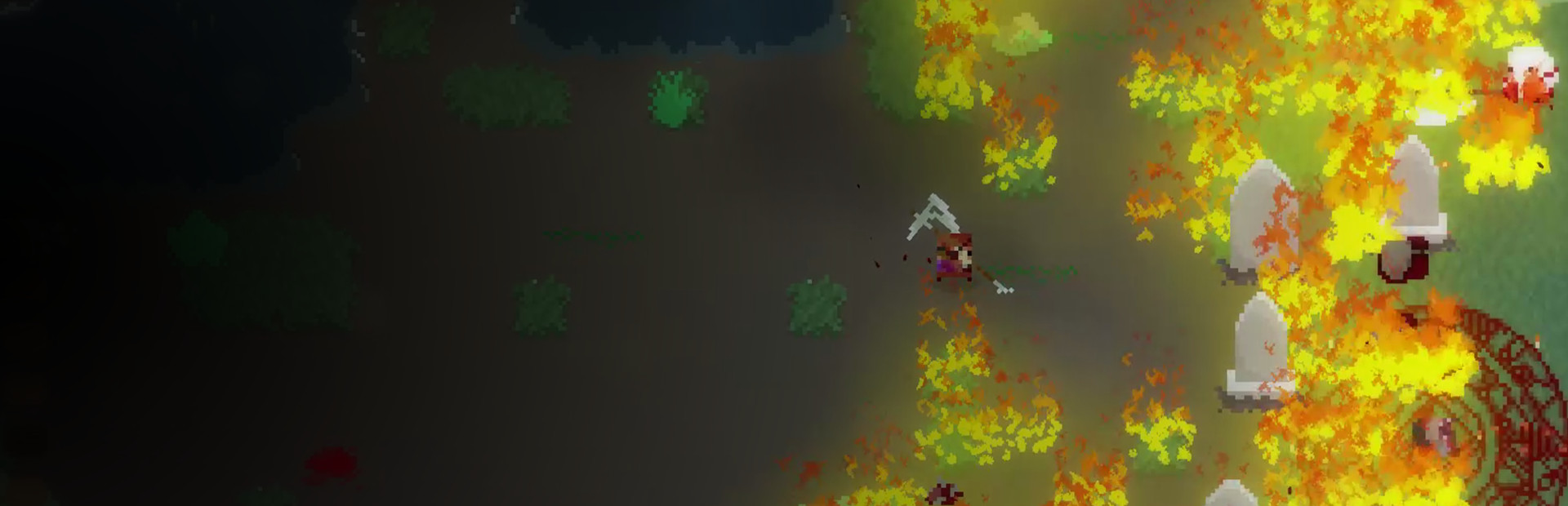
My first few runs in In Celebration of Violence felt like being handed a sword in a dark room and told, quietly, good luck. Julian Edison, sole developer, sole publisher, made this game as the roguelike he wanted to play but couldn't find, and that personal obsession bleeds through every system. You land in The Sanctuary, a sparse hub world, and after a stripped-back control tutorial the game simply opens its doors and waits. No waypoints. No quest markers. No item tooltips. The deliberate opacity is the design. Combat is the heart of it, and it earns its Souls-like label honestly. Your character moves with weight and consequence, weapons arc slowly, and stamina governs every decision. Enemies are beholden to the same rules you are, they drain stamina, they tire, they leave openings. Learning a sword's swing arc teaches you how an enemy holding the same blade will behave. Parrying into a heavy cleave feels earned in a way that spamming dodge-rolls never could. The environmental systems layer on top of this: fire spreads based on weather and temperature, electricity arcs across wet ground, and leading a cluster of enemies into a burning thicket is as valid a tactic as a clean parry. Procedurally generated lands span plains, swamps, cities, and dungeons, each run threading a different path through the branching world toward its bosses. The legitimate criticism is that the learning curve is less a curve and more a cliff face. Reviewers who bounced off it consistently describe the same first five hours: confusion, death, more confusion, and only the faintest foothold of progress. Boss kills award experience you can bank for future runs, but when you die in later dungeons those bosses reset entirely, which can erode the sense of forward momentum. Mementos, spells, resistances, shrine gods, they exist, they matter, and the game will not explain a single one of them. If you need legible systems, this will exhaust you before it rewards you. For the audience it is quietly calling to, though, this is something rare. The Steam community sits at 87% positive across its reviews, which for a single-developer indie that announces itself this awkwardly is a signal worth respecting. Players who commit describe the moment it clicks as a genuine epiphany: suddenly the top-down pixel world reads as a tactical puzzle, every run generating new questions worth chasing. You start as a peasant, unlock further classes through obscure in-game actions, collect weapons and spells and mementos, and build toward runs that can stretch past three hours if you push deep into the branching paths. The pixel art wears a slightly washed-out, medievally grim palette that suits the atmosphere better than cheery sprites ever could, and the soundscape, while modest, keeps the dread ambient rather than intrusive. This is not for players who want Hades-style clarity or Enter the Gungeon's kinetic pace. It is for the player who still thinks about that one Binding of Isaac run from years ago, who wants Souls-weighted combat in a procedural world, and who has the patience to let a one-person game teach itself on its own schedule.

Indie & narrative
Tags
System Requirements
Minimum
- OS
- 7
- Memory
- 2 GB RAM
- Storage
- 350 MB available space
- Graphics
- AMD Radeon HD 5570
- Processor
- Athlon II X3 @ 3.20GHz
- Sound Card
- Nay!
Recommended
- OS
- 10
- Memory
- 4 GB RAM
- Storage
- 350 MB available space
- Sound Card
- The most expensive one.
Keep exploring
Community Discussion
Be the first to comment on In Celebration of Violence.
Reviews & Ratings
No ratings available
Game Info
- Developer
- Julian Edison
- Publisher
- Julian Edison
- Release Date
- Feb 15, 2018