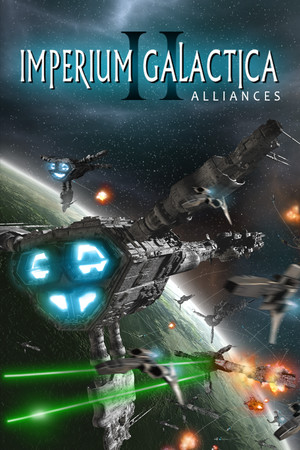
Imperium Galactica II
A 25-year-old space 4X hybrid that still does things modern titles won't touch - three playable campaigns, ground and space combat in the same match, and a spy system that actually bites back. Nostalgia trip or genuine curiosity, this one earns its hours.
GamerScout Verdict
Best for patient 4X fans who want a space strategy hybrid that modern titles have largely stopped attempting - go in solo, skip the multiplayer.
Compare Prices(10 stores)
Every store in this table quotes us in euros, so the EUR figure is the price the seller actually set, not our arithmetic — which is why EUR is also the currency we rank in. We only list an offer here when the store gives us its price in euros, so nothing in this table is a number we invented.
Pick USD, PLN, GBP, CAD or AUD in the header and we convert from EUR at the European Central Bank reference rate — converted amounts are prefixed with ~. Your bank or the store may apply a different rate at checkout. We never hide offers based on where you are: everyone sees this whole table.
We may earn a commission when you buy games through links on this page — at no extra cost to you. It never affects our rankings or verdicts.
Price History
Screenshots & Media
About Imperium Galactica II
I came in expecting a relic and got a surprisingly coherent design that a lot of newer space strategy titles still haven't figured out. Imperium Galactica II is a pausable real-time 4X - not turn-based, not pure RTS - that runs on a four-speed game clock and lets you freeze everything to issue orders, which in practice means the tension comes from how well you manage that pause button rather than from raw APM. That's a useful distinction because the game punishes people who assume it plays like StarCraft. It does not. It plays like a management sim that occasionally requires you to win a fight. The structure that holds it together is genuinely rare even now. You pick one of three playable factions - the Solarian Federation (humans, technology-focused), the Kra'hen Empire (aggressive, militaristic, they want heads), or the Shinari Republic (diplomacy and intrigue as their primary weapon) - each with a distinct campaign and win condition. Eight total races exist in the galaxy, all tradeable with or spyable upon, each with their own tech profiles and capital ship types. Colony management is relatively light - you zone buildings on flat terrain squares, balance power and population, and automate what you don't want to babysit - which frees you to think about fleet composition and expansion timing rather than micromanaging every factory queue. Ship customization is present and meaningful: you research new tech and push it into updated hull designs, and you can even refit existing ships mid-campaign. Fleet formations before space battles - ten options covering flanking, escort, full assault, and more - give fights a tactical layer that auto-resolving skips entirely, so there's a real decision to engage manually or let the AI handle it. Ground invasions are the signature mechanic and the most divisive one. When you attack a planet you drop into a separate RTS layer and command tanks and defensive fortresses directly. The unit variety is thin - a few tank classes, some towers, no infantry or air units despite what the intro cinematics imply - and the pathfinding for ground vehicles has always been awkward. But the strategic layer around it works: knock out power plants to deactivate laser fortresses before pushing in, or raze factories and pull back to cripple production without committing to a full occupation. That loop between the space map and the ground layer is the one thing IG2 does that almost nothing else in the genre replicates cleanly. The spy system adds another dimension, letting you weaken enemies quietly before you commit fleets. Randomly generated side missions - take sides in a war, decide whether to shelter a refugee civilization or hand them to their oppressors for a reward - keep individual playthroughs feeling different, even if those choices rarely alter the strategic picture in a meaningful way. The honest problems are real and product-of-era. The UI is functional but clunky by modern standards, and the keyboard shortcut reliance (F1 through F12 covers most of the empire screen) takes time to internalize. The tutorial is rough enough that first-timers will almost certainly need to restart after two hours when they realize their colony layout was wrong from the start. The research tree is shallower than it first appears, and the lack of explanation for what each tech actually does means a wiki tab is not optional, it is required equipment. On the multiplayer side, community reports consistently flag it as non-functional or close to it in this Steam release, so treat the PvP listing as vestigial. Mac users on Catalina or above are locked out entirely due to a compatibility issue that has not been patched. Steam sits at 87 percent positive across 584 reviews, which is a fair read - this is a game that rewards patience from players who respect its age rather than demanding it behave like something released last year.

Shooters
Tags
System Requirements
Minimum
- OS
- Windows XP, Windows Vista, Windows 7, Windows 8 or Windows 10 (32 or 64bit)
- Memory
- 1 GB RAM
- Storage
- 700 MB available space
- Graphics
- OpenGL 2.0 compatible gpu
- Processor
- Intel 1.4 GHz
- Sound Card
- DirectX compatible
Keep exploring
Community Discussion
Be the first to comment on Imperium Galactica II.
Reviews & Ratings
No ratings available
Game Info
- Developer
- Digital Reality
- Publisher
- THQ Nordic
- Release Date
- Jan 19, 2017