Hunter's Moon: A Sovereign Syndicate Adventure
Darkest Dungeon meets Slay the Spire in a gaslit Victorian London, and the atmosphere alone carries this indie deckbuilder further than its content depth probably deserves right now.
GamerScout Verdict
Grab it if you want atmosphere and solid Slay the Spire fundamentals; wait for a balance patch if you need deep late-game optimization.
Compare Prices(3 stores)
Every store in this table quotes us in euros, so the EUR figure is the price the seller actually set, not our arithmetic — which is why EUR is also the currency we rank in. We only list an offer here when the store gives us its price in euros, so nothing in this table is a number we invented.
Pick USD, PLN, GBP, CAD or AUD in the header and we convert from EUR at the European Central Bank reference rate — converted amounts are prefixed with ~. Your bank or the store may apply a different rate at checkout. We never hide offers based on where you are: everyone sees this whole table.
We may earn a commission when you buy games through links on this page — at no extra cost to you. It never affects our rankings or verdicts.
Price History
Screenshots & Media
About Hunter's Moon: A Sovereign Syndicate Adventure
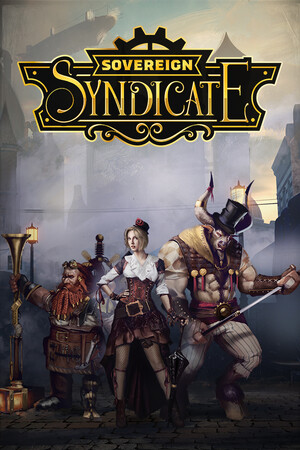
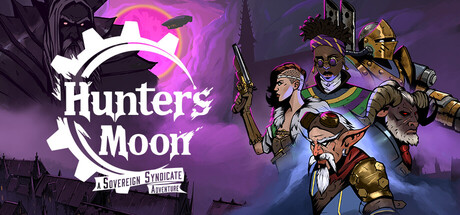
I went into Hunter's Moon expecting a competent genre exercise, and what I got was something that held my attention longer than the raw content count suggests it should. Four chapters, four distinct agents, and a Doom mechanic that creeps up like a rising tide, pressing you further into corrupted territory whether your deck is ready or not. The pressure system is genuinely clever: Vigor tracks your physical health, Nerve tracks your sanity, and letting either hit zero ends the run. Healing the body is manageable; keeping a grip on Nerve mid-run is a constant low-level anxiety that gives the moment-to-moment combat more texture than a standard HP bar ever could. The four agents play in meaningfully different ways. Molly leans into gun-based damage chains, the alchemist builds around poisons and explosive stacks, and the mech character is powerful enough that community voices have flagged it as potentially overtuned, capable of ending fights before enemies take a turn via stun and spark combos. That balance wobble is real, and veteran deckbuilder players will feel it. The card pool per agent is not enormous, which means optimal build paths become apparent fairly quickly. On the positive side of that coin, each agent's deck is distinct enough that replaying with a different character is a genuine change of experience rather than a palette swap. The DOT system adds some depth: certain damage-over-time effects resolve before the enemy turn, others after, and learning that timing is one of the game's more satisfying "aha" moments. Meta-progression runs on two tracks. Ship upgrades use salvaged materials to permanently improve The Starling's onboard rooms, unlocking shared crew bonuses like extra health or card removal options. Agent XP feeds into Talent Points for character-specific passives. Layered over runs are enchanted tarot cards that function as build modifiers, pushing you toward status archetypes, crit chains, or block-scaling strategies. When tarot effects stack, the synergy space opens up noticeably, which is where theorycrafters will spend their mental energy. The travel deck system, where you pick a card representing your next location rather than walking a static map node, is a small but effective way to frame navigation as a decision with stakes. The presentation is the game's strongest card. The art direction pulls from the same heavy-shadow, flat-color palette that made Darkest Dungeon's aesthetic stick in memory, and the full voice narration, delivered by a single narrator handling multiple characters, gives the whole thing a theatrical quality closer to a D&D session than a typical indie roguelite. The music shifts register between ambient dread and pulse-heavy boss tracks, and that tonal discipline does real work. Technically, the launch window brought some performance hiccups and at least one card-freezing bug that required a save-reload to escape. These are minor in isolation but worth knowing about. The Steam review rating trends very positive, and players who connected with Sovereign Syndicate's alt-Victorian worldbuilding will find familiar faces and lore payoff even without replaying the original CRPG first. Where Hunter's Moon currently falls short is content volume. Determined completionists have reported hitting the achievement ceiling under ten hours, and the enemy and event pools thin out enough across runs that repetition becomes visible. Balance spikes, particularly entering the fourth map's first section, feel like difficulty knobs that weren't fully calibrated at ship. None of this is fatal, but it does mean the game is best approached as a mood-first purchase, atmospheric, well-produced, and mechanically sound at its core, rather than a deep-systems sandbox for the obsessive optimizer. If Crimson Herring Studios follows up with a content and balance pass, the bones here could support a much longer-lived game.

Strategy & simulation
Tags
System Requirements
Minimum
- OS
- Windows 10
- Memory
- 4 GB RAM
- DirectX
- Version 11
- Storage
- 6 GB available space
- Graphics
- NVIDIA GeForce GTX 760 or equivalent
- Processor
- Intel Core i3 3110M 2.4 GHz
Recommended
- OS
- Windows 10
- Memory
- 8 GB RAM
- DirectX
- Version 11
- Storage
- 6 GB available space
- Graphics
- NVIDIA GeForce GTX 1080 or equivalent
- Processor
- Intel Core i5-8600K 3.60 GHz
Keep exploring
Community Discussion
Be the first to comment on Hunter's Moon: A Sovereign Syndicate Adventure.
Reviews & Ratings
No ratings available
Game Info
- Developer
- Crimson Herring Studios
- Publisher
- Zugalu Entertainment
- Release Date
- Nov 24, 2025