How to Say Goodbye
A two-to-three-hour grief puzzle that slides floor tiles instead of lecturing you about mortality, and somehow lands harder for it.
GamerScout Verdict
Worth it for puzzle fans who want craft over challenge and don't mind a story that whispers rather than shouts.
Compare Prices(4 stores)
Every store in this table quotes us in euros, so the EUR figure is the price the seller actually set, not our arithmetic — which is why EUR is also the currency we rank in. We only list an offer here when the store gives us its price in euros, so nothing in this table is a number we invented.
Pick USD, PLN, GBP, CAD or AUD in the header and we convert from EUR at the European Central Bank reference rate — converted amounts are prefixed with ~. Your bank or the store may apply a different rate at checkout. We never hide offers based on where you are: everyone sees this whole table.
We may earn a commission when you buy games through links on this page — at no extra cost to you. It never affects our rankings or verdicts.
Price History
Screenshots & Media
About How to Say Goodbye
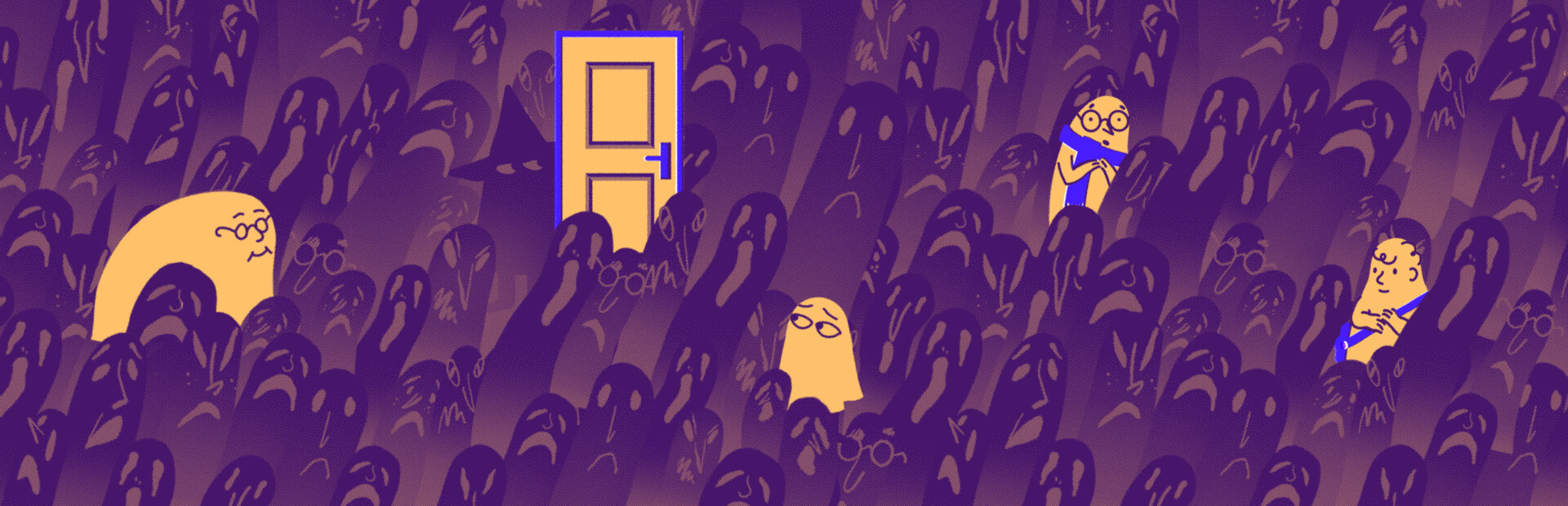
My first instinct when I booted this up was skepticism: a game about death, packaged in pastel picture-book art, published by a French public broadcaster. It had every ingredient for hollow earnestness. What I found instead was something quieter and stranger, a puzzle game that earns its emotional weight by keeping the philosophy mostly offscreen and letting the mechanics do the whispering. The core idea is genuinely original. You never move the ghosts directly. Instead, you slide entire rows and columns of floor tiles, nudging characters toward keys, pressure pads, and exit doors in a grid-based system that sits somewhere between a sliding block puzzle and a conveyor-belt contraption. New elements layer in chapter by chapter: windmills that redirect movement, teleporters that rewire the grid geometry, a magic mirror that summons a duplicate ghost you can use to hold down pressure pads while the original pushes forward. The game introduces each mechanic cleanly, and the puzzles are tuned to be satisfying rather than punishing. A single session of about two and a half hours will get most players to the credits, and the difficulty never spikes enough to break the mood. The setting drifts through more than fifteen chapters, from a domestic kitchen to the surface of the moon, and the colour palette shifts with each zone to mirror the emotional temperature of the ghosts you are helping. The visual inspirations are specific and worn proudly: the hand-drawn character designs nod directly to Tomi Ungerer, Tove Jansson, Antoine de Saint-Exupery, and Maurice Sendak, names that also show up as character names inside the story. If you grew up with any of those illustrators, the art will land with extra weight. If you did not, the craftsmanship still reads clearly. The soundtrack draws similar praise from players, who repeatedly single it out as a standout part of the identity. The honest caveats: the narrative framing is a little bait-and-switch. The opening implies a heavy meditation on grief, but the actual tone is lighter, almost whimsical, with the deeper emotional meaning tucked into subtext rather than stated. Players expecting a tearjerker in the vein of What Remains of Edith Finch may feel the story never quite finds urgency, and the ending tips toward the sentimental. There is also a save structure to be aware of: progress saves only at chapter boundaries, so a crash or an accidental close mid-chapter means replaying from the start of that section. On PC the controls behave well, but the grid-direction input can occasionally misread your intended slide. None of these issues derail the experience, but they are worth knowing going in. The Steam rating sits at over ninety percent positive, which feels earned for what this game is trying to be, as long as you calibrate your expectations toward a short, mood-forward puzzle experience rather than a hard mechanical workout.

Indie & narrative
Tags
System Requirements
Minimum
- OS
- Windows 7 SP1+
- Memory
- 4 GB RAM
- DirectX
- Version 10
- Storage
- 1000 MB available space
- Graphics
- DX10 (shader model 4.0)
- Processor
- SSE2 instruction set support
Keep exploring
Community Discussion
Be the first to comment on How to Say Goodbye.
Reviews & Ratings
No ratings available
Game Info
- Developer
- Florian Veltman
- Publisher
- ARTE France
- Release Date
- Nov 3, 2022