
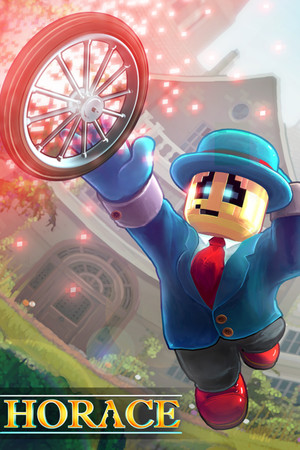
Horace
Seven years of one person's obsession poured into a little yellow robot, and it shows in every pixel. A Metroidvania platformer with a narrative gut-punch hiding behind its gentle opening.
GamerScout Verdict
For fans of story-driven Metroidvanias who can stomach a slow opening and rooms that will eat them alive before the solution clicks.
Compare Prices(10 stores)
Every store in this table quotes us in euros, so the EUR figure is the price the seller actually set, not our arithmetic — which is why EUR is also the currency we rank in. We only list an offer here when the store gives us its price in euros, so nothing in this table is a number we invented.
Pick USD, PLN, GBP, CAD or AUD in the header and we convert from EUR at the European Central Bank reference rate — converted amounts are prefixed with ~. Your bank or the store may apply a different rate at checkout. We never hide offers based on where you are: everyone sees this whole table.
We may earn a commission when you buy games through links on this page — at no extra cost to you. It never affects our rankings or verdicts.
Price History
Screenshots & Media
About Horace
I went in expecting a charming curiosity and came out genuinely shaken by a story about garbage collection, mortality, and what it means to want to be a real boy. That slow opening hour where Horace, a wide-eyed robot freshly delivered to a wealthy British family's mansion, learns to clean up the shed and misinterpret jokes about pulling fingers? Do not skip it. It is doing real narrative work. The payoff is earned, and when the game pivots into post-apocalyptic wreckage, the emotional weight lands harder than it has any right to from a SNES-palette side-scroller. Paul Helman spent seven years building this, handling art, music, design, writing, and promotion largely on his own. That singularity of vision is impossible to miss. The pixel work sits somewhere between 80s home computer grit and SNES warmth, with cutscenes rendered in the same sprites as the gameplay, which should feel like a budget compromise but instead feels intentional and cinematic. The soundtrack leans on chiptune arrangements of classical pieces and familiar themes, and the tonal range it covers is remarkable: slapstick one moment, quietly devastating the next. Horace himself is narrated in a deadpan text-to-speech robot voice that somehow becomes one of the most endearing presences in recent indie memory. His robotic misreading of every human situation is the engine that makes the heavier themes of war, loss, and identity digestible rather than crushing. The platforming is a genuine masocore proposition. Once the gravity-defying red boots arrive, each room becomes a four-orientation spatial puzzle where a jump that looks impossible from the floor becomes trivial from the ceiling. Think VVVVVV's gravity flipping crossed with Super Meat Boy's one-hit kill philosophy, threaded through level design that is deviously authored but rarely feels dishonest. Infinite lives and a mercy-shield system, where dying repeatedly earns you extra hit points, keep frustration from curdling into hostility. Boss fights require working out a mechanical solution under sustained pressure, and the game keeps introducing new wrinkles: stealth segments, rail shooters, a Guitar Hero-style rhythm section, and a string of fully playable arcade mini-games spanning Pong to OutRun clones. The breadth is astounding for a two-person project. The collectible system, picking up one million pieces of rubbish scattered across the world, ties exploration to achievements without feeling like padding. The genuine criticisms are real. Some reviewers flag hitboxes as occasionally wider than what the death replay suggests, and checkpointing is uneven in the harder stretches. The cutscene-to-gameplay ratio in the opening chapters skews heavily toward storytelling, and players who need immediate mechanical engagement will chafe before the world opens up. The sound mix can be unbalanced, with certain effects sitting too loud against the otherwise lovely score. And the British cultural references, ranging from specific 80s sitcom casts to ZX Spectrum heritage, will resonate differently depending on where and when you grew up. They are baked in so naturally that they rarely feel like winking fan-service, but your mileage will vary. At 15-plus hours, the game is also longer than most people expect, and that length is not equally brilliant throughout. What Horace does that almost nothing else does is make precision platforming and profound grief live in the same space without either element feeling like a concession to the other. It is a handcrafted thing, made by someone who clearly needed to make it, and that shows in details small enough to miss and large enough to stay with you for weeks. If you have any patience for slow-burn setups, any fondness for pixel craft done with real intention, and a tolerance for rooms that will kill you a dozen times before the solution becomes obvious, this is the understated gem of its year.

Indie & narrative
Tags
System Requirements
Minimum
- OS
- Windows 7
- Memory
- 4 GB RAM
- DirectX
- Version 12
- Storage
- 12 GB available space
- Graphics
- Any DX12 graphics card
- Processor
- Intel i5
- Sound Card
- Any, onboard
Recommended
- OS
- Windows 10
- Memory
- 8 GB RAM
- DirectX
- Version 12
- Storage
- 12 GB available space
- Graphics
- Any DX12 graphics card
- Processor
- Intel i7
- Sound Card
- Any, or onboard
Keep exploring
Community Discussion
Be the first to comment on Horace.
Reviews & Ratings
Game Info
- Developer
- Paul Helman
- Publisher
- 505 Games
- Release Date
- Jul 18, 2019