Hindsight 20/20 - Wrath of the Raakshasa
A four-person indie brawler built around a single genuine idea: every sword swing or stun-baton tap quietly rewrites the kingdom waiting for you at the end. The concept lands. The dungeons that carry it there, less so.
GamerScout Verdict
Best for players who want moral choices with real narrative teeth and can stomach repetitive combat to get there.
Compare Prices(3 stores)
Every store in this table quotes us in euros, so the EUR figure is the price the seller actually set, not our arithmetic — which is why EUR is also the currency we rank in. We only list an offer here when the store gives us its price in euros, so nothing in this table is a number we invented.
Pick USD, PLN, GBP, CAD or AUD in the header and we convert from EUR at the European Central Bank reference rate — converted amounts are prefixed with ~. Your bank or the store may apply a different rate at checkout. We never hide offers based on where you are: everyone sees this whole table.
We may earn a commission when you buy games through links on this page — at no extra cost to you. It never affects our rankings or verdicts.
Price History
Screenshots & Media
About Hindsight 20/20 - Wrath of the Raakshasa
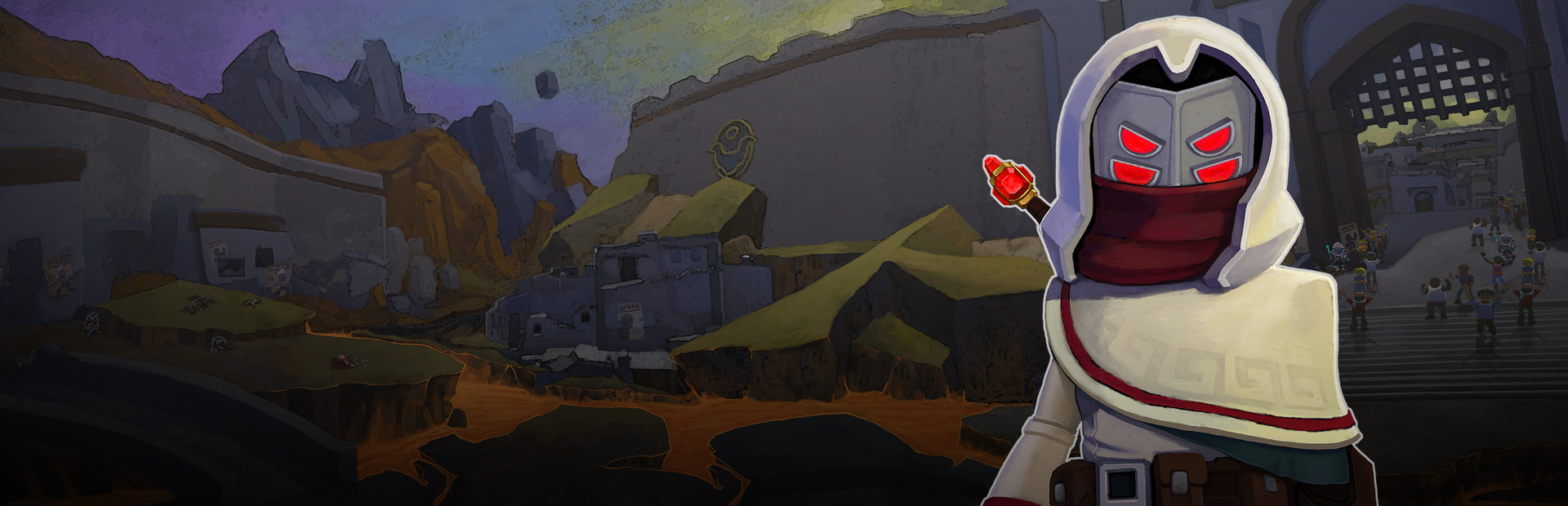
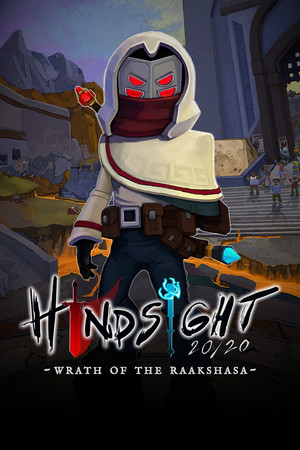
I'm genuinely fond of small teams with one strong philosophical thesis at the center of their game, and Hindsight 20/20 - Wrath of the Raakshasa has exactly that. Triple-I Games, a quartet of veterans with backgrounds at BioWare and Sucker Punch, built this third-person action game around a question most choice-based RPGs only pretend to ask: what does it actually cost to be merciful? The answer the game gives is uncomfortable, and I mean that as a compliment. The setup is bleak in the right way. One-armed warrior Jehan returns to Champaner to find his kingdom sliding toward ruin, its people infected by a contagion that turns them into stone-skinned, bloodthirsty Raakshasa. A metaphysical force hands him the chance to rewind and try again, and the whole structure is designed to be played two or three times across a total of maybe twelve to eighteen hours. Each run clocks in around six to eight hours depending on pace, and the game has ten possible endings, four of which share no overlap with the others. The core tension lives in two weapons you carry into every fight: a red sword that kills cleanly and quickly, and a blue stun baton that pacifies enemies but leaves them in the world to remember how you treated them. How the town of Champaner and its NPCs regard Jehan shifts depending on that accumulated history, and the Experience Engine, an in-house system Triple-I built from scratch, quietly tracks every decision to shape the version of the story you see. What the morality system does genuinely well is resist the usual binary reward structure. Playing the full pacifist route will not give you the clean redemption arc the opening seems to promise. The game lets those choices haunt Jehan in ways that feel philosophically honest, even when the execution is uneven. The soundtrack carries some of this emotional weight too, understated for most of Champaner but hitting harder at pivotal moments, though it thins out noticeably in the Gibsonia sections and especially during boss encounters. Here is where honesty requires me to slow down. The level design is the game's most persistent problem. Most stages resolve into large square kill-rooms, color-coded key hunts, and rudimentary puzzles in a progression pattern that critics have compared to early Doom in its linearity. The combat itself is fast and readable, with color-differentiated enemy types making fight management clear, and the Shakti special ability adding a bit of burst damage variety. But bosses are easy and repetitive, and because the room layouts never change between runs, the second and third playthrough can feel like memorized checklists rather than fresh experiences. The visuals lean into a deliberately retro 3D aesthetic, somewhere between late Nintendo 64 and early PS2, which gives the game its own visual voice, though character models outside Jehan and the Raakshasa are noticeably underdeveloped. Steam user reviews sit at mixed, and that split feels accurate: the idea is stronger than the game built around it. For players who care about moral philosophy expressed through game systems, and who can forgive repetitive dungeon structure in service of a genuinely thoughtful ending space, there is something real here. It is a small game made with intention, and the best version of a playthrough, the one where you agonize over the stun baton versus the sword and watch the consequences ripple outward, lands with more weight than its budget would suggest. It knows what it wants to say. It just needed more interesting rooms to say it in.

Indie & narrative
Tags
System Requirements
Minimum
- OS
- Windows 7, 8, or 10
- Memory
- 8 GB RAM
- DirectX
- Version 11
- Storage
- 20 GB available space
- Graphics
- 2GB VRAM
- Processor
- Quad-core Intel or AMD processor, 2.5 GHz
Keep exploring
Community Discussion
Be the first to comment on Hindsight 20/20 - Wrath of the Raakshasa.
Reviews & Ratings
No ratings available
Game Info
- Developer
- Triple-I Games
- Publisher
- Triple-I Games
- Release Date
- Sep 9, 2021