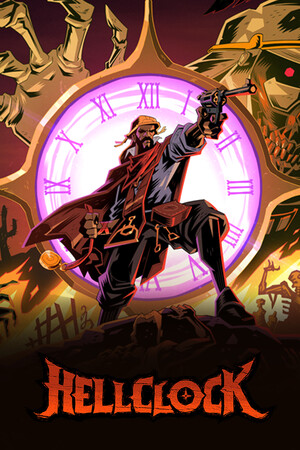
Hell Clock
A ticking-clock roguelite built on Brazilian history that earns the right to demand your full attention, run after punishing run.
GamerScout Verdict
Best for ARPG fans who want their loot loop pressure-cooked by a countdown and grounded in real, under-told history.
Compare Prices(6 stores)
Every store in this table quotes us in euros, so the EUR figure is the price the seller actually set, not our arithmetic — which is why EUR is also the currency we rank in. We only list an offer here when the store gives us its price in euros, so nothing in this table is a number we invented.
Pick USD, PLN, GBP, CAD or AUD in the header and we convert from EUR at the European Central Bank reference rate — converted amounts are prefixed with ~. Your bank or the store may apply a different rate at checkout. We never hide offers based on where you are: everyone sees this whole table.
We may earn a commission when you buy games through links on this page — at no extra cost to you. It never affects our rankings or verdicts.
Price History
Screenshots & Media
About Hell Clock
My first instinct was to file Hell Clock alongside the crowd of Hades-adjacent action roguelites that flood Steam every quarter. Within thirty minutes it had corrected me firmly. Rogue Snail, a small Brazilian studio, has built something with genuine stakes underneath the familiar dungeon-dive loop, and the source material alone separates it from the pack. You play as Pajeú, a warrior descended into a demon-infested purgatory rooted in the real-world tragedy of the 1890s War of Canudos, a conflict that left tens of thousands dead and has gone largely uncovered in mainstream game culture. The story is voiced in both English and Brazilian Portuguese, and the Portuguese option in particular gives the whole thing a grounded, lived-in quality most dark fantasy ARPGs simply cannot fake. The mechanical hook is the title itself. A countdown timer begins the moment you enter each run, and if it reaches zero before you clear the final floor and its boss, the run ends. That single design decision compresses the loot-and-grind rhythm of a traditional ARPG into something that feels genuinely urgent. You find yourself calculating whether detour treasure chests are worth the seconds they cost, swapping AoE skills mid-run to clear groups faster, and watching the clock with an eye-corner anxiety you never get from a static dungeon crawl. Combat is built around a hotbar of up to five configurable abilities drawn from a pool of twenty total skills, including knife strikes, the great bell of Canudos, and revolver builds, supported by a relic system that drops from bosses and fundamentally reshapes how your chosen skills interact. The auto-equip loot system keeps trinkets and gear from stopping your momentum, and the massive between-run skill tree, anchored to a hub structure, rewards repeat play without gating progress behind a frustrating RNG wall. The build variety is real. A summon-focused playstyle built around relics that boost spell damage per active minion plays genuinely differently from a knife-spinner build or a constellation-node AoE mage. The Reliquary system lets you slot and reconfigure relics between runs, and the meta-progression tree sprawls wide enough that sessions eight hours in still surface new unlocks. Post-completion, Ascension Mode resets your progression and hardens the rules until it functions more like a full roguelike, and a Hardcore permadeath option exists for those who want real consequences. The game has been receiving steady patches since launch, and a Cursed War expansion has already been announced, suggesting Rogue Snail is treating this as a live project. The honest friction points: early runs can feel punishing before the meta-tree has had time to breathe, because the initial timer headroom is slim and some relics prove nearly useless against certain builds due to RNG mismatches. Boss design has drawn some criticism for difficulty spikes that feel like damage-check walls rather than skill tests, and the procedural corridor layouts wear their seams more visibly the longer you play. A Relaxed Mode that removes the timer entirely is available from the start, which helps accessibility but does blunt the thing that makes the design sing. The percussion-heavy soundtrack lands beautifully during runs but loops quickly enough in extended sessions to expose its limited pool. What stays with me is that Rogue Snail clearly made this game to tell a specific story about specific people, and that intentionality shows in every visual and audio choice. The comic-book-inflected art style, thick-inked and atmospheric, carries the weight of the setting. The dialogue and historical figures including the eugenicist villain Dr. Raimundo Nina Rodrigues, drawn directly from the historical record, give the campaign an emotional current rare in this genre. This is the kind of small studio swinging well above its weight class, and if you have any patience for the ARPG grind loop at all, the ticking clock will get its hooks into you fast.

Indie & narrative
Tags
System Requirements
Minimum
- OS
- Windows 10
- Memory
- 8 GB RAM
- DirectX
- Version 11
- Storage
- 2 GB available space
- Graphics
- nVidia GTX 1060 / AMD RX 580 with 6GB of VRAM
- Processor
- Intel Core i5 2500 or AMD FX-4350
Recommended
- OS
- Windows 10
- Memory
- 16 GB RAM
- DirectX
- Version 11
- Storage
- 2 GB available space
- Graphics
- nVidia RTX 3060 or AMD RX 6600-XT with 6GB+ GB of VRAM
- Processor
- Intel Core i5 6500 or AMD Ryzen 3 1200
Keep exploring
Community Discussion
Be the first to comment on Hell Clock.
Reviews & Ratings
No ratings available
Game Info
- Developer
- Rogue Snail
- Publisher
- Mad Mushroom
- Release Date
- Jul 22, 2025