
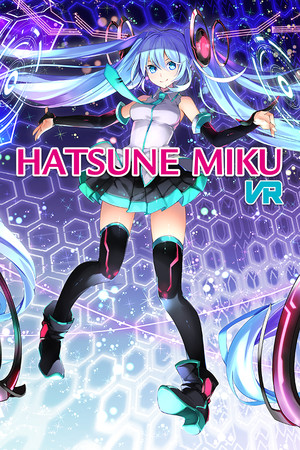
Hatsune Miku VR
A thin but charming VR rhythm experience that earns its 72% Steam approval almost entirely on Miku's charisma, the motion controls work, but the content depth does not.
GamerScout Verdict
Best for committed Vocaloid fans wanting a brief physical thrill with Miku, casual rhythm players will hit the content floor in under an hour.
Compare Prices(4 stores)
Every store in this table quotes us in euros, so the EUR figure is the price the seller actually set, not our arithmetic — which is why EUR is also the currency we rank in. We only list an offer here when the store gives us its price in euros, so nothing in this table is a number we invented.
Pick USD, PLN, GBP, CAD or AUD in the header and we convert from EUR at the European Central Bank reference rate — converted amounts are prefixed with ~. Your bank or the store may apply a different rate at checkout. We never hide offers based on where you are: everyone sees this whole table.
We may earn a commission when you buy games through links on this page — at no extra cost to you. It never affects our rankings or verdicts.
Price History
Screenshots & Media
About Hatsune Miku VR
My first session with Hatsune Miku VR was spent half-playing, half-just watching the show, and that tension never really goes away. The core loop drops you onstage with Miku while rings fly toward you from speakers arranged in a circle behind her. You swing two motion controllers, styled as either a star-tipped wand or a pair of leeks, your call, to catch the incoming rings in time with the music. Gold rings build a fever meter, and filling it launches a fever mode that strips the stage back to a dark void with Miku, giving you a score multiplier for rings hit during the window. The controls track reliably and the physical feedback of landing a long riff symbol, where you trace a trail of notes in one sweeping motion, genuinely feels satisfying when it clicks. The problem is that the rest of the design works hard to undermine those good moments. Difficulty progression is scrambled: there is no sensible ramp from track one to track ten, and some mid-list songs are significantly harder than what comes after them. Hard mode introduces bombs you have to dodge, which sounds like a smart escalation but in practice just adds frustration to an already demanding arm-workout. You also cannot fail out of a song no matter how badly you play, which softens any sense of meaningful stakes. Miku herself will occasionally drift into the path of incoming rings and block your view, and the crowd will boo you for a B grade on certain songs while you are still figuring out the patterns, a tone-deaf combination. Visually the game is bare. The stages are sparse and the rendering of Miku has visible rough edges up close, especially if you move around the stage in the passive music video mode (which exists as a no-notes concert option). Compared to the Project Diva games on handheld and console, it looks like a step back rather than forward. The base game ships with 10 songs, Senbonzakura, Ghost Rule, Hibikase, Singularity, and a handful of others, and three five-track DLC packs extend the library, but the per-song cost math is punishing and the community has noticed. Who is this actually for? Dedicated Vocaloid fans who want the specific novelty of sharing a physical stage with Miku will find that the concept still delivers a brief thrill. If you are already in the fan camp, the motion controls are tight enough and the tracklist recognizable enough that short sessions carry real charm. But if you are coming from Beat Saber looking for comparable depth, or from Project Diva expecting a rich rhythm game, you will run into the content ceiling fast. The lack of an easy entry mode and the thin base song count were widely criticized at launch and those criticisms still hold. Play it in short bursts with the full DLC bundle if you can catch it at a low combined price, and treat it as a fan experience rather than a serious rhythm title.

Catch-all
Tags
System Requirements
Minimum
- OS
- Windows 8.1 - 64-bit
- Memory
- 8 GB RAM
- DirectX
- Version 11
- Storage
- 3 GB available space
- Graphics
- Nvidia GeForce GTX 970 or better
- Processor
- Intel Core i5-4670
- VR Support
- SteamVR. Standing or Room Scale
Keep exploring
Community Discussion
Be the first to comment on Hatsune Miku VR.
Reviews & Ratings
No ratings available
Game Info
- Developer
- Crypton Future Media
- Publisher
- KOMODO
- Release Date
- Mar 8, 2018