
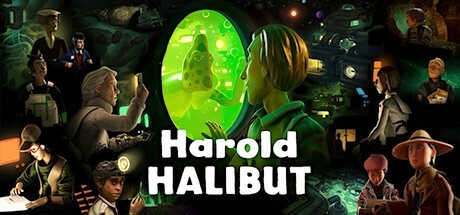
Harold Halibut
Ten years of handcrafted stop-motion devotion packed into a 10-12 hour walk through an alien ocean floor. Come for the world, stay for the characters, make peace with the errand-running.
GamerScout Verdict
Built for players who treat a beautifully made world as enough reward - bring patience or skip it entirely.
Compare Prices(6 stores)
Every store in this table quotes us in euros, so the EUR figure is the price the seller actually set, not our arithmetic — which is why EUR is also the currency we rank in. We only list an offer here when the store gives us its price in euros, so nothing in this table is a number we invented.
Pick USD, PLN, GBP, CAD or AUD in the header and we convert from EUR at the European Central Bank reference rate — converted amounts are prefixed with ~. Your bank or the store may apply a different rate at checkout. We never hide offers based on where you are: everyone sees this whole table.
We may earn a commission when you buy games through links on this page — at no extra cost to you. It never affects our rankings or verdicts.
Price History
Screenshots & Media
About Harold Halibut
I want to be honest with you about what kind of patience Harold Halibut asks for, because the answer matters more than almost anything else you could know going in. Slow Bros. spent roughly a decade physically sculpting, sewing, and welding every surface you will see aboard the Fedora I - a generational spacecraft that crashed into an alien ocean and was quietly repurposed into something between a town and a prison. The result is one of the most visually singular things I have encountered in an indie game: wood panelling corridors giving way to gaudy hand-painted murals, fish drifting past all-glass walls that are absolutely not up to code for a spaceship. You can feel the thumbprint texture under the clay. That craft is real, and it deserves to be seen. What you are actually doing for the bulk of those 10-12 hours is considerably more modest. Harold is a shy maintenance worker who runs errands, talks to the Fedora's wonderfully weird residents - the three Secretary brothers, the shifting ambitions of Harold's ex Sunny, the faintly human CEO Brenna Casselchop - and shuttles between tube stations when the story needs him somewhere else. There are no branching paths, no multiple endings, and the handful of interactive moments (operating strange-symbol machinery, a surprise portrait-mode room-packing sequence that briefly echoes Tetris) are light diversions rather than real puzzles. The dialogue choices exist mostly for texture; they do not redirect the story. If you clock into an adventure game expecting systems to push against, you will bounce off this one quickly. The case for staying is the writing and the mood. The script is drily funny and quietly melancholic in equal measure. Harold is not a hero - he is someone crushed by the grind of a mundane life who happens to discover a fish-like humanoid named Fishy trapped in the ship's filtration system, and that small, strange bond slowly cracks him open. The supporting cast each traces its own arc without feeling servile to Harold's journey. The piano-and-strings soundtrack sits at the intersection of artsy and lullaby; it will make you sleepy in the early chapters and eerie and trippy by the later ones, which is probably intentional. Later chapters do get genuinely weird in ways I would rather not spoil, and the variety that the opening hours withheld does start to arrive. The honest criticism critics landed on is valid: the opening is slow even by slow-game standards, the back-and-forth traversal across a small set of locations wears thin, and the story meanders long enough that some players will tap out before the emotional payoff arrives. If you need urgency, the in-game deadline of a distant solar flare is not going to manufacture it for you. But if you can calibrate to the Fedora's rhythm - less Night in the Woods or Firewatch, more an animated film that occasionally asks you to hold the controller - the back half earns the patience the front requires. Steam users sitting at 82% positive across over a thousand reviews suggests that the people who stick with it mostly do not regret the trip.

Indie & narrative
Tags
System Requirements
Minimum
- OS
- Windows 10
- Memory
- 8 GB RAM
- DirectX
- Version 11
- Storage
- 56 GB available space
- Graphics
- GeForce GTX 1060 / Radeon RX 480
- Processor
- Intel Core i5-7400 @ 3.00GHz / AMD FX-8370 Eight-Core
Recommended
- OS
- Windows 11
- Memory
- 16 GB RAM
- DirectX
- Version 11
- Storage
- 56 GB available space
- Graphics
- GeForce RTX 3060 Ti / Radeon RX 6800
- Processor
- Intel Core i9-10900K @ 3.70GHz / AMD Ryzen 5 7600X
Keep exploring
Community Discussion
Be the first to comment on Harold Halibut.
Reviews & Ratings
No ratings available
Game Info
- Developer
- Slow Bros.
- Publisher
- Slow Bros.
- Release Date
- Apr 16, 2024