
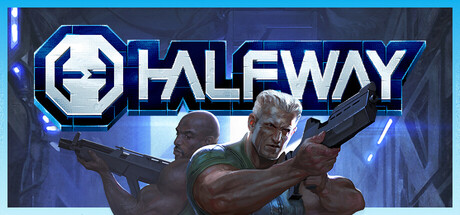
Halfway
A lean sci-fi tactics game that gets the atmosphere dead-right but runs out of mechanical ideas before the credits roll. Worth it for XCOM fans who want a shorter, moodier commitment.
GamerScout Verdict
Best for newcomers to squad tactics or sci-fi atmosphere hunters; veterans will feel the mechanical ceiling within a few hours.
Compare Prices(5 stores)
Every store in this table quotes us in euros, so the EUR figure is the price the seller actually set, not our arithmetic — which is why EUR is also the currency we rank in. We only list an offer here when the store gives us its price in euros, so nothing in this table is a number we invented.
Pick USD, PLN, GBP, CAD or AUD in the header and we convert from EUR at the European Central Bank reference rate — converted amounts are prefixed with ~. Your bank or the store may apply a different rate at checkout. We never hide offers based on where you are: everyone sees this whole table.
We may earn a commission when you buy games through links on this page — at no extra cost to you. It never affects our rankings or verdicts.
Price History
Screenshots & Media
About Halfway
My spreadsheet instincts kept whispering that Halfway would reward patience and careful squad builds. After working through its dozen-or-so hours of corridor firefights aboard the colonial vessel Goliath, I can report: the atmosphere earns its keep, but the tactics system leaves a noticeable gap where depth should be. The core loop is familiar to anyone who has spent time with squad-based tactics. Each character gets two action points per turn, spendable on moving, shooting, focusing for a more accurate single shot, using items, or triggering a unique special ability. One team member can destroy enemy shields, another can self-heal on a cooldown, a third brings sniper utility. Ammunition is shared across the whole squad and eats into limited inventory space, which creates genuine resource tension in the early missions. The problem is that this tension rarely evolves. Each character carries exactly one special ability with a long cooldown, and there is no skill tree or meaningful progression beyond minor stat bumps and whatever weapons you loot from crates. By the midpoint you have settled into a dominant pattern: position the sniper at a chokepoint, funnel mutants through, spend the cooldowns as they recharge. The enemy roster does not push back hard enough to break that habit. Critics at the time noted that the enemies are largely homogeneous, cycling through the same move-shoot-melee behavior from the first deck to the last, and my experience matched that assessment. The hit-chance system also deserves a mention, because it will frustrate you. A 70 percent shot misses with what feels like suspicious regularity, and because there are no opportunity attacks or zone-of-control rules, enemies can simply walk past your front line to reach softer targets. These are design gaps, not bugs, and they blunt the tactical expression the game clearly wants to offer. The Steam community sits at roughly 70 percent positive across several hundred reviews, which feels about right: people who wanted a tidy, atmosphere-first sci-fi romp got what they came for; people who wanted XCOM-level decision density did not. What Halfway does genuinely well is presentation. The 16-bit pixel art renders Goliath's corridors with real craft: shadowy corners, bullet-casing-strewn command centers, and star-filled windows all read immediately as a ship in crisis. The synthesizer soundtrack leans into John Carpenter territory, building a tense, understated mood that outpunches what you might expect from a small indie production. The cast of survivors, including a morally ambiguous scientist, a genetically engineered soldier, a cigar-chomping sniper, and a hacking specialist, are stock archetypes done affectionately rather than lazily, and the writing gives the setting more texture than the missions strictly need. Between missions you can talk to survivors and choose who accompanies you, which provides light squad-composition decisions without demanding the kind of roster management that defines deeper tactics games. For strategy-and-sim regulars, Halfway sits closer to the XCOM-lite end of the dial than to anything demanding a planning spreadsheet. Robotality shipped modding tools and a Steam Workshop, so community maps extend the base content for those who exhaust the campaign, and a harder game-plus mode was added post-launch for players who found the default difficulty too forgiving. If you are a newcomer to the genre, this is actually a reasonable entry point: the campaign is compact, the two-action-point system is easy to internalize, and the story provides forward momentum that keeps early sessions moving. If you are a grizzled tactics veteran, arrive knowing the ceiling is low and the enemy AI will not challenge your fundamentals.

Strategy & simulation
Tags
System Requirements
Minimum
- OS
- Windows 7 or higher
- Memory
- 2 GB RAM
- Storage
- 300 MB available space
- Graphics
- Intel HD3000 or higher with OpenGL 2.1 support
- Processor
- 2.0 GHz Dual Core
- Sound Card
- OpenAL supported sound card
Keep exploring
Community Discussion
Be the first to comment on Halfway.
Reviews & Ratings
No ratings available
Game Info
- Developer
- Robotality
- Publisher
- Chucklefish
- Release Date
- Jul 22, 2014