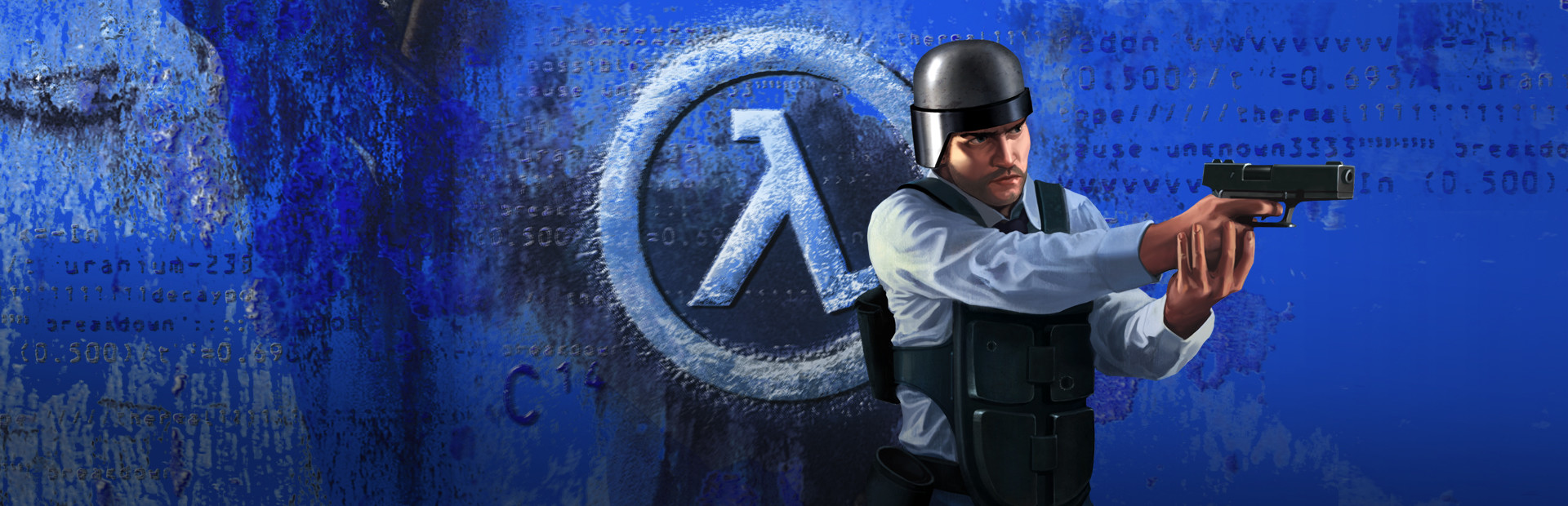
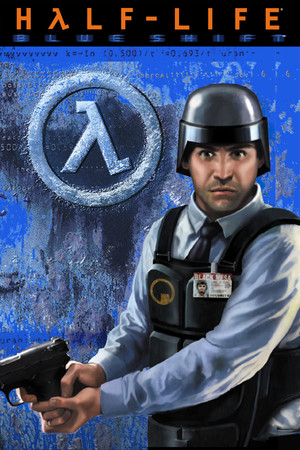
Half-Life: Blue Shift
A three-to-five hour sprint through Black Mesa from the boots of a security guard - lean, focused, and unapologetically thin on new content, but still Half-Life at its core.
GamerScout Verdict
7.1/10Worth a single afternoon for Half-Life series completionists; too short and content-light to recommend to anyone else as a standalone.
Compare Prices(2 stores)
Every store in this table quotes us in euros, so the EUR figure is the price the seller actually set, not our arithmetic — which is why EUR is also the currency we rank in. We only list an offer here when the store gives us its price in euros, so nothing in this table is a number we invented.
Pick USD, PLN, GBP, CAD or AUD in the header and we convert from EUR at the European Central Bank reference rate — converted amounts are prefixed with ~. Your bank or the store may apply a different rate at checkout. We never hide offers based on where you are: everyone sees this whole table.
We may earn a commission when you buy games through links on this page — at no extra cost to you. It never affects our rankings or verdicts.
Price History
Screenshots & Media

About Half-Life: Blue Shift
I came into Blue Shift right after finishing Opposing Force, and the contrast is sharp enough to sting. Where Opposing Force felt like a full expansion with new weapons, new enemy types, and a protagonist with real military weight, Blue Shift runs closer to a bonus level pack that got stretched into a retail product. That origin story is literally true: the whole thing started as supplemental content for a cancelled Sega Dreamcast port of Half-Life, then got repurposed for PC. That context explains a lot about what the game is and what it isn't. You play as Barney Calhoun, a Black Mesa security guard on a routine shift when Freeman's resonance cascade tears the facility apart. The premise is genuinely interesting - swapping the PhD physicist and the elite marine for an ordinary working-class guard changes the atmosphere of the disaster in a quiet but meaningful way. Barney isn't trying to seal a portal or eliminate alien threats at scale. He finds Dr. Rosenberg, keeps a handful of surviving scientists alive, and tries to get everyone out through a prototype teleporter. The stakes feel smaller and more grounded, and that works in the game's favor tonally. You even catch brief glimpses of Gordon Freeman through security cameras and from across corridors - the shared-timeline cross-referencing is one of Blue Shift's most satisfying tricks. Mechanically, you're working with a noticeably stripped-down loadout. The high-end science weapons and alien arms from the base game are gone. Barney carries a pistol, a SPAS-12 shotgun, an MP5 with an M203 grenade launcher, and a few other standard-issue options. No crossbow, no Tau Cannon, no Gluon Gun. The weapon restrictions feel authentic to the character but they also flatten combat variety considerably. Most encounters involve cutting corners and putting magnum rounds or MP5 bursts into HECU marines until the room is clear, and the game's open combat areas don't do much to complicate that rhythm. The Xen section is brief and fares better than the original game's finale, though the endgame devolves into a drawn-out fetch quest before delivering a surprisingly hopeful closing note compared to the rest of the series. Length is the unavoidable conversation with this one. Three to five hours is a reasonable estimate, and that is on the shorter end even for an expansion. Critics at launch were blunt about it, and that criticism hasn't aged poorly. The level design is competent and sometimes better-looking than the base game's environments, but there are no new enemy types and no mechanics that weren't already present in Half-Life or Opposing Force. What saves it is pacing: because the campaign never overstays, it also never drags the way Opposing Force does in its later chapters. The tight runtime means the quality stays consistent even if the ceiling is lower. For Half-Life series completionists or anyone who wants to fully understand Barney Calhoun before Half-Life 2, Blue Shift is worth the couple of hours it asks for. For everyone else, it sits firmly in the "nice to have" column. Go in knowing it is a side dish, not a main course.

Catch-all
Tags
System Requirements
Minimum
500 mhz processor, 96mb ram, 16mb video card, Windows XP, Mouse, Keyboard, Internet Connection
Recommended
800 mhz processor, 128mb ram, 32mb+ video card, Windows XP, Mouse, Keyboard, Internet Connection
Keep exploring
Community Discussion
Be the first to comment on Half-Life: Blue Shift.
Reviews & Ratings
Game Info
- Developer
- Gearbox Software
- Publisher
- Valve
- Release Date
- Jun 1, 2001