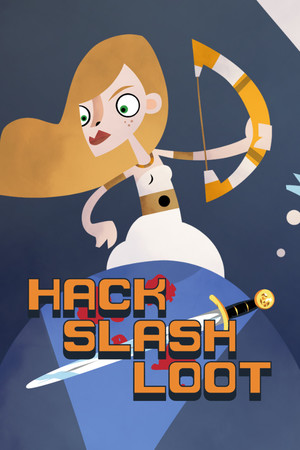
Hack, Slash, Loot
A one-person roguelike that wears its luck-dependency on its sleeve - respect that contract upfront, or frustration will follow fast.
GamerScout Verdict
Worth a session if you accept pure luck variance as the core loop; skip it if you need tactical agency or audio atmosphere.
Compare Prices(5 stores)
Every store in this table quotes us in euros, so the EUR figure is the price the seller actually set, not our arithmetic — which is why EUR is also the currency we rank in. We only list an offer here when the store gives us its price in euros, so nothing in this table is a number we invented.
Pick USD, PLN, GBP, CAD or AUD in the header and we convert from EUR at the European Central Bank reference rate — converted amounts are prefixed with ~. Your bank or the store may apply a different rate at checkout. We never hide offers based on where you are: everyone sees this whole table.
We may earn a commission when you buy games through links on this page — at no extra cost to you. It never affects our rankings or verdicts.
Price History
Screenshots & Media
About Hack, Slash, Loot
I went in expecting a quiet little dungeon crawl and got something more complicated: a game that is, at its best, a meditative loop of doors and dice, and at its worst, a slot machine wearing a barbarian's helmet. David Williamson built this solo, released it in 2012, and it shows both the charm and the limitations of that context. There is something genuinely handcrafted about the pixel aesthetic and the stripped-back structure. But stripped-back can tip into threadbare, and that line gets crossed more than once here. The core is turn-based movement on a square grid, where bumping into an enemy tile counts as an attack. You start with three unlockable character classes - a wizard, a wood elf, and a barbarian - each with distinct stat weights across melee, ranged, and magic. More classes unlock through deaths and quest completions, which is the game's core progression hook. There are six quests in total, each with its own dungeon theme: goblin warrens, undead crypts, a quest where your NPC allies turn hostile when they die. The variety is real, even if the underlying moment-to-moment play stays consistent. Crucially, there are no character levels. Every stat point you gain comes from equipment found on the floor, so early loot quality dictates almost everything. Items with Regeneration or Swiftness affixes can effectively carry a run; without them, the math quietly tilts against you. That is not a bug, exactly, but it is also not entirely a feature - it sits in the uncomfortable space between genre-faithful randomness and poor early-game balancing. The part the community argues about most is also the part that defines whether you stay or go. Landing in the first room with weak starting gear and facing enemies that deal more damage than your healing items restore is the default experience for new players. The saving grace is that individual runs are short. Dying in ten minutes hurts differently than dying in two hours, and the game does earn some goodwill from that brevity. The choke-point tactic, using door frames to funnel melee enemies one at a time, is about as deep as the strategic layer goes. Ranged enemies negate it entirely, which makes certain rooms feel like a coin flip. The audio is thin - a short looping melody and recycled sound effects throughout - so if you were hoping for the kind of soundscape that makes a dungeon feel alive, look elsewhere. Where the game finds its modest groove is in that unlockable roster. Once you have survived (and failed) enough runs to open the stronger classes, a rhythm emerges. The procedural dungeons never cohere into something atmospheric, but they do keep the eye moving. Players who enjoy the genre's roguelike contract - where variance is the point, not the obstacle - will find something here worth a few sessions. Players expecting build depth, tactical agency, or a sense of earned progression will bounce off it hard and fast. This is a solo developer's first commercial release, and it carries all the marks of that: earnest, compact, unpolished in ways that feel personal rather than lazy. I respect the handcraft even where I can't fully defend the design. At its price point and scope it is a curiosity rather than a recommendation, best suited to genre completionists or players who want something they can finish in a single sitting without demanding anything back from it.

Indie & narrative
Tags
System Requirements
Minimum
- OS
- Windows XP, Vista, 7
- DirectX®
- dx9
- Hard Drive
- 30 MB HD space
Keep exploring
Community Discussion
Be the first to comment on Hack, Slash, Loot.
Reviews & Ratings
No ratings available
Game Info
- Developer
- David Williamson
- Publisher
- David Williamson
- Release Date
- Apr 5, 2012