Habitat
A Kickstarter-funded space junk builder with a genuinely clever physics premise, hamstrung by thin AI, a punishing difficulty curve, and a mostly negative Steam verdict that tells you most of what you need to know.
GamerScout Verdict
Skip unless the physics sandbox loop alone is enough to satisfy you, because the strategy layer underneath it is not finished.
Compare Prices(0 stores)
Loading prices...
We may earn a commission when you buy games through links on this page — at no extra cost to you. It never affects our rankings or verdicts.
Price History
Screenshots & Media
About Habitat
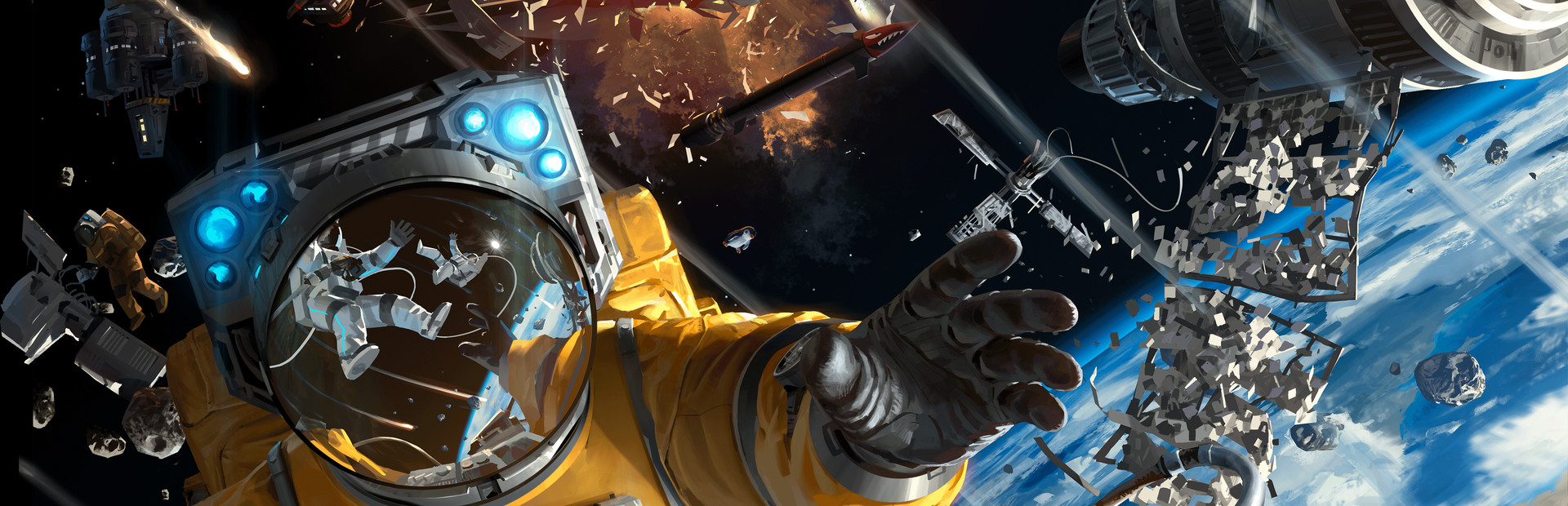
My interest spiked the moment I read the pitch: weld a flamethrower T-Rex head onto a rocket booster, point it at a nanomachine swarm, and call it urban planning. The core fantasy of Habitat is legitimately interesting, a real-time orbital strategy game where you assume the role of Commander and direct a team of engineers to scavenge procedurally generated space junkyards, bolting debris into survivable stations using honest-to-goodness thrust-and-weight physics. Lasers, grappling hooks, particle accelerators, and rocket boosters all interact with a zero-gravity simulation that can produce genuinely chaotic moments. On paper, this is the kind of systemic sandbox that strategy and sim players exist for. In practice, the experience falls apart in several key places. The difficulty spike arrives almost immediately: community feedback consistently describes getting overwhelmed by nanomachine hunters before the station core is mobile enough to evade or fight back. The controls for grouping objects and issuing commands to engineers are poorly explained, and the tutorial does almost nothing to prepare newcomers for the juggle of managing fuel, electricity, and the omnipresent "omni" resource simultaneously. That resource loop, which should be the strategic spine of the game, ends up feeling undefined rather than deep. Complex habitats have a tendency to explode simply from booster vibration or parts clipping each other, which punishes ambitious construction rather than rewarding it. The two main modes, a narrative-driven Campaign and a freeform Sandbox, offer different entry points but neither fully delivers. Campaign missions add structure and give you civilian rescue, engineer combat, and environmental hazards like ice storms and EMP bursts to manage, which is a solid list on paper. Sandbox strips all that away for pure creative control, letting you explore procedurally generated fields across Earth, Moon, and Mars orbits. The Steam Workshop integration means a Junk Workshop pipeline exists for sharing custom debris pieces, and that is genuinely the brightest spot for long-term engagement. But the community is thin a decade after launch, and the mod ecosystem never grew to the scale that could compensate for the base game's rough edges. The verdict from Steam reviewers is mostly negative at 32 percent positive across 170 reviews, and that number is hard to argue with. The enemy AI is erratic: hostile stations have been documented firing on targets for extended periods without landing a kill, then exploding on their own before the player even engages. That is not strategic tension, that is undefined behavior. The game also carries a legacy compatibility note indicating it no longer runs on macOS 10.15 or above, which further shrinks its viable audience. If you are a sim-curious player who finds the junk-welding concept irresistible, Sandbox mode offers a brief window of physics-toybox entertainment. Strategy players looking for a coherent decision loop with meaningful AI opposition should approach with very low expectations.

Strategy & simulation
Tags
System Requirements
Minimum
- OS
- Windows 7
- Memory
- 2 GB RAM
- DirectX
- Version 9.0c
- Graphics
- Intel HD3000, Nvidia GeForce GT8600 or equivalent
- Processor
- 2 GHz processor
Recommended
- OS
- Windows 7
- Memory
- 3 GB RAM
- DirectX
- Version 9.0c
- Graphics
- NVIDIA® GeForce® GTX 550 ti 1GB ram or or ATI™ Radeon™ HD 6XXX or higher
- Processor
- 3 GHz processor
Keep exploring
Community Discussion
Be the first to comment on Habitat.
Reviews & Ratings
No ratings available
Game Info
- Developer
- 4gency
- Publisher
- Versus Evil
- Release Date
- Jan 26, 2016