Guards II: Chaos in Hell
One swap per turn sounds like a mobile tutorial gimmick. Spend three hours with Guards II and you will realize it is quietly the tightest lane-combat puzzle this side of a spreadsheet.
GamerScout Verdict
Tight lane-combat puzzler with a permanent-upgrade flaw that punishes blind spenders but rewards anyone who reads before they click.
Compare Prices(7 stores)
Every store in this table quotes us in euros, so the EUR figure is the price the seller actually set, not our arithmetic — which is why EUR is also the currency we rank in. We only list an offer here when the store gives us its price in euros, so nothing in this table is a number we invented.
Pick USD, PLN, GBP, CAD or AUD in the header and we convert from EUR at the European Central Bank reference rate — converted amounts are prefixed with ~. Your bank or the store may apply a different rate at checkout. We never hide offers based on where you are: everyone sees this whole table.
We may earn a commission when you buy games through links on this page — at no extra cost to you. It never affects our rankings or verdicts.
Price History
Screenshots & Media
About Guards II: Chaos in Hell
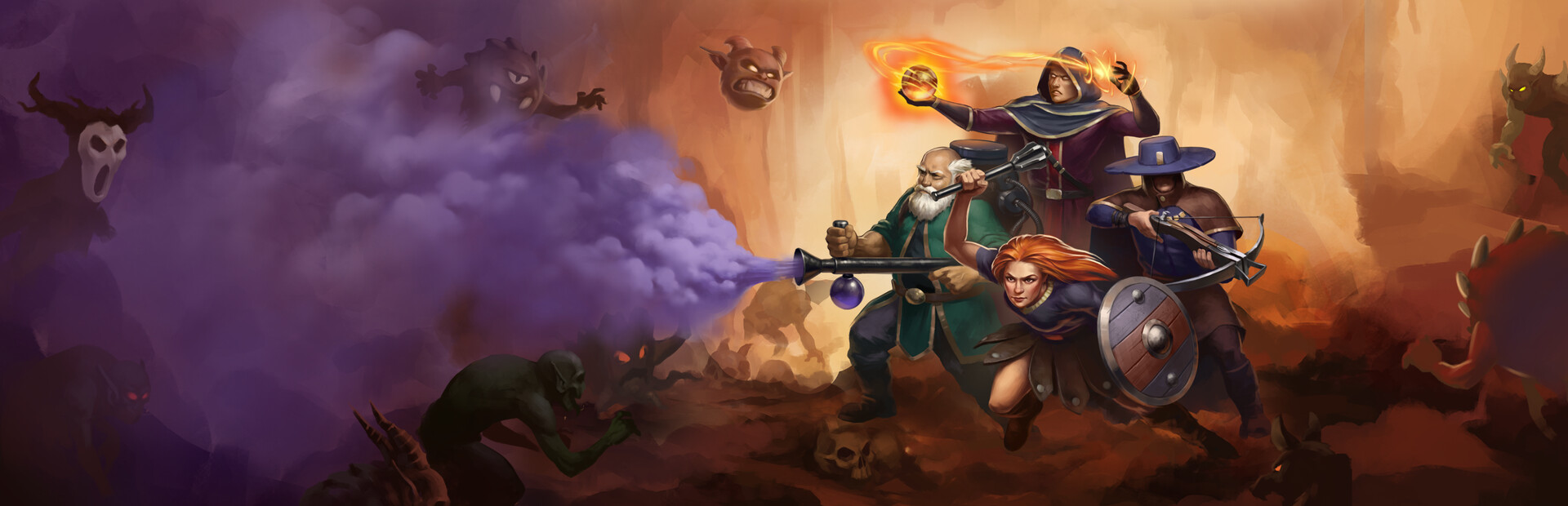
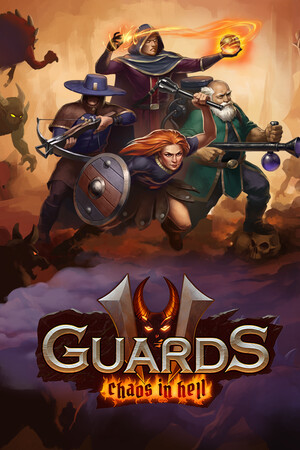
I went in expecting something to click through on autopilot, and Guards II: Chaos in Hell immediately made me feel foolish for that assumption. The entire combat system rests on a single, almost absurdly minimal action: each turn you swap two heroes on a 7x3 grid. Three fighters hold the front line, one rests in the back row and recovers health, and whoever gets pulled out of that rest slot fires their ultimate ability. That is the whole engine. What Battlecruiser Games pulls off is building genuine decision weight on top of that constraint, to the point where mid-battle you are running damage-type math in your head the same way you would weigh a production queue in a Paradox title. The depth hides behind the damage-type system. Each hero and enemy carries one of four attack types (Physical, Fire, Magic, or Deadly) alongside a corresponding resistance profile and a vulnerability. The Archer laying down a lane-wide arrow barrage means nothing if the mummies in the Egyptian Hell biome shrug off physical hits. Rotating in the Alchemist to toss a healing potion instead, banking the Warrior Princess for a Physical strike next turn, then cycling the Wizard through his Fire stance to hit the back row of yokai in the Japanese biome, these are the micro-decisions that stack. Each hero also carries two stances that can be toggled once per turn, effectively doubling the tactical surface area. The Wizard in magic stance lobs orbs; flip him to Fire and his ultimate drops three meteors, one per lane. That is a meaningful choice, not a cosmetic one. The upgrade system is where things get genuinely crunchy, and also where the one real design problem lives. Every hero has a per-character tech tree with more than 30 upgrades across multiple tiers. You spend points earned through progression, and here is the catch: you cannot reset those points. Community feedback has flagged this clearly, and it hurts. Several upgrades are stance-specific but the game does not label them as such, so players invest points in bonuses that silently do nothing in their preferred configuration. The wording on abilities needs a pass. It is the kind of oversight that costs a small game player trust, and it is fair to call it out. Demonic essence, a separate temporary resource earned from clearing levels, adds a layer of pre-battle stat boosting that partially papers over a bad upgrade spread, but it does not fix the underlying transparency problem. Content volume is not a concern. The campaign runs 80 levels across five thematically distinct biomes - Egyptian deserts full of mummies and scorpions, a frozen Scandinavian wasteland with dead warriors, a Slavic forest where Baba Yaga literally flies in on a mortar, Japanese yokai territory, and Classic Hell leading to the Devil's throne. Completing the campaign unlocks Hell Mode, which reruns all 80 levels with new enemies and elevated difficulty. The pixel art reads a little cramped on small monitors and boss encounters lack visual distinction compared to regular enemies, but the character sprites have idle animations that carry personality the art budget could not fully afford elsewhere. There is no mod ecosystem here and no multiplayer, which is the honest trade-off for the sub-5 dollar tier price point. For newcomers to lane-combat tactics, this is a legitimate entry point. The tutorial is short but functional, and the first two biomes give the player room to learn the swap rhythm before the difficulty ramps. The game scales into something genuinely punishing by the Slavic and Classic Hell zones, which is where the build-planning element stops being optional. Strategy players who have bounced off heavier turn-based titles because of UI complexity will find the single-action-per-turn structure cuts out noise without cutting out thought. Just go in knowing that your upgrade choices are permanent, read every tooltip twice, and treat the back-row rotation as the core tempo mechanic rather than a panic button.

Strategy & simulation
Tags
System Requirements
Minimum
- OS
- Microsoft Windows 7 and newer
- Memory
- 2 MB RAM
- DirectX
- Version 9.0
- Storage
- 1 GB available space
- Graphics
- Video Card DX9 256mb
- Processor
- Pentium or AMD 1.5mhz
Recommended
- OS
- Microsoft Windows 10
- Memory
- 8 MB RAM
- DirectX
- Version 9.0
- Storage
- 1 GB available space
- Graphics
- Video Card DX9 512mb
- Processor
- Pentium or AMD 2.1mhz
Keep exploring
Community Discussion
Be the first to comment on Guards II: Chaos in Hell.
Reviews & Ratings
No ratings available
Game Info
- Developer
- Battlecruiser Games
- Publisher
- HeroCraft PC
- Release Date
- Jun 19, 2025