Guardians of Hyelore
If your idea of a lunch-break strategy fix involves army composition decisions and a passive abilities tree, Guardians of Hyelore scratches that itch cheaply - but clock-watchers chasing deep late-game systems should temper expectations before clicking purchase.
GamerScout Verdict
Best for auto-battler fans who want a low-commitment composition puzzle, not a deep late-game strategy workout.
Compare Prices(0 stores)
Loading prices...
We may earn a commission when you buy games through links on this page — at no extra cost to you. It never affects our rankings or verdicts.
Price History
Screenshots & Media
About Guardians of Hyelore
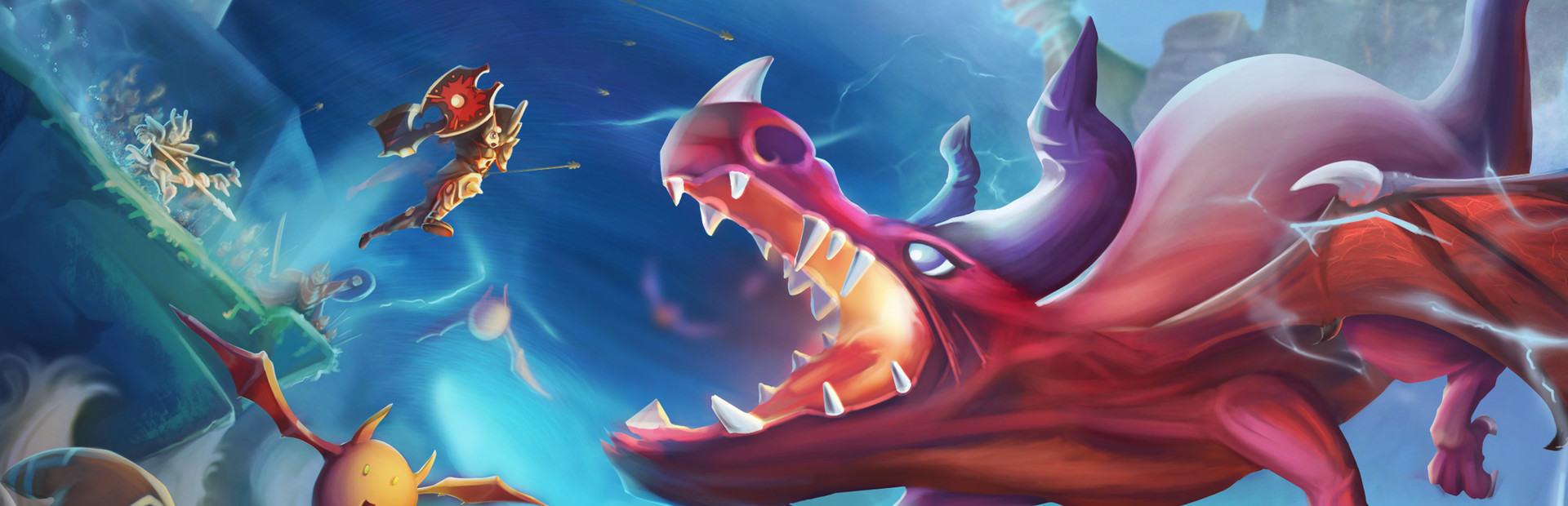
My honest take after sitting with this one: Guardians of Hyelore lands somewhere between a light auto-battler and a stripped-down tug-of-war RTS, and whether that hybrid serves you depends almost entirely on how much decision-making you need to feel engaged. The core loop has you commanding a 2D army that marches automatically across the battlefield toward the enemy tower, while you spend currency in real time to spawn additional units from a bottom-bar inventory. It is not a game that asks you to micromanage pathing or unit formations. What it does ask is that you think carefully about composition before and during each fight. The roster gives you four categories to build from: frontline warriors, healing clerics, ranged archers, and spellcasters. Eighteen individual units sit across those four buckets, each with distinct stats and abilities that scale as you invest upgrade points earned from missions and achievements. On top of that, Guardians, essentially powerful hero units on a recruitment cooldown, can be dropped into the scrum when the moment calls for it. Passive ability choices unlocked between missions add a light build-crafting layer: push warrior health, double cleric output, or reduce archer hiring costs. None of these choices are permanent in a punishing way, but they do accumulate into meaningful differences across the 35-campaign-mission arc. There is also an Arena mode once the campaign wraps up, a leaderboard-driven endless mode that keeps throwing boss encounters and escalating challenges at your army to see where your build breaks. The strategic depth here is real, but it is calibrated for short sessions rather than marathon runs. The auto-pilot movement means that once a wave is in motion, your active inputs narrow to spawning reinforcements, deploying your Guardian at the right moment, and using consumable items from the shop, things like fire flasks, lightning, and healing potions. That narrow input window is the game's principal trade-off. Players who need constant hands-on control will feel the friction after an hour or two. On the other hand, players who understand the auto-battler genre know that the strategy lives in the setup phase and the reactive mid-battle call to spend resources now versus saving for a heavier unit. In that light, Guardians of Hyelore handles the balance between passive and active involvement better than most of its budget-tier peers. Steam user sentiment sits at a mixed 55 percent across 36 reviews, which lines up with the split between players who accept the genre's passivity and those who do not. Visually, the game is cheerful and readable. Smoothly animated 2D sprites move across environments that vary across roughly seven campaign zones, from greens to volcanic terrain, with a medieval orchestral soundtrack keeping things from feeling too sparse. Nobody is going to hold this up as a visual showcase, and a couple of community posts flag post-launch launch bugs (one recurring crash on certain setups that required a clean reinstall to resolve). The per-level star rating system, up to five stars, gates progression if you consistently score low, which functions as a soft skill check and adds mild replayability to earlier stages. Multiplayer is absent entirely, which is the single most obvious missing feature given how well the tug-of-war format maps to head-to-head play. As a strategy specialist, I would not recommend this to someone looking for meaningful late-game systems depth, a rich mod ecosystem, or AI that adapts to your tactics. The enemy AI follows set patterns and the campaign does not escalate into the kind of systemic complexity that rewards 50-plus-hour mastery sessions. What it does offer is a competent, low-friction introduction to the unit-composition side of auto-battler thinking, four difficulty options including the Arena endgame, and a price tag that removes most of the risk from the purchase.

Strategy & simulation
Tags
System Requirements
Minimum
- OS
- Windows 7
- Memory
- 2 GB RAM
- Network
- Broadband Internet connection
- Storage
- 5 GB available space
- Graphics
- 1Gb Video Memory, capable of OpenGL 3.0+ support (2.1 with ARB extensions acceptable)
- Processor
- 2.0 Ghz
Recommended
- OS
- Windows 10
- Memory
- 2 GB RAM
- Network
- Broadband Internet connection
- Storage
- 5 GB available space
- Graphics
- 1Gb Video Memory, capable of OpenGL 3.0+ support (2.1 with ARB extensions acceptable)
- Processor
- 2.0 Ghz
Keep exploring
Community Discussion
Be the first to comment on Guardians of Hyelore.
Reviews & Ratings
No ratings available
Game Info
- Developer
- Megaglope Studios
- Publisher
- indie.io
- Release Date
- Sep 29, 2021