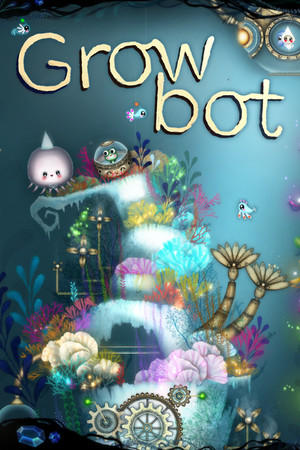
Growbot
Handcrafted by a solo illustrator and scored like a fever dream, Growbot is the rare three-hour point-and-click that earns every quiet minute it asks for.
GamerScout Verdict
Worth it for cozy point-and-click fans who can accept a two-hour runtime and a rushed finale in exchange for exceptional art and sound.
Compare Prices(5 stores)
Every store in this table quotes us in euros, so the EUR figure is the price the seller actually set, not our arithmetic — which is why EUR is also the currency we rank in. We only list an offer here when the store gives us its price in euros, so nothing in this table is a number we invented.
Pick USD, PLN, GBP, CAD or AUD in the header and we convert from EUR at the European Central Bank reference rate — converted amounts are prefixed with ~. Your bank or the store may apply a different rate at checkout. We never hide offers based on where you are: everyone sees this whole table.
We may earn a commission when you buy games through links on this page — at no extra cost to you. It never affects our rankings or verdicts.
Price History
Screenshots & Media
About Growbot
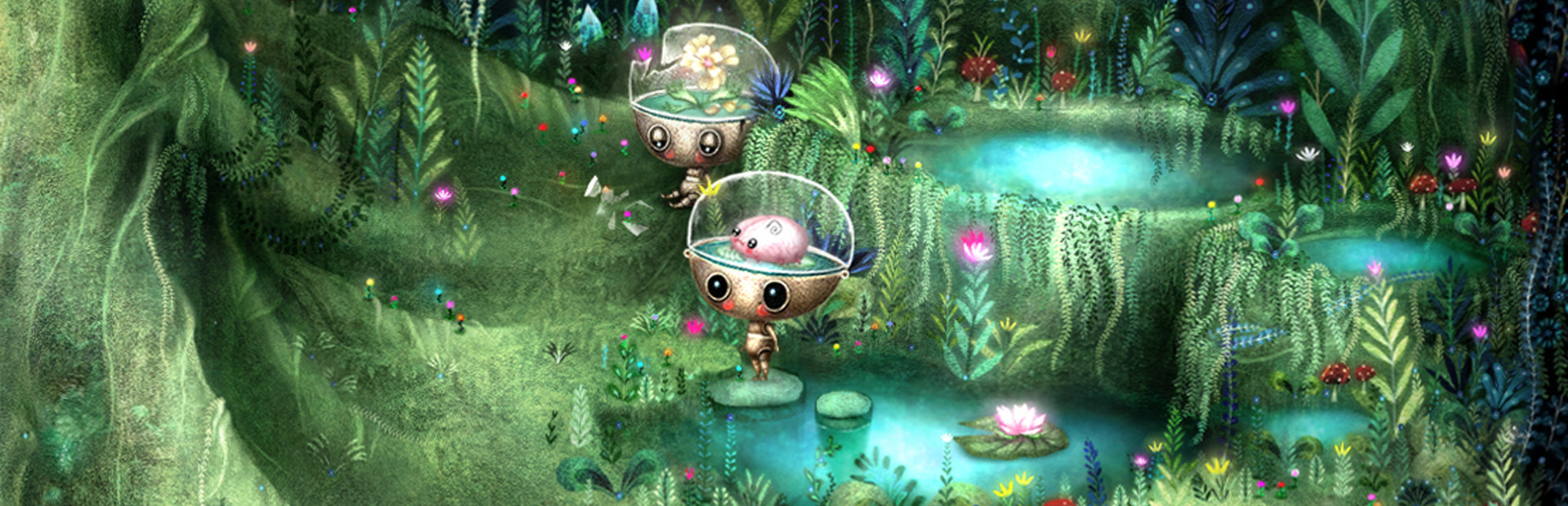
My first hour with Growbot felt like cracking open a children's book that someone had left on a spaceship, then discovering the pages were moving. Wabisabi Play is essentially one illustrator, Lisa Evans, who spent years building a biopunk space station out of hand-drawn flora and soft light, and the sincerity of that project radiates from every screen. You play as Nara, a dome-headed robot-in-training who wakes up on the Ventral Station to find her crewmates missing and alien crystals spreading through every corridor. The premise is deliberately gentle, and the game never pretends otherwise. Mechanically, Growbot sits comfortably in the Machinarium lineage: point-and-click navigation, an inventory split between consumable single-use items and permanent tools you carry for the whole run, and a built-in hint companion called Brainapilla who lives inside Nara's glass-dome head and jiggles on the sidebar when it has something useful to say. What sets the game apart from its inspirations is the musical shield system. Flowers throughout the station each carry a distinct note; you collect them, load them into a flower arranger, and replicate the melody emitted by whatever crystal barrier is blocking your path. It sounds niche, and it is, but it also weaves the soundtrack directly into the puzzle logic in a way that feels genuinely considered rather than bolted on. The broader puzzle variety surprises too: color-mixing rings, seahorse tube mazes, clockwork gear assembly, sliding panels. The pace at which new mechanics arrive borders on restless, and a few of them, particularly a lever-based labyrinth, leave you guessing rather than reasoning. That is a real complaint. The tutorials are blink-and-miss-it brief, and the hint system, generous as it is, cannot fully compensate when a puzzle's rules are unclear from the start. The story is the other soft point. Nara's world is rich and the lore is patiently built through readable station documents and dialogue, but the narrative climax arrives in a rush. The villain's identity and motives land in the final minutes as a compressed info dump, which is a shame given how much atmospheric groundwork the rest of the game lays. Characters like Starbelly, a fluffy holographic yeti with a galaxy inside its belly, are too charming to be wasted as set dressing, and the game occasionally treats them exactly that way. What saves all of this, and more than saves it, is the craft. Jessica Fichot's score is the best argument for wearing headphones: chimes, soft French vocals, a melancholy undertow that shifts to something almost urgent when the crystals close in. The hand-drawn art uses a granulated, muted palette that feels alive without trying to be busy. Rock Paper Shotgun called the artwork "utterly charming" and that is not an overstatement. The whole thing runs in two to three hours at a measured pace, which is the right length. Growbot knows when its story is told, and it stops. That discipline is rarer than it sounds. If you bounced off old-school point-and-clicks because of pixel-hunting and inventory cruelty, Growbot is worth revisiting the genre for. If you are a hardened adventure veteran hoping for deep narrative complexity, you will hit the ceiling fast. This is a game for people who want to sit inside something beautiful for an evening and solve problems that feel handmade rather than procedural. The short runtime and limited replayability are worth knowing going in, especially at full price. But for anyone drawn to the Amanita Games corner of the genre, or who simply wants something that does not demand anything harsh of them, Nara's little station is a genuinely warm place to spend a few hours.

Indie & narrative
Tags
System Requirements
Minimum
- OS
- Windows 7 SP1 and above
- Memory
- 4 GB RAM
- Storage
- 5 GB available space
- Graphics
- 1024MB VRAM, DirectX 11
- Processor
- 1.2 GHz
Keep exploring
Community Discussion
Be the first to comment on Growbot.
Reviews & Ratings
No ratings available
Game Info
- Developer
- Wabisabi Play
- Publisher
- Application Systems Heidelberg
- Release Date
- Oct 21, 2021