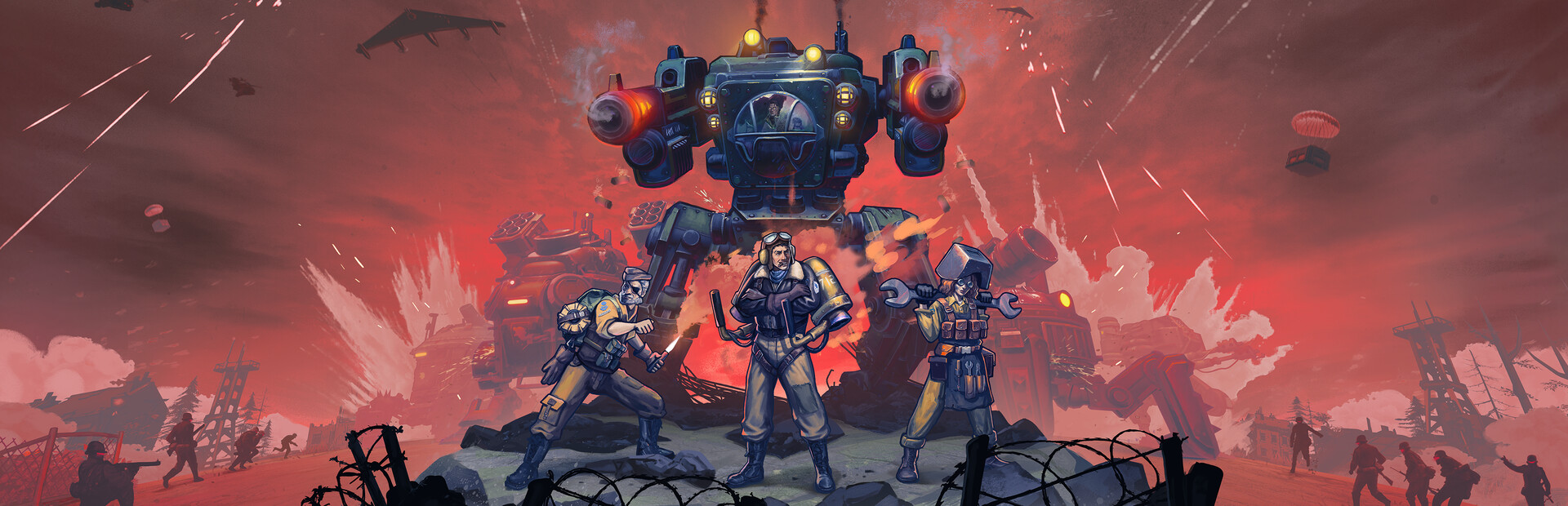
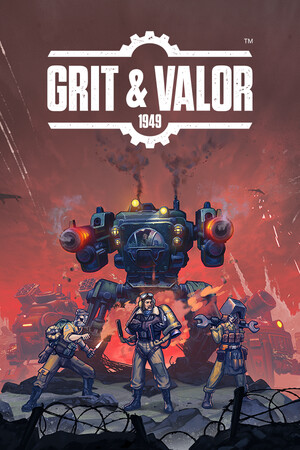
Grit and Valor - 1949
Real-time mech tactics meets roguelite grind across a dieselpunk alt-WW2 Europe - snappy 45-minute runs that reward positioning over raw firepower, if you can stomach the early unlock wall.
GamerScout Verdict
Worth it for tactics fans who can tolerate a stingy first few hours before the mech roster and pilot synergies fully open up.
Compare Prices(8 stores)
Every store in this table quotes us in euros, so the EUR figure is the price the seller actually set, not our arithmetic — which is why EUR is also the currency we rank in. We only list an offer here when the store gives us its price in euros, so nothing in this table is a number we invented.
Pick USD, PLN, GBP, CAD or AUD in the header and we convert from EUR at the European Central Bank reference rate — converted amounts are prefixed with ~. Your bank or the store may apply a different rate at checkout. We never hide offers based on where you are: everyone sees this whole table.
We may earn a commission when you buy games through links on this page — at no extra cost to you. It never affects our rankings or verdicts.
Price History
Screenshots & Media
About Grit and Valor - 1949
I have a colour-coded spreadsheet for most roguelites I play, and Grit and Valor - 1949 earned its own tab fast. The core ask is deceptively simple: command a squad of three mechs plus a fragile command vehicle across grid-based arenas, fend off waves of Axis attackers, and push toward a final EMP delivery deep in "New Germany." What keeps it interesting is how much is happening simultaneously inside those tiny diorama-like battlefields. Mechs cannot move and shoot at the same time, so every repositioning decision is a mini gamble. Take fire while walking, or plant in suboptimal cover and hold position? Those micro-calls, stacked across four waves per map, are where the real decision-making lives. The combat system runs on a clean three-way type triangle: Ballistics beat Fire, Fire beats Explosives, Explosives beat Ballistics. It sounds like Pokemon shorthand, but in practice it drives squad composition choices before you even hit the field. You pick three mechs from your unlocked roster of up to nine, pair them with pilots whose active abilities differ significantly - Archie Miller jumps and area-damages on landing, Emilia Rochefort self-repairs and can front-line tank, Jan Nowak lays mines in the path of advancing enemy columns. Getting pilot-to-mech pairing right is its own pre-run puzzle, and that pre-battle planning layer is where strategy fans will spend a disproportionate amount of enjoyable time. Mid-battle, crate drops offer three randomised upgrades per wave, ranging from flat stat boosts to range extensions and status-effect attachments. That variance is the game's strongest hook - you never quite know whether a run is heading toward a glass-cannon fire build or a slow armoured slug. There is, however, a real tension between the game's roguelite DNA and its progression gating. Early runs feel deliberately undersupplied: you start with two mechs when three is the intended squad size, and the unlocks needed to fill that slot require grinding through failures first. PC Gamer flagged this directly, noting you cannot win with a factory-fresh two-mech squad regardless of tactical skill. The permanent upgrade currencies - Valor for pilot training, Scrap for new mech modules - accumulate steadily but the first few hours feel narrow. For pure roguelite fans expecting a rich first-run experience, that friction will register as a flaw. For progression-minded players who enjoy watching previously impossible encounters crumble once the meta-upgrades stack up, it is a feature. I lean toward the latter reading, but the divide in player reception is real and visible in the community feedback. The other honest criticism is map repetition. Early regions recycle arenas noticeably before the later, more varied stages open up, and the enemy roster does not grow as quickly as the upgrade tree. Optional secondary objectives per map - protecting outposts, destroying V2 rockets, escorting cargo - add currency rewards and keep individual battles from feeling identical, but they do not fully offset the feeling of running the same opening corridors several times per session. Boss fights at each of the four regional climaxes are genuinely multi-phase and well-telegraphed, and they provide the dramatic punctuation the standard wave battles sometimes lack. The pulpy comic-book narrative, with villains like Helene von Sturm and the cackling Doctor Z standing in for real historical figures, keeps the tone light without overstaying its welcome. For the strategy-curious player who finds grand-strategy or deep XCOM-style campaigns too time-intensive right now, this is a compelling on-ramp. A full run clocks in under an hour. The pause-and-issue-orders mechanic means the real-time pressure never becomes a pure reflex test, and the weapon triangle plus pilot synergies provide enough decision surface to keep build-theorycrafters occupied across many hours. Just go in knowing the first three or four runs are the tutorial the game never explicitly labels as such.

Strategy & simulation
Tags
System Requirements
Minimum
- OS
- Windows 10 64-bit
- Memory
- 8 GB RAM
- DirectX
- Version 11
- Storage
- 15 GB available space
- Graphics
- Nvidia GTX 960 / Radeon R9 280
- Processor
- 2.4 GHz Quad Core
- VR Support
- OpenXR
Recommended
- OS
- Windows 10/11 64-bit
- Memory
- 16 GB RAM
- DirectX
- Version 11
- Storage
- 15 GB available space
- Graphics
- Nvidia RTX 2070 / AMD Radeon RX 5700 XT
- Processor
- 2.5+ GHz Quad Core
- VR Support
- OpenXR
Keep exploring
Community Discussion
Be the first to comment on Grit and Valor - 1949.
Reviews & Ratings
No ratings available
Game Info
- Developer
- Milky Tea Studios
- Publisher
- Megabit Publishing
- Release Date
- Mar 26, 2025