
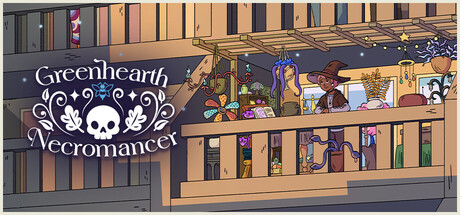
Greenhearth Necromancer
A semi-idle garden sim that uses necromancy to surgically remove failure anxiety from the genre, then fills the gap with genuine mechanical depth and unusually good writing.
GamerScout Verdict
Best for players who want a cozy idle sim with real mechanical bite and a grief narrative that earns its emotional weight.
Compare Prices(6 stores)
Every store in this table quotes us in euros, so the EUR figure is the price the seller actually set, not our arithmetic — which is why EUR is also the currency we rank in. We only list an offer here when the store gives us its price in euros, so nothing in this table is a number we invented.
Pick USD, PLN, GBP, CAD or AUD in the header and we convert from EUR at the European Central Bank reference rate — converted amounts are prefixed with ~. Your bank or the store may apply a different rate at checkout. We never hide offers based on where you are: everyone sees this whole table.
We may earn a commission when you buy games through links on this page — at no extra cost to you. It never affects our rankings or verdicts.
Price History
Screenshots & Media
About Greenhearth Necromancer
My first instinct with Greenhearth Necromancer was to clock it as a vibe app with a gimmick. A lo-fi playlist, some cute pixel plants, necromancy slapped on as flavour. That instinct was wrong by about thirty minutes in. What Silverstring Media has actually built is a garden management sim with two genuinely separate ecosystems running in parallel on the same balcony, and once that clicks, it stops feeling like a cozy game dressed up as something deeper and starts feeling like a cozy game that actually is. The mechanical hook is worth spelling out clearly, because most coverage buries it. Dead plants in this game are not failed living plants. They are a second resident category with independent care logic. A resurrected succulent needs necromantic energy infusions rather than water, produces a low-level pest-deterrent aura that benefits its living neighbours, and levels up through a completely separate progression path. Over 50 species each carry their own sunlight and humidity preferences, and those preferences shift when a plant crosses from living to undead. Balancing water and fertilizer on the living side while managing necromantic rituals, potion brewing, and spell cooldowns on the undead side is legitimately satisfying systems work. It is not Stardew Valley's crop economy, the scope is much smaller, one balcony, no town loop, but within that scope, the decision-making has real texture. The idle structure deserves honest treatment. The design goal is explicit: Silverstring wanted to reclaim idle gameplay from the compulsive-timer genre and build something that genuinely rewards stepping away. When you click off to another window, plants regenerate health faster and the event deck draws new narrative cards at an accelerated pace, so absence is mechanically productive. That works well in the mid and late game when plants are mature and tolerant. Early on, some players have reported needing to check back every few minutes to keep newly planted seedlings in acceptable ranges, which cuts against the background-companion pitch until you've built up your mulch supply and upgraded care stats. It is a real friction point and worth knowing going in. The focus mode and the four-station radio setup, ranging from lofi beats to drum and bass, do make the game a genuinely decent desk companion once past that early hump. Writer Lindsay Ishihiro, whose credits include I Was a Teenage Exocolonist, delivers the narrative through an event deck system: gold cards carry the main story beats, silver cards mix random neighbour encounters with memory sequences tied to Echo's grandmother. The grief theme is handled without melodrama. Echo is processing loss through the act of caring for what was left behind, and the writing earns that weight without overexplaining it. The neighbour cast has distinct voices, the protagonist's social anxiety shapes dialogue options in ways that feel specific rather than decorative, and the randomised card order means different playthroughs surface story beats in different sequences. For a sub-twelve-hour game, that is a meaningful amount of replay texture. There is also a necromancer archetype choice at the start, including a Blighted Necromancy path where cultivating pests actually fuels your spells, which adds a second pass incentive for players who want to see the full system. The studio has indicated the current patch is their last major update, with only critical bug fixes planned going forward. No DLC or expansions are confirmed. For a game of this scope and price, that is fine. It shipped clean, the cloud save issues flagged at launch were patched quickly, and the content is complete. The absence of a mod ecosystem or post-launch content roadmap is worth noting for players who want an evergreen title, but Greenhearth Necromancer is clearly designed as a finite, authored experience rather than a platform.

Strategy & simulation
Tags
System Requirements
Minimum
- OS
- Windows 10 version 21H1 (build 19043) or newer
- Memory
- 4 GB RAM
- Storage
- 1 GB available space
- Graphics
- DX10, DX11, DX12, or Vulkan capable GPUs
- Processor
- x86, x64 architecture with SSE2 instruction set support, ARM64
Keep exploring
Community Discussion
Be the first to comment on Greenhearth Necromancer.
Reviews & Ratings
No ratings available
Game Info
- Developer
- Silverstring Media Inc.
- Publisher
- indie.io
- Release Date
- May 11, 2026