Compare Glass Masquerade prices across trusted key stores and find the best deal. Developed by Onyx Lute. Published by Onyx Lute. Released on 11/18/2016. Available on PC. Genres: Casual, Indie.

Somewhere between a meditation app and a gallery visit, this stained-glass puzzler earns its 97% rating by doing one quiet thing uncommonly well.

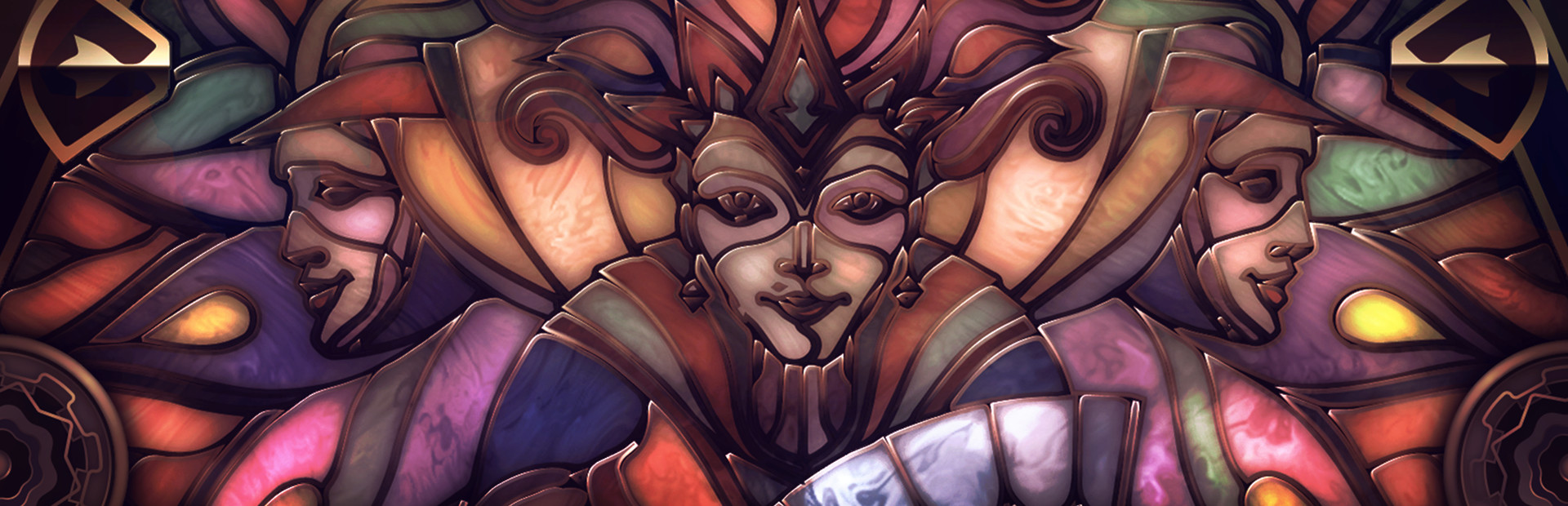
I keep a small mental shelf for games that know exactly what they are and refuse to be anything else. Glass Masquerade earned its spot on that shelf fast. Onyx Lute, a Russian indie team, built their debut around a single premise: reconstruct Art Deco stained-glass clock faces, one curved shard at a time, with no timer ticking, no punishment for wrong guesses, and no noise beyond a soundtrack composed by Nikita Sevalnev that sits somewhere between ambient and orchestral. That restraint is a deliberate design choice, and it pays off. The structure is a world tour dressed as a fictional International Times Exhibition. Twenty-five countries each contribute a clock face whose image, once assembled, depicts something culturally resonant to that nation: a Sherlock Holmes silhouette for Britain, a minotaur for Greece, a Yuri Gagarin motif for Russia, a dancing geisha for Japan. You work from a world map, unlocking neighboring countries as you go, and the difficulty climbs naturally as piece counts rise from around 30 shards on the easier puzzles to just over 60 on the harder ones. Easier puzzles take five to ten minutes; the harder ones can hold you for twenty to thirty. The whole base game runs three to four hours, which is honest. It does not stretch. The core mechanic is a spin on jigsaw logic. Two rotating rings around the blank clock face hold your silhouetted pieces, and you drag each one into its socket on the empty board. Here is the key wrinkle: unlike a traditional jigsaw, you often cannot read the final image from the piece shapes alone, because the stained-glass fragments are curved, faceted, and cut to aesthetic rather than purely logical boundaries. Colour matching and spatial reasoning share the work. Hint pieces are highlighted at the start of each puzzle so newcomers find their footing, but the option to disable them is right there in settings for anyone who wants a cleaner challenge. One small friction point the community flags: pieces arrive randomly rotated relative to the board, which can slow the drag-and-test loop in ways that feel fiddly rather than satisfying. It is a minor complaint against a largely frictionless experience, but worth knowing. What earns the overwhelmingly positive rating is not mechanical complexity. It is atmosphere and craft density. The clock hands on the puzzle board actually move as you play, snapping forward each time a piece locks in, a small theatrical touch that makes completion feel like something is waking up. The art direction, inspired by Tiffany glass and early 20th-century decorative movements, gives the game a visual identity with no real competitor on Steam. Background colours shift puzzle to puzzle to complement each artwork, keeping the palette readable without becoming sterile. The soundtrack rewards headphones. Sevalnev wrote music that does not demand attention but rewards it, the kind of ambient scoring that makes a forty-five-minute session feel like ten minutes. The honest limitations: the base game is short, the gameplay loop introduces no new mechanical wrinkle from puzzle one to puzzle twenty-five, and a small number of DLC packs became unavailable for purchase over time, frustrating completionists. If you need escalating systems or a reason to return beyond personal time records, this is not your game. But for anyone who wants something genuinely handcrafted, visually coherent, and designed to lower your heart rate rather than raise it, the original Glass Masquerade remains the cleanest entry point into what became a quiet and respected series. Kai, Scout Team

Glass Masquerade

Glass Masquerade

Nov 18, 2016Onyx Lute
GamerScout Says

Somewhere between a meditation app and a gallery visit, this stained-glass puzzler earns its 97% rating by doing one quiet thing uncommonly well.

PC
Best Price Available
€0.00
at N/A

GamerScout Verdict

A gentle, visually handcrafted puzzler best suited to players who want atmosphere and artistry over mechanical challenge.

Compare Prices(0 stores)

Loading prices...

We may earn a commission when you buy games through links on this page — at no extra cost to you. It never affects our rankings or verdicts.

Screenshots & Media

About Glass Masquerade

I keep a small mental shelf for games that know exactly what they are and refuse to be anything else. Glass Masquerade earned its spot on that shelf fast. Onyx Lute, a Russian indie team, built their debut around a single premise: reconstruct Art Deco stained-glass clock faces, one curved shard at a time, with no timer ticking, no punishment for wrong guesses, and no noise beyond a soundtrack composed by Nikita Sevalnev that sits somewhere between ambient and orchestral. That restraint is a deliberate design choice, and it pays off. The structure is a world tour dressed as a fictional International Times Exhibition. Twenty-five countries each contribute a clock face whose image, once assembled, depicts something culturally resonant to that nation: a Sherlock Holmes silhouette for Britain, a minotaur for Greece, a Yuri Gagarin motif for Russia, a dancing geisha for Japan. You work from a world map, unlocking neighboring countries as you go, and the difficulty climbs naturally as piece counts rise from around 30 shards on the easier puzzles to just over 60 on the harder ones. Easier puzzles take five to ten minutes; the harder ones can hold you for twenty to thirty. The whole base game runs three to four hours, which is honest. It does not stretch. The core mechanic is a spin on jigsaw logic. Two rotating rings around the blank clock face hold your silhouetted pieces, and you drag each one into its socket on the empty board. Here is the key wrinkle: unlike a traditional jigsaw, you often cannot read the final image from the piece shapes alone, because the stained-glass fragments are curved, faceted, and cut to aesthetic rather than purely logical boundaries. Colour matching and spatial reasoning share the work. Hint pieces are highlighted at the start of each puzzle so newcomers find their footing, but the option to disable them is right there in settings for anyone who wants a cleaner challenge. One small friction point the community flags: pieces arrive randomly rotated relative to the board, which can slow the drag-and-test loop in ways that feel fiddly rather than satisfying. It is a minor complaint against a largely frictionless experience, but worth knowing. What earns the overwhelmingly positive rating is not mechanical complexity. It is atmosphere and craft density. The clock hands on the puzzle board actually move as you play, snapping forward each time a piece locks in, a small theatrical touch that makes completion feel like something is waking up. The art direction, inspired by Tiffany glass and early 20th-century decorative movements, gives the game a visual identity with no real competitor on Steam. Background colours shift puzzle to puzzle to complement each artwork, keeping the palette readable without becoming sterile. The soundtrack rewards headphones. Sevalnev wrote music that does not demand attention but rewards it, the kind of ambient scoring that makes a forty-five-minute session feel like ten minutes. The honest limitations: the base game is short, the gameplay loop introduces no new mechanical wrinkle from puzzle one to puzzle twenty-five, and a small number of DLC packs became unavailable for purchase over time, frustrating completionists. If you need escalating systems or a reason to return beyond personal time records, this is not your game. But for anyone who wants something genuinely handcrafted, visually coherent, and designed to lower your heart rate rather than raise it, the original Glass Masquerade remains the cleanest entry point into what became a quiet and respected series.

Kai
Kai · Scout Team

Indie & narrative

Tags

auto-admittedArt DecoStained Glass AestheticNo Time LimitWorld Tour StructureAmbient SoundtrackShort CompletionMeditative PacingJigsaw Variant

System Requirements

Minimum

Processor
1.6GHz CPU
Memory
1 GB RAM
Graphics
Intel HD4000, AMD HD 6550D (or higier), 256Mb video memory
Storage
500 MB available space

Recommended

Processor
2.0GHz CPU or higher
Memory
2 GB RAM
Graphics
Nvidia GTX 650, AMD HD7850 (or higher), 1GB video memory
Storage
500 MB available space

Keep exploring

Community Discussion

Be the first to comment on Glass Masquerade.

Reviews & Ratings

Steam
97%(7,043)

Game Info

Developer
Onyx Lute
Publisher
Onyx Lute
Release Date
Nov 18, 2016

Features

Single-playerSteam AchievementsSteam Trading CardsSteam CloudFamily Sharing

Price Alert

Get notified when the price drops below your target!

Create Alert

No card? Pay another way

Top up your Steam Wallet or buy crypto with any card — instant delivery, no bank account needed.

More from Onyx Lute

Buy smarter: helpful guides

Looking for more? See games like Glass Masquerade →

Frequently asked questions about Glass Masquerade

How much does Glass Masquerade cost?

Glass Masquerade pricing changes often and varies by store, edition and region. The live price table on this page compares the cheapest in-stock offers from trusted key stores like Eneba and Kinguin, so you always see the current lowest price before you buy.

Where can I buy Glass Masquerade cheapest?

Compare Glass Masquerade prices across every verified store in the price table on this page. We list the cheapest in-stock key and store offers, updated regularly, so you always see the best current deal before you buy.

What platforms is Glass Masquerade available on?

Glass Masquerade is available on PC.

When was Glass Masquerade released?

Glass Masquerade was released on 18 November 2016.

Who developed Glass Masquerade?

Glass Masquerade was developed by Onyx Lute.