Girls Like Robots
A hand-crafted tile-placement puzzler where feelings are the rules and every seating chart hides a small broken heart, charming enough to carry you through 100-plus levels on vibes alone.
GamerScout Verdict
Best for puzzle fans who appreciate handcrafted absurdity and can forgive a mid-game lull in exchange for consistent mechanical surprises.
Compare Prices(4 stores)
Every store in this table quotes us in euros, so the EUR figure is the price the seller actually set, not our arithmetic — which is why EUR is also the currency we rank in. We only list an offer here when the store gives us its price in euros, so nothing in this table is a number we invented.
Pick USD, PLN, GBP, CAD or AUD in the header and we convert from EUR at the European Central Bank reference rate — converted amounts are prefixed with ~. Your bank or the store may apply a different rate at checkout. We never hide offers based on where you are: everyone sees this whole table.
We may earn a commission when you buy games through links on this page — at no extra cost to you. It never affects our rankings or verdicts.
Price History
Screenshots & Media
About Girls Like Robots
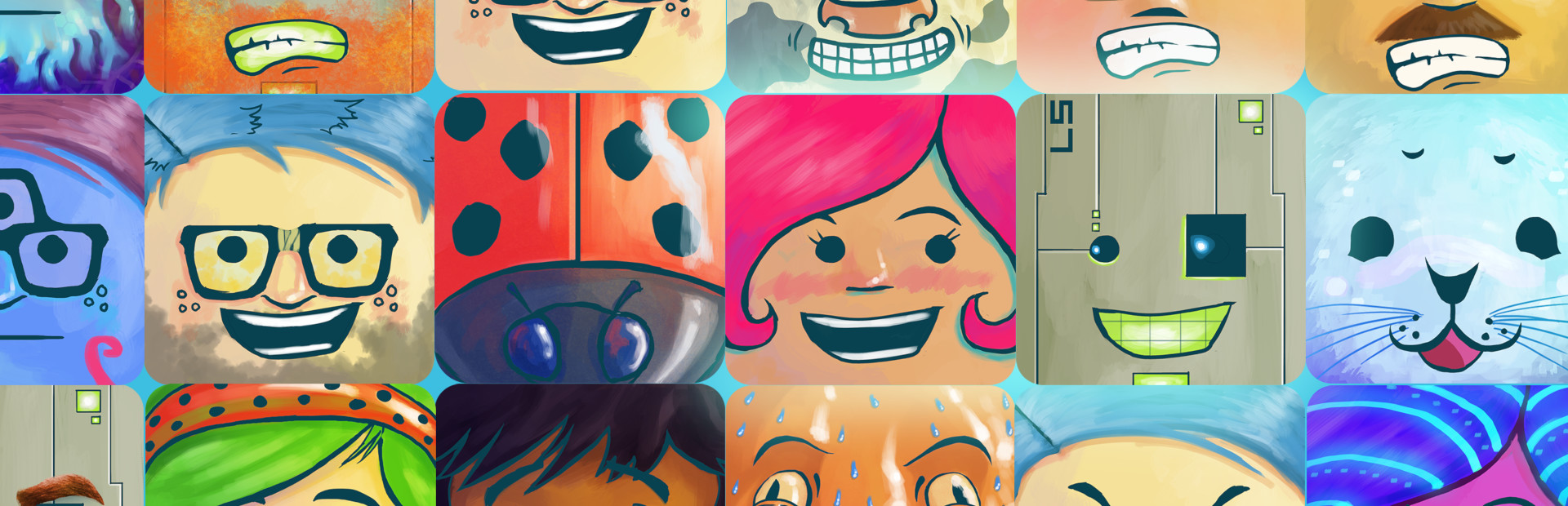
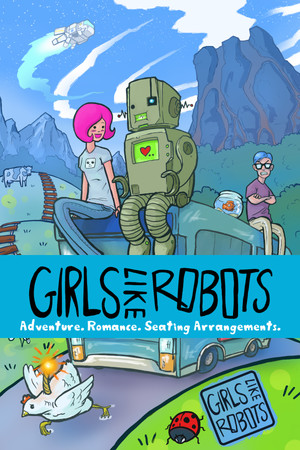
I went in expecting a cute throwaway and came out the other side having genuinely stewed over a grid populated by square-headed robots, lovesick nerds, and a girl named June who is absolutely passionate about bugs. That is the kind of specific, handcrafted absurdity that Popcannibal built this whole thing on, and it works more often than it has any right to. The core loop is a spatial logic puzzle dressed as a high-school seating chart. You place character tiles on a grid and score points based on adjacency: girls are happy next to robots, robots are happy next to girls but get anxious when surrounded by too many of them, nerds gravitate toward corners and quietly enjoy robots while most characters around them are decidedly indifferent. Pie shows up. Cows show up. Aliens eventually show up. The game spreads across three acts and clears over 100 levels, and the thing it does best is introduce a fresh twist just before the existing rules start to feel like wallpaper. One chapter asks you to maximize misery instead of joy so that stressed-out cows will release their milk. Another drops a quasi-Tetris tile-falling mode on you. A late section introduces a laser that blasts your placed tiles one by one, forcing you to think about column integrity rather than pure adjacency math. The rule-set keeps breathing, which is the game's main defense against its own repetition. The medal system threads a quiet strand of replayability through everything. Bronze clears the level and lets you move on; silver and gold demand increasingly optimal arrangements. Those medals feed a "Bag of Happy" counter that unlocks bonus challenges and special modes at certain thresholds. Importantly, gold does not mean a mathematically perfect solution exists and that you must find it. The designer left room for human play, which feels like a small act of respect. Where the game earns its more mixed reviews is the middle stretch, where the standard seating-chart levels pile up before the next curveball arrives. Some players bounce off that mid-game plateau hard. The undo button rather than free tile retrieval is a genuine friction point that has frustrated people since launch, and a handful of later levels only reveal their structural logic after you have already committed to a wrong path. Those are real complaints, not nitpicks. The old-time string band soundtrack is either going to feel like a warm front porch or a mildly grating affectation depending on your tolerance for that register. I fell on the warm-porch side, and I think the music is doing serious emotional lifting to keep the whole surreal narrative from feeling weightless. At roughly five hours for the main run, it knows when to end. That is rarer and more valuable than most puzzle games admit. If you have patience for a slow middle act and any fondness for hand-drawn character work with a genuinely odd sense of humour, there is something genuinely lovely here that bigger games on your wishlist will not give you.

Indie & narrative
Tags
System Requirements
Minimum
- OS
- Windows 7, 8, 10
- Memory
- 1 GB RAM
- Storage
- 350 MB available space
- Graphics
- Graphics Card made within the last 4 years (Pixel Shader 3.0, Vertex Shader 3.0)
- Processor
- 1.5 Ghz
Recommended
Requires a 64-bit processor and operating system
Keep exploring
Community Discussion
Be the first to comment on Girls Like Robots.
Reviews & Ratings
No ratings available
Game Info
- Developer
- Popcannibal
- Publisher
- Popcannibal
- Release Date
- Feb 14, 2014