GIGASWORD
A solo-dev metroidvania that turns its one big idea, a sword too heavy to carry everywhere, into a surprisingly elegant puzzle engine. Worth the slow opening.
GamerScout Verdict
Best for patient metroidvania fans who want clever spatial puzzles and a dark story from a solo dev who gave it everything.
Compare Prices(8 stores)
Every store in this table quotes us in euros, so the EUR figure is the price the seller actually set, not our arithmetic — which is why EUR is also the currency we rank in. We only list an offer here when the store gives us its price in euros, so nothing in this table is a number we invented.
Pick USD, PLN, GBP, CAD or AUD in the header and we convert from EUR at the European Central Bank reference rate — converted amounts are prefixed with ~. Your bank or the store may apply a different rate at checkout. We never hide offers based on where you are: everyone sees this whole table.
We may earn a commission when you buy games through links on this page — at no extra cost to you. It never affects our rankings or verdicts.
Price History
Screenshots & Media
About GIGASWORD
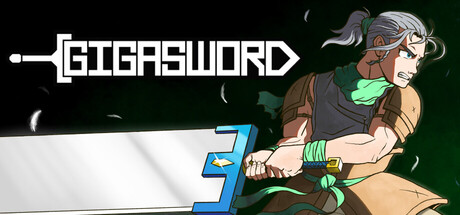
My first instinct, seeing the title, was that this would be another gimmick game that burns through its central idea in an hour and coasts on charm. I was wrong. GIGASWORD, the product of six-plus years of work by one developer named Jack Breen, builds an entire action-puzzle metroidvania around a single mechanical truth: the sword is your burden as much as your weapon, and the whole game flows from that tension. The core loop asks you to weigh up, constantly, whether to carry the blade or leave it behind. Holding it slows you down, shortens your jumps, and turns ladders into minor ordeals. Plant it in the ground and Ezra becomes nimble again, able to reach ledges and clear gaps that were impossible a moment before. But now he is defenceless, and he needs the sword back on the other side of the room. The level design in the Nestrium tower builds on this relentlessly: pressure plates that require the sword's weight to stay depressed while you find a route to the exit, moving platforms you can ride by stabbing the blade into them, hidden chambers behind breakable walls that reward players who think spatially. The puzzle density in the back half reminded me of the best Zelda dungeons, where the same tool keeps revealing new uses you did not see coming. Upgrade ore collected from enemies and treasure chests lets you spend at save shrines to grow the sword's abilities, unlocking things like a ground-sparking Crawling Spark attack, or the ability to shoot lightning, giving combat legs beyond the basic swing. Boss encounters, which feel handcrafted and distinct rather than recycled, are where the combat side finally earns its keep. The story surprised me too. Ezra is a grief-stricken orphan from Thoenhart, a city rotting under famine and disease, and the game does not spare him. A mentor dies early, the politics of the world are bleak, and the narrative leans into ideas of how good intentions can still produce catastrophe. The pixel art carries all of this with a quiet confidence, environments shifting palette between zones, ancient temples giving way to sewers and volcanic corridors like the fiery Volmire or the hidden Astral Realm, each readable at a glance. The NES-era soundtrack has been called out by multiple outlets as genuinely standout work, and they are right. It does that rare thing where the music makes an empty corridor feel inhabited. The criticisms that surface in the community are fair. The opening hours front-load cutscenes heavily before handing you the sword, and some players found that patience-testing. Standard enemy encounters can feel underpowered compared to the puzzle rooms, the map is functional but not inspired, and the game ships with no accessibility options to speak of. Platforming precision is sometimes higher than the slightly floaty feel of the controls can reliably deliver. These are the fingerprints of a solo debut, not fatal flaws, but worth knowing before you sit down. If you have a soft spot for single-developer passion projects that know exactly what they are, GIGASWORD earns your time. The slow start repays patience. The puzzles are genuinely clever. And the fact that one person wrote the code, drew every pixel, scored the soundtrack, and shipped the whole thing is something I find quietly astonishing.

Indie & narrative
Tags
System Requirements
Minimum
- OS
- Requires a 64-bit processor and operating system
- Memory
- 4 GB RAM
- Storage
- 250 MB available space
- Graphics
- NVIDIA GeForce GT 520, 1 GB or AMD Radeon HD 7470, 1 GB or Intel HD Graphics 4400
- Processor
- Intel Core 2 Duo E8400 or AMD
Recommended
- OS
- Requires a 64-bit processor and operating system
- Memory
- 4 GB RAM
- Storage
- 250 MB available space
- Graphics
- NVIDIA GeForce GT 710, 1 GB or AMD Radeon R7 240, 1 GB or Intel HD Graphics 530
- Processor
- Intel Core i3-550 or AMD FX-4100
Keep exploring
Community Discussion
Be the first to comment on GIGASWORD.
Reviews & Ratings
No ratings available
Game Info
- Developer
- Studio Hybrid
- Publisher
- Akupara Games
- Release Date
- Nov 13, 2025