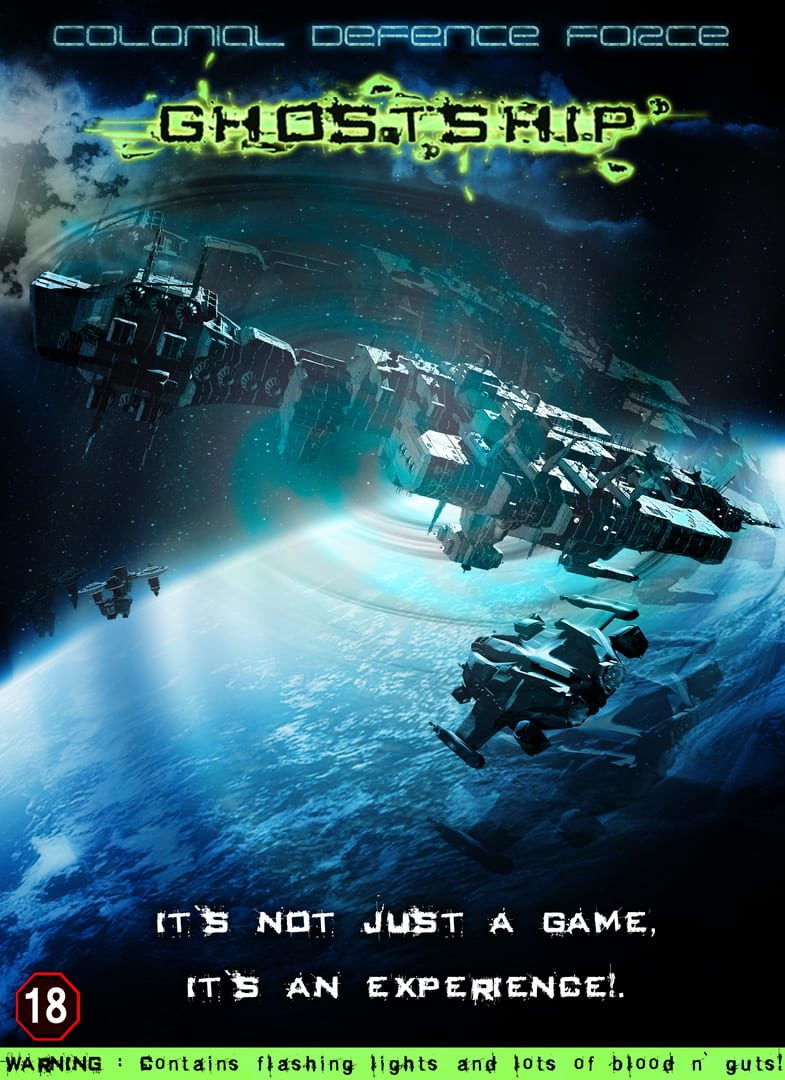
Ghostship Aftermath
Mostly negative reviews, a permadeath space horror with a genuinely oppressive atmosphere and genuinely broken bones - approach as a curiosity, not a polished experience.
GamerScout Verdict
Buy only if you can stomach broken AI and control jank in exchange for a genuinely oppressive one-person-studio space horror atmosphere.
Compare Prices(5 stores)
Every store in this table quotes us in euros, so the EUR figure is the price the seller actually set, not our arithmetic — which is why EUR is also the currency we rank in. We only list an offer here when the store gives us its price in euros, so nothing in this table is a number we invented.
Pick USD, PLN, GBP, CAD or AUD in the header and we convert from EUR at the European Central Bank reference rate — converted amounts are prefixed with ~. Your bank or the store may apply a different rate at checkout. We never hide offers based on where you are: everyone sees this whole table.
We may earn a commission when you buy games through links on this page — at no extra cost to you. It never affects our rankings or verdicts.
Price History
Screenshots & Media
About Ghostship Aftermath
I want to be honest with you about why I kept coming back to Ghostship Aftermath even after it frustrated me to the point of audibly complaining at my monitor. The atmosphere on the CDF Goliath - that dim, corridor-after-corridor military spacecraft draped in near-total darkness - does something right that far more expensive horror games fumble. The acoustics carry real weight. The silence between alien encounters feels earned rather than empty. For a one-person studio out of the UK, the spatial mood is quietly remarkable, and I understand completely why a small clutch of reviewers came away genuinely unsettled. The survival loop, on paper, is clever and tense. You board the Goliath as Dr. Jake Abbots, a Colonial Science Division specialist, with a radio lifeline to your partner Dr. Riggs who feeds you objectives from a safe distance. Your spacesuit holds roughly 90-98 minutes of oxygen, and sprinting burns through it four times faster - so every decision to run from an alien rather than face it costs you breathable air. Your helmet flashlight runs on a single non-replaceable, non-rechargeable battery with about an hour of juice total. No map marker, no shimmering loot highlights, no HUD arrows pointing the way. You find keycards, passcodes, consoles, and weapons by actually exploring. When you die, your save is deleted. Permadeath and randomised events mean each run reshuffles enemy spawns and story branches, so the CDF Goliath theoretically never plays the same way twice. There is also an Instant Action mode that strips permadeath and hands you weapons at the start, which is a sensible pressure valve for players who want the ambience without the roguelike punishment. Then reality sets in. The alien AI phases through geometry, gets snagged on the same environmental edges that catch the player, and some enemy types move faster than you while only being killable with weapons that the randomised spawns may not have placed anywhere reachable - which makes certain deaths genuinely unavoidable rather than the result of player error. The gun reticle has an auto-levelling quirk that makes aiming at low-to-the-ground creatures nearly impossible. The crouch mechanic has a long-standing habit of slowly pushing the player into the ceiling. Key bindings cannot be rebound. The view occasionally locks at wrong angles. These are not launch-week bugs - community posts across multiple years still flag them. The average playtime data tells its own story: most sessions clock out around 75 minutes, which covers roughly one permadeath run and not much else. What makes this genuinely hard to dismiss rather than easy to bury is the game's origin. Ghostship Aftermath was built largely as a VR title by a single self-taught programmer, originally designed for early Oculus Rift hardware. The spacesuit-helmet HUD - pop-up windows, a free-floating crosshair, the wraparound visor framing - makes total sense as a VR interface and feels awkward with a mouse precisely because it was never meant to be a mouse-and-keyboard experience first. Played on a flat screen, you are inheriting design compromises from a different medium. The soul of the idea, a lonely scientist piecing together a horror aboard a dead warship with only radio chatter for company, is genuinely worth something. The execution, after more than a decade and a mostly negative community reception, has not been rescued by patches.

Indie & narrative
Tags
System Requirements
Minimum
- OS
- Windows 7
- Memory
- 4 GB RAM
- DirectX
- Version 9.0c
- Storage
- 18 GB available space
- Graphics
- 1gb Shader 3 compatible graphics card
- Processor
- 2.3ghz
Recommended
- OS
- Windows 7/Windows 8
- Memory
- 6 GB RAM
- DirectX
- Version 9.0
- Storage
- 18 GB available space
- Graphics
- 2gb Shader 3 compatible graphics card
- Processor
- 3.3Ghz
Keep exploring
Community Discussion
Be the first to comment on Ghostship Aftermath.
Reviews & Ratings
No ratings available
Game Info
- Developer
- MadAboutGamesStudios
- Publisher
- MadAboutGamesStudios
- Release Date
- Jul 18, 2014