
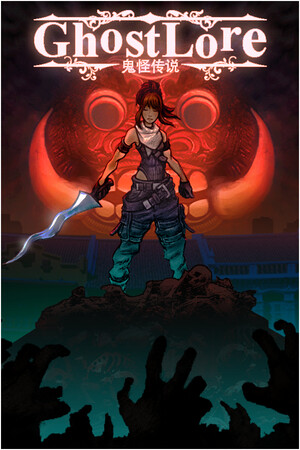
Ghostlore
A two-person ARPG that pulls Southeast Asian folklore out of the shadows and drops it into a Diablo-shaped framework. The craft here is quiet, precise, and worth your time.
GamerScout Verdict
Best for ARPG fans who want real build variety and a folklore setting that no other game in the genre is using.
Compare Prices(5 stores)
Every store in this table quotes us in euros, so the EUR figure is the price the seller actually set, not our arithmetic — which is why EUR is also the currency we rank in. We only list an offer here when the store gives us its price in euros, so nothing in this table is a number we invented.
Pick USD, PLN, GBP, CAD or AUD in the header and we convert from EUR at the European Central Bank reference rate — converted amounts are prefixed with ~. Your bank or the store may apply a different rate at checkout. We never hide offers based on where you are: everyone sees this whole table.
We may earn a commission when you buy games through links on this page — at no extra cost to you. It never affects our rankings or verdicts.
Price History
Screenshots & Media
About Ghostlore
My instinct with small ARPGs is always caution, because the genre is brutal to execute on a budget and the graveyard of failed Diablo clones is enormous. Ghostlore surprised me. Built by two developers from Singapore, it pulls from a vein of mythology that almost no games have touched: the Mogui, Jiang-Shi, Babi Ngepet, Penanggal, and dozens more creatures drawn from Malaysian, Indonesian, and Chinese folklore. The hub world of Seaport carries quiet echoes of 1990s Singapore, and the way that cultural specificity bleeds into the pixel art gives the whole thing a texture you won't find in any Western ARPG. That sense of place is the first reason to pay attention. The second reason is the character system, which is genuinely clever in ways that only reveal themselves gradually. You pick one of six classes at the start: the Adept (martial artist), Exorcist (ESP-driven spirit caster), Feral (blood mage who can transform into a Weretiger), Geomancer (elemental spells across fire, ice, earth, and lightning), Hashashin (speed and shadow), or Sentinel (animal companion summons). As you level up, you unlock two more class slots, mixing and matching abilities from any three of the six. Skills placed adjacent on a 10x10 grid can form combo skills that inherit properties from both base skills, and trigger modifiers can automate abilities under specific conditions. It sounds fiddly on paper, but in practice it opens a real build space that rewards thinking rather than just clicking faster. Weapons carry their own regional identity too: kris blades, parangs, kukri knives, enchanted talismans, spears. The armory alone does quiet cultural work. The Glyph system is the other distinct pillar. Instead of a conventional skill tree, you inscribe magical symbols onto a body grid, with compound glyphs occupying up to five spaces and granting bonuses to glyphs nested inside them. Community feedback is split here: min-maxers find it genuinely satisfying, while some players report that tracking thirty-plus glyph types simultaneously becomes a management burden rather than a puzzle. That tension is real. The early game also skews soft, with the challenge only tightening noticeably in later islands, and the absence of difficulty options means newer ARPG players may coast through the first few hours in a pleasant but low-stakes way. The story, told through text boxes, lands as functional rather than evocative, and the soundtrack's limited loop count has attracted some valid criticism. These are honest rough edges on an otherwise confident game. What keeps Ghostlore in good standing is its generosity in the right places. Equipment carries no level locks, meaning a weapon found on one character can be handed straight to a fresh one. The main story can be seen in around five hours, but a post-credits Hell Gate Endless Mode introduces permadeath stakes that finally match the depth of the build system. Local co-op for up to four players is here, alongside a Shrine of Balance asynchronous feature that lets you send equipment to other players' games in exchange for loot returns. Steam Workshop support means the procedurally generated world already has a modding layer around it. For a release built by two people, the breadth of what actually works is quietly extraordinary. If you came up on Titan Quest or the earlier Grim Dawn, the multi-class hybridization will feel immediately legible. If Southeast Asian folklore is new territory, Ghostlore is a genuinely considerate introduction, not an exploitation of it. The setting earns its mood, and the handcrafted pixel sprites of creatures like the Penanggal or the Gui-Kia show the kind of per-enemy authorship that large studios rarely bother with anymore. It is not a game that announces itself loudly. It opens quietly and gets better the longer you sit with it.

Indie & narrative
Tags
System Requirements
Minimum
- OS
- Windows 7 or later
- Memory
- 4 GB RAM
- Storage
- 500 MB available space
- Processor
- Intel Core i3
Recommended
- Storage
- 1 GB available space
- Processor
- Intel Core i5
Keep exploring
Community Discussion
Be the first to comment on Ghostlore.
Reviews & Ratings
No ratings available
Game Info
- Developer
- Andrew Teo
- Publisher
- AT-AT Games
- Release Date
- May 17, 2023