GetsuFumaDen: Undying Moon Deluxe Edition
Gorgeous ukiyo-e visuals and samurai combat that feels genuinely crisp, undermined by one of the stingiest progression systems the roguelite genre has produced. Worth it if patience is your superpower.
GamerScout Verdict
Stunning to look at and feel, but only worth the grind if you can make peace with one of the genre's slowest progression systems.
Compare Prices(4 stores)
Every store in this table quotes us in euros, so the EUR figure is the price the seller actually set, not our arithmetic — which is why EUR is also the currency we rank in. We only list an offer here when the store gives us its price in euros, so nothing in this table is a number we invented.
Pick USD, PLN, GBP, CAD or AUD in the header and we convert from EUR at the European Central Bank reference rate — converted amounts are prefixed with ~. Your bank or the store may apply a different rate at checkout. We never hide offers based on where you are: everyone sees this whole table.
We may earn a commission when you buy games through links on this page — at no extra cost to you. It never affects our rankings or verdicts.
Price History
Screenshots & Media
About GetsuFumaDen: Undying Moon Deluxe Edition
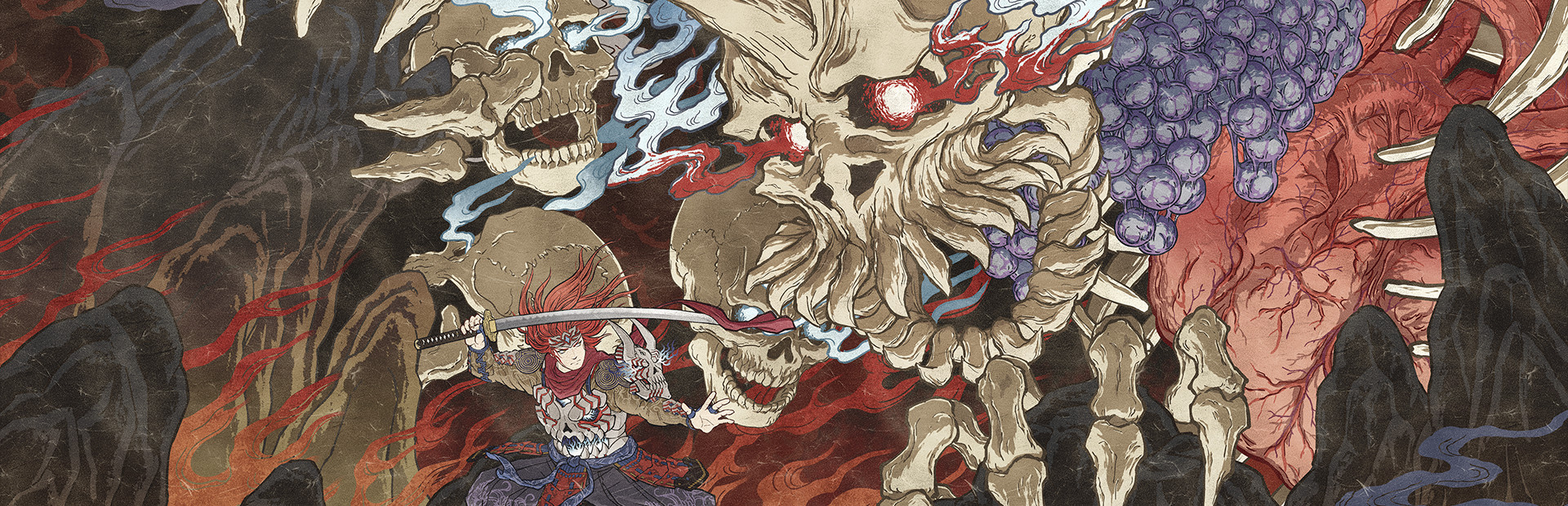
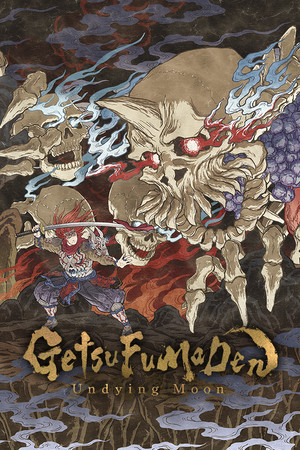
My first impression of GetsuFumaDen: Undying Moon was a quiet, involuntary exhale. The art stopped me. Konami and GuruGuru built something that looks like a living woodblock print: hand-painted backdrops layered with a parallax that gives the hellish underworld real physical depth, enemy silhouettes drawn straight from Japanese folklore, and a cel-shaded protagonist whose animations flow with a kind of fluid weight you rarely see in 2D action. Multi-headed hydras, colossal fire centipedes, reanimated demon lords, every boss encounter opens with a brief cinematic that puts that creature design front and center, and the bosses themselves use verticality and multi-tiered arenas in ways that make the fights feel genuinely theatrical. The soundtrack compounds the mood: eerie vocal passages between stages, a boss battle score that genuinely ratchets tension, and, reportedly, a reggae shop theme that is either a stroke of genius or a fever dream, depending on your disposition. On atmosphere alone, this game is doing something special. Under that painterly surface is a side-scrolling roguelite that wears its Dead Cells inspiration without much disguise. You start each run from a hub that displays every weapon you have unlocked, pick a portal into procedurally arranged hellscape stages, kill demons, collect resources, fight a boss, then decide whether to press deeper or retreat to bank your loot. The combat loop is satisfying in the hands. You carry two melee and two ranged weapons simultaneously, katanas for speed, oni clubs for raw damage, battle umbrellas and spears for mid-range control, bows and rifles for range tradeoffs. Each weapon type has its own attack animations and a special ability tied to a cooldown, and swapping between them mid-run to suit the enemy pattern in front of you is where the game actually sings. Boss weak points exist, and learning the rhythm of a fight across multiple attempts is legitimately rewarding. Here is where the warmth cools. The progression economy is the thing that has divided players most sharply, and the criticism is fair. Two separate currencies, green and yellow Tao symbols, govern permanent passive upgrades, and both are rare enough that meaningful meta-progress accumulates at a crawl. Weapon enhancement is handled per-weapon rather than per-weapon-type, demanding specific random material drops that compound the grind further. Level paths are often locked behind omamori keys that drop randomly from bosses, meaning you can put in an hour-long run and emerge with almost nothing banked. A second playable character, Getsu Renge, is faster but weaker, and requires a completely separate upgrade track, a design choice that essentially doubles the investment needed to feel good with either hero. Critics across the board landed in roughly the same place: the moment-to-moment combat is genuinely fun; the systems scaffolding it work against that fun rather than amplifying it. The Deluxe Edition includes a digital artbook, a mini soundtrack, and a full emulated port of the original 1987 Famicom GetsuFumaDen, previously Japan-exclusive, which is a real curio for anyone interested in where this lineage came from. The main game completed Early Access in February 2022 following several content updates, and the finished product sits at 77% positive on Steam. That "Mostly Positive" label feels accurate: this is not a broken game, and the players it clicks with tend to feel it strongly. But those who bounced off the sluggish unlock cadence tend to bounce hard. The difficulty scaling, at least, is thoughtfully done, multiple difficulty hands on the hub's statue give patient players something to climb toward if the base game feels too accommodating. Who is this for, then? Honestly: players who find the visual and sonic world so compelling that they are willing to treat the grind as a form of meditation. Players who like to settle into a single weapon archetype, a katana build, a rifle sub-weapon pairing, and chisel away at it run by run. Players who do not need Dead Cells-level unlock velocity to stay engaged. If you want a tight, fast-escalating roguelite with snappy meta-progression, this will frustrate you. If you want to inhabit a hell rendered like a museum piece, with combat that clicks into place once you stop fighting the pacing, there is something genuinely worth sitting with here.

Indie & narrative
Tags
System Requirements
Minimum
- OS
- Windows 10 (64-bit OS required)
- Processor
- Intel Core i5-4440 AMD Athlon 300GE
- Memory
- 8 GB RAM
- Graphics
- NVIDIA GeForce GTX 1050 Radeon RX 560
- DirectX
- Version 11 Ne…
Recommended
- OS
- Windows 10 (64-bit OS required)
- Processor
- Intel Core i5-6400 AMD FX-8300/AMD Ryzen 3 2300U
- Memory
- 8 GB RAM
- Graphics
- NVIDIA GeForce GTX 1660 Radeon…
Keep exploring
Community Discussion
Be the first to comment on GetsuFumaDen: Undying Moon Deluxe Edition.
Reviews & Ratings
Game Info
- Developer
- KONAMI, GuruGuru
- Publisher
- KONAMI
- Release Date
- Feb 16, 2022