Gerda: A Flame in Winter
Five days, a husband in Gestapo custody, and a watercolor Danish village where every handshake costs you something. This one lingers after the credits.
GamerScout Verdict
Best for narrative fans who want a quiet, morally complicated WW2 story and can accept that there is no clean way to win.
Compare Prices(5 stores)
Every store in this table quotes us in euros, so the EUR figure is the price the seller actually set, not our arithmetic — which is why EUR is also the currency we rank in. We only list an offer here when the store gives us its price in euros, so nothing in this table is a number we invented.
Pick USD, PLN, GBP, CAD or AUD in the header and we convert from EUR at the European Central Bank reference rate — converted amounts are prefixed with ~. Your bank or the store may apply a different rate at checkout. We never hide offers based on where you are: everyone sees this whole table.
We may earn a commission when you buy games through links on this page — at no extra cost to you. It never affects our rankings or verdicts.
Price History
Screenshots & Media
About Gerda: A Flame in Winter
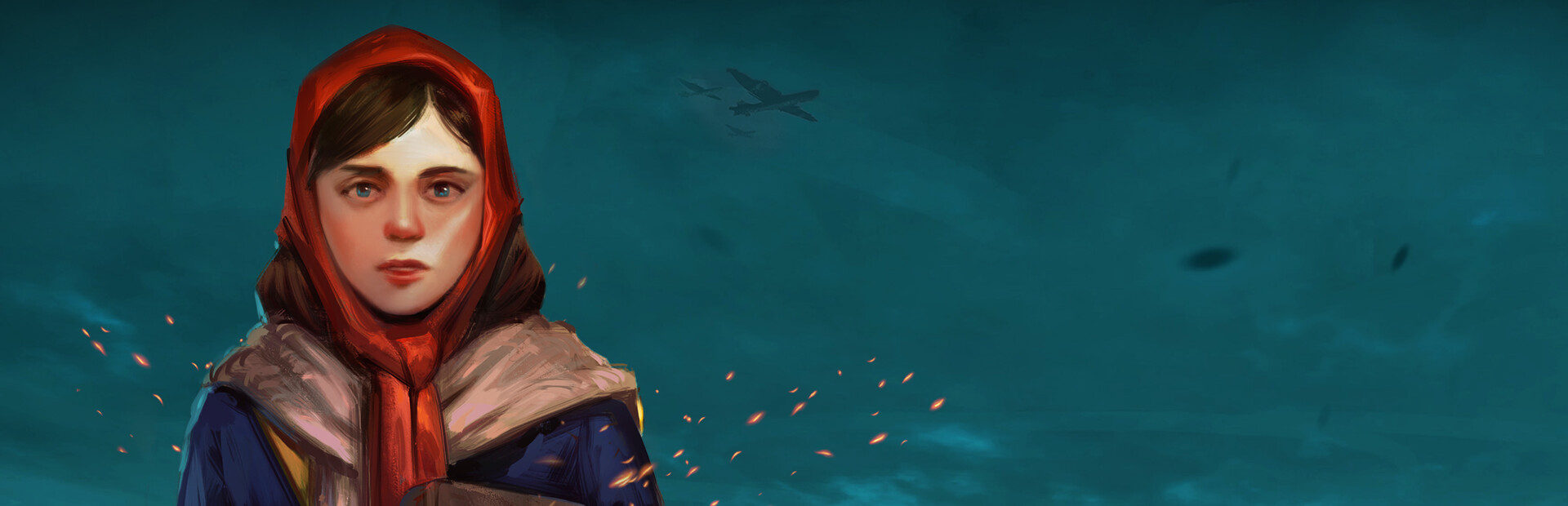
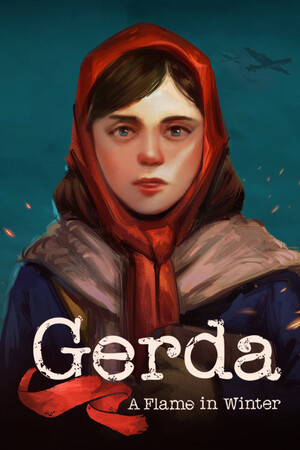
My first hour with this game felt like reading a letter someone tucked inside a history book and forgot to send. PortaPlay built something quietly devastating here: a narrative RPG-lite set in February 1945 in Tinglev, a small Danish border town where German and Danish families have lived side-by-side for generations, and where that coexistence has curdled into something frightening under occupation. You play Gerda Larsen, a nurse of mixed German-Danish heritage whose husband Anders has just been arrested by the Gestapo. You have five days. Who you trust, and how much of yourself you spend doing it, is the entire game. The structural skeleton is clever and feels intentional rather than thin. Each in-game day breaks into scenes spread across the town: a market, a clinic, the Gestapo headquarters, a bar housing resistance soldiers. You cannot go everywhere, so every destination is a small wager. At day's end, Gerda writes in her journal, and the entry you choose rewards one of three stat points: Compassion, Insight, or Wit. Crucially, these are not permanent numbers that grow forever. They are resources spent on skill checks during tense conversations, and once they are gone they are gone until you earn more. That design choice is quietly brilliant. The mechanical drain mirrors the emotional exhaustion of a civilian trying to hold a community together while the world comes apart around her. Layer in four faction reputations (Danes, Germans, Occupation, Resistance) and individual trust scores with specific characters, and the web of consequence gets genuinely complex for something that plays this gently on the surface. The art is the first thing that disarms you. The whole world looks like a moving watercolor painting, brush strokes visible in the backgrounds as if the landscapes were lifted from an unfinished sketchbook. The piano score is minimal and wistful, the kind of soundtrack that knows silence is also a tool. Voice acting is sparse, mostly confined to Gerda reading her journal entries between days, and that restraint fits. Some players will find the movement speed frustratingly slow, and a handful of late-game skill check bugs have surfaced in community discussions, occasionally refusing to register properly in the final act. The Trust system, displayed as a live numerical sidebar during conversations, breaks the atmosphere a little too often: the human drama and the RPG spreadsheet do not always sit comfortably together, and critics noted the second half of the story feels slightly rushed compared to the rich setup of the opening days. What the game gets right that few WW2 games attempt: it refuses to flatten its characters into symbols. Gerda's father joined the Nazi party. Her best friend is engaged to a German officer. The Resistance is not uniformly heroic. Deciding whether to greet a patrol soldier who happens to be family is not a trolley problem with a clean answer, and the game knows that. Some reviewers found the moral framing occasionally uncertain, particularly around whether sympathy extended too far toward the occupiers, but that discomfort is largely the point. There is no victory state. There are endings that are less catastrophic than others, and there is replay value in exploring the paths you closed off, but the game works best when you accept the first playthrough as the only one that was truly yours. At five to ten hours it knows exactly when to end, which is a virtue I will always defend. This is the kind of handcrafted, historically grounded narrative experience that deserves the attention it quietly earned at an 84 on Metacritic. If you came from This War of Mine or the quieter corners of Disco Elysium and want something that prioritizes humanist storytelling over mechanical spectacle, Gerda fits like a key in a lock.

Indie & narrative
Tags
System Requirements
Minimum
- OS
- Windows 7
- Memory
- 4 GB RAM
- DirectX
- Version 11
- Storage
- 5 GB available space
- Graphics
- GeForce GTX 750 (2048 VRAM) or equivalent
- Processor
- Intel Core2 Quad Q9400 (4 * 2660) or equivalent
Recommended
- OS
- Windows 10
- Memory
- 16 GB RAM
- DirectX
- Version 11
- Storage
- 5 GB available space
- Graphics
- GeForce GTX 1050 (2048 VRAM) or equivalent
- Processor
- Intel Core i5-3470 (4 * 3200) or equivalent
Keep exploring
Community Discussion
Be the first to comment on Gerda: A Flame in Winter.
Reviews & Ratings
Game Info
- Developer
- BirdIsland/PortaPlay
- Publisher
- DON'T NOD
- Release Date
- Sep 1, 2022