Genesis Rising
Blood as currency, living ships that grow weapons from their hulls, and a gene-slot system with real strategic depth. Too bad the execution undermines nearly every interesting idea the concept has to offer.
GamerScout Verdict
Worth a look only if clunky 2007 RTS interfaces are your niche; the gene system is clever but the execution defeats it at every turn.
Compare Prices(0 stores)
Loading prices...
We may earn a commission when you buy games through links on this page — at no extra cost to you. It never affects our rankings or verdicts.
Price History
Screenshots & Media

About Genesis Rising
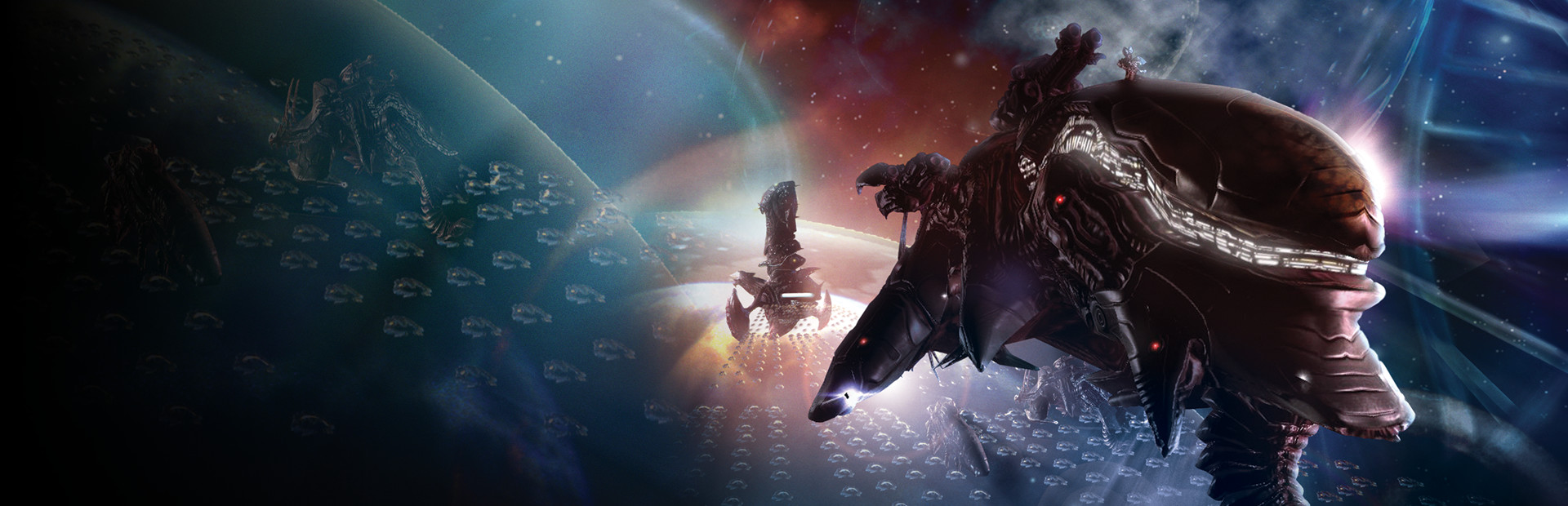
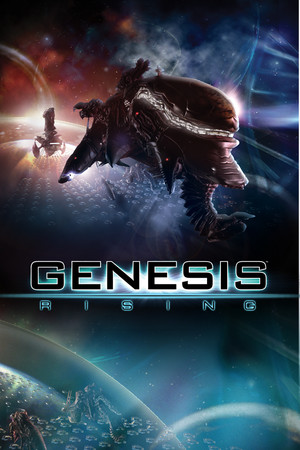
My spreadsheet instincts lit up the moment I read the pitch: a space RTS where the single resource is blood, your fleet is made of organic creatures called organids, and every weapon slotted into a ship slot physically mutates its hull in real time. That is a genuinely original design concept, and for roughly the first hour of Genesis Rising I was taking notes like it owed me something. Here is what the gene system actually does on paper, because it deserves a fair description. Each of your 20-plus organid ships has a fixed number of gene slots, and you fill those slots with abilities ranging from standard projectile weapons to boomerang-trajectory shots that curve back on a miss, cryo genes that double as heat management tools, and stealth or warp-drive utilities. Genes are scavenged from defeated enemy hulls, bought with bloodair at trade nexuses, or stolen by boarding actions. Vary your loadout between missions and you can build a fast scout, a long-range sniper, or a tanky close-combat bruiser from the same base chassis. On paper that is a lightweight but flexible tech tree with genuinely interesting decisions. In practice, the whole system collapses under a set of design failures that critics across the board identified in 2007 and that Steam's current rating of roughly 30 percent positive confirms nobody has reassessed since. The gene laboratory interface requires you to drag and drop icons while combat continues in the background at full speed, with no pause-and-command option and no way to slow time. The AI controls its own ships instantly and without hesitation; you do not get that luxury. Ships have no formation controls, pathfind in wide looping arcs that make long-range gene attacks nearly impossible to aim, and will only fire basic weapons autonomously, meaning every special ability must be triggered manually per ship mid-battle. There is no in-mission save, only an autosave at mission start, so multi-step missions that end in a late-game mistake send you back to the beginning of long, load-screen-heavy sequences. There is also no difficulty slider, a fact that stops being amusing very quickly. The presentation is a mixed bag. Ship designs are genuinely striking, drawing on insect anatomy blown up to capital-ship scale, and the Warhammer 40,000-adjacent religious-fascist tone gives the setting a memorably weird personality. The cutscenes were considered good-looking for 2007. The campaign story, however, is built on stilted dialogue, an inconclusive arc, and a cast of characters that critics described as sci-fi cheese at best. Multiplayer supports up to 12 players via GameSpy-era infrastructure, which is essentially dead, and a two-player co-op mode exists for the campaign, though both modes suffer from the same pacing and interface problems as solo play. If you are a strategy player who specifically wants to study an interesting design-concept-gone-wrong, or you have a high tolerance for clunky 2007-era interfaces and enjoy the challenge of working around bad AI pathfinding as a form of puzzle, there is something here worth an afternoon. For everyone else, the gap between the gene-customisation concept and the frustration of actually using it during live combat is simply too wide to recommend.

Strategy & simulation
Tags
System Requirements
Minimum
LAN or 56K Internet connection
Keep exploring
Community Discussion
Be the first to comment on Genesis Rising.
Reviews & Ratings
Game Info
- Developer
- Metamorf
- Publisher
- THQ Nordic
- Release Date
- Aug 6, 2007