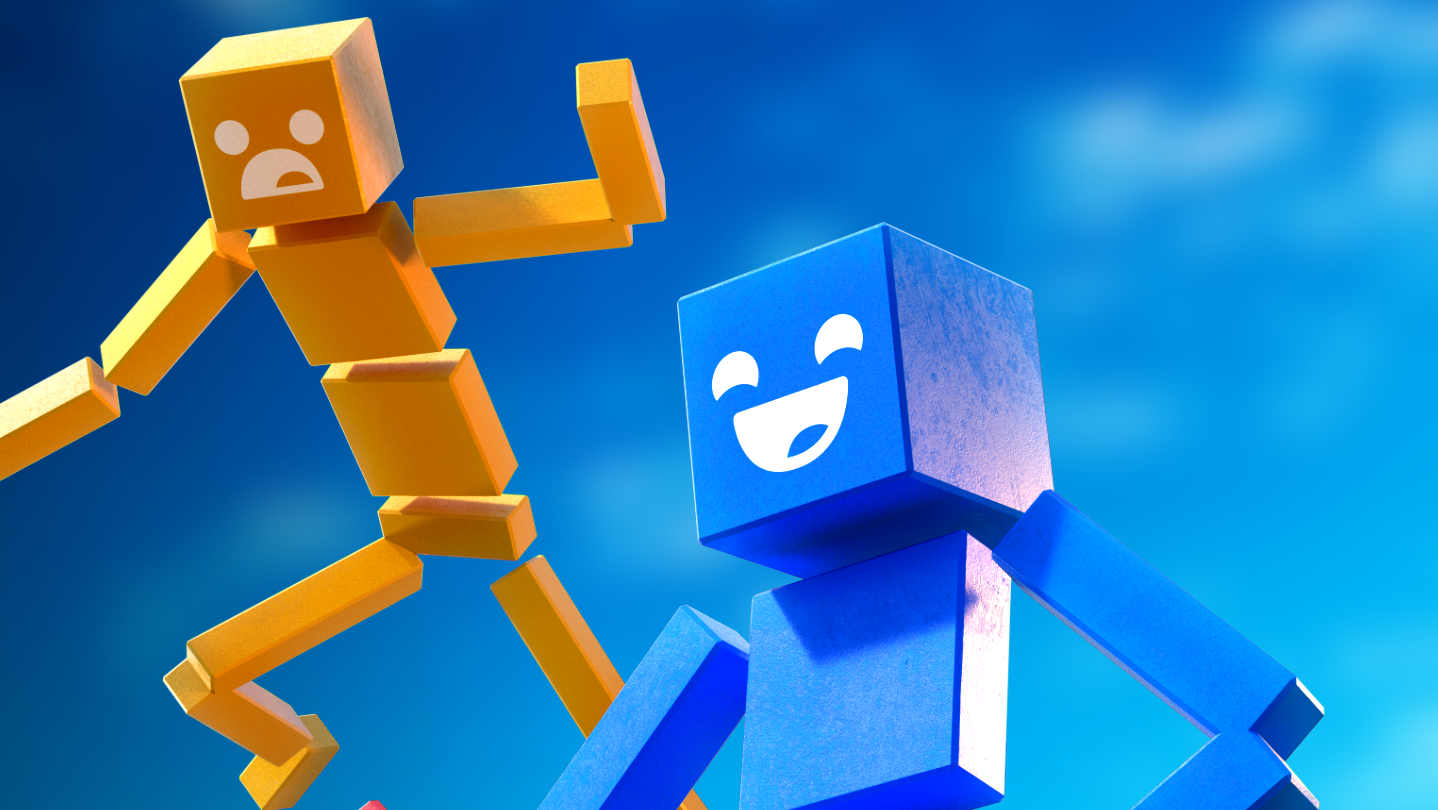
Fun with Ragdolls: The Game
A zero-stakes sandbox where you build destructible playgrounds and watch ragdolls suffer the consequences. Pure chaos, no objectives.
GamerScout Verdict
Best for casual players and streamers who want a low-pressure physics toy with strong community content - not built for depth seekers.
Compare Prices(6 stores)
Every store in this table quotes us in euros, so the EUR figure is the price the seller actually set, not our arithmetic — which is why EUR is also the currency we rank in. We only list an offer here when the store gives us its price in euros, so nothing in this table is a number we invented.
Pick USD, PLN, GBP, CAD or AUD in the header and we convert from EUR at the European Central Bank reference rate — converted amounts are prefixed with ~. Your bank or the store may apply a different rate at checkout. We never hide offers based on where you are: everyone sees this whole table.
We may earn a commission when you buy games through links on this page — at no extra cost to you. It never affects our rankings or verdicts.
Price History
Screenshots & Media
About Fun with Ragdolls: The Game
Fun with Ragdolls: The Game is exactly what it says on the tin: a physics sandbox built around the simple, reliable pleasure of watching floppy human-shaped bodies collide with things. Developed solo by Jadon Barnes, it sits firmly in the tradition of lightweight chaos simulators where the game hands you a set of tools and steps back. There are no win conditions, no campaign, no resource curves to optimize. For someone like me who usually wants a tech tree and a diplomacy screen, that is either refreshing or alarming depending on the afternoon. The core loop involves Sandbox Mode, where you construct environments from the available props, set up ragdoll characters, and then trigger whatever catastrophe you have in mind. Ramps, launchers, destructible geometry, stacked objects, falling platforms - the toolkit is modest but the interaction between physics objects keeps sessions from feeling identical. The ragdoll simulation itself is the star; bodies react to collisions with enough bounce and secondary motion to stay funny rather than feel clinical. It is not a physics engine that will impress anyone who has run stress tests in more serious simulation titles, but it is tuned well for comedy. The workshop integration is where the game earns its replay value. Community-built levels extend the content significantly beyond what the base sandbox provides, and the Steam reviews reflect that players are finding enough variety to stick around. At 88 percent positive across over five thousand reviews, the satisfaction rate is genuinely solid for a solo-developed indie. That said, the content ceiling without community contributions is low. If the workshop ever dried up, the base game would feel thin within a few hours. There is no structured progression, no unlocks tied to play time, and no mode that introduces mechanical complexity over time. What you see on day one is what you get on day fifty, minus whatever the community has added. From a pure depth-of-decision standpoint, this is not a game I would normally find myself recommending to my audience. There is no build order, no late-game crisis to manage, no AI opponent to outmaneuver. The tutorial is light because the game is light - newcomers will be functional within minutes, which is genuinely appropriate here rather than a failure of onboarding. Where the game earns respect is in its honesty. It does not try to be a survival game or a progression RPG in disguise. It is a ragdoll toy, priced and scoped accordingly, and it delivers on that specific promise without padding. Who should pick this up: players who want a low-commitment stress-relief session, content creators who build setups for video or streaming, and younger audiences who get genuine entertainment out of physics chaos without needing a narrative frame around it. Who should skip it: anyone expecting systems depth, replayable challenge modes, or a reason to return that is not self-generated. The game is a sandbox in the most literal sense - the fun is what you bring to it.

Strategy & simulation
Tags
System Requirements
Minimum
- Processor
- Pentium Silver N5000
- Memory
- 4 GB RAM
- Graphics
- Intel UHD Graphics 605
- DirectX
- Version 10
- Storage
- 200 MB available space
- Sound Card
- Any
Keep exploring
Community Discussion
Be the first to comment on Fun with Ragdolls: The Game.
Reviews & Ratings
Game Info
- Developer
- Jadon Barnes
- Publisher
- Jadon Barnes
- Release Date
- Sep 17, 2019