
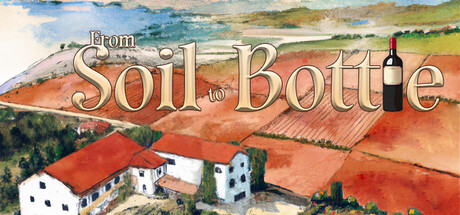
From Soil to Bottle
Winemaking has more decision layers than most strategy games admit - terroir selection, fermentation variables, barrel aging, client reputation. This one actually respects that complexity without requiring an enology degree to start.
GamerScout Verdict
Best for patient sim fans who want a mechanically honest winemaking sandbox and can live without a large community or mod ecosystem behind it.
Compare Prices(3 stores)
Every store in this table quotes us in euros, so the EUR figure is the price the seller actually set, not our arithmetic — which is why EUR is also the currency we rank in. We only list an offer here when the store gives us its price in euros, so nothing in this table is a number we invented.
Pick USD, PLN, GBP, CAD or AUD in the header and we convert from EUR at the European Central Bank reference rate — converted amounts are prefixed with ~. Your bank or the store may apply a different rate at checkout. We never hide offers based on where you are: everyone sees this whole table.
We may earn a commission when you buy games through links on this page — at no extra cost to you. It never affects our rankings or verdicts.
Price History
Screenshots & Media
About From Soil to Bottle
I spend a lot of time in management sims where resource chains matter, so when a sandbox puts soil composition and seasonal weather into the same decision tree as client satisfaction and blend ratios, my attention is earned. From Soil to Bottle is a singleplayer winemaking simulator from Longbow Creations that covers the full production chain: choosing grape varieties suited to your land, tending vines through unpredictable weather cycles, timing your harvest for peak ripeness, then working through crushing, fermentation, aging, and final bottling. The hand-drawn 2D presentation keeps things readable rather than visually overwhelming, which suits the game's cozy-but-systems-heavy tone. The depth sits mainly in the fermentation and blending phases. You adjust yeast types, control fermentation temperatures, manipulate acidity and tannin levels, and choose barrel types that contribute their own flavor compounds to the aging wine. None of this is window dressing - each variable shifts the final product's profile, which in turn affects how demanding clients evaluate your output and, by extension, your winery's reputation score. There is no fixed recipe to follow. The game actively withholds a single correct answer, which is either liberating or frustrating depending on how comfortable you are with iterative trial-and-error. If you need clearly signposted win conditions, this sandbox will feel underexplained at first. The developer has published a "Winemaking 101" guide on Steam that functions as a more detailed in-game manual, and newcomers will want to read it before diving in. On the strategy side, the external pressure layer - weather variability, yield fluctuations, client demand curves - gives the sim genuine replay tension. A bad growing season forces you to work with lower-quality grapes and compensate through technique, which is exactly the kind of constraint that separates a good management sim from a glorified idle game. The reputation system means late-game decisions carry weight, since a string of disappointing bottles erodes client trust that took multiple seasons to build. The review count is still small (around 51 Steam reviews at "Very Positive" standing), so the community is thin: guides are sparse, mod support appears nonexistent at this stage, and the AI-driven client behavior has not received the kind of public stress-testing that larger titles benefit from. That is a real limitation if you hit a wall and want community answers. The honest ceiling here is session length and content breadth. From Soil to Bottle is a focused, single-developer indie without the sprawling variety of a Stardew-adjacent farm sim or the economic complexity of a full tycoon. Custom label design adds a light personalization layer, and cloud saves keep progress intact across machines, but there is no co-op, no scenario mode, and no apparent roadmap for major content expansions posted publicly. What exists is a clean, mechanically coherent winemaking loop that rewards patience and experimentation. Sim fans who want a subject matter niche enough to feel genuinely fresh, and who do not need a massive content library on day one, will find more here than the modest review count suggests.

Strategy & simulation
Tags
System Requirements
Minimum
- OS
- Windows 10
- Memory
- 2 GB RAM
- Graphics
- Support for OpenGL 3.3
Recommended
Support for Vulkan 1.2
Keep exploring
Community Discussion
Be the first to comment on From Soil to Bottle.
Reviews & Ratings
No ratings available
Game Info
- Developer
- Longbow Creations
- Publisher
- Longbow Creations
- Release Date
- Mar 22, 2024