
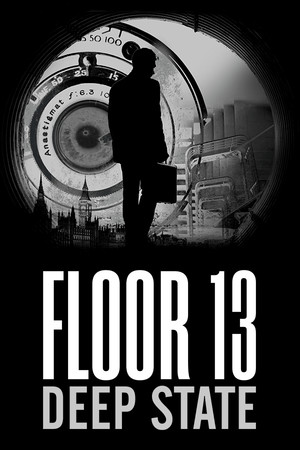
Floor 13: Deep State
Signing an order to abduct a journalist feels disturbingly routine here, which is either the point or the problem, depending on your patience for opaque bureaucratic systems.
GamerScout Verdict
A genuinely unsettling premise buried under clunky UI and punishing opacity; rewarding only for the most patient simulation fans.
Compare Prices(5 stores)
Every store in this table quotes us in euros, so the EUR figure is the price the seller actually set, not our arithmetic — which is why EUR is also the currency we rank in. We only list an offer here when the store gives us its price in euros, so nothing in this table is a number we invented.
Pick USD, PLN, GBP, CAD or AUD in the header and we convert from EUR at the European Central Bank reference rate — converted amounts are prefixed with ~. Your bank or the store may apply a different rate at checkout. We never hide offers based on where you are: everyone sees this whole table.
We may earn a commission when you buy games through links on this page — at no extra cost to you. It never affects our rankings or verdicts.
Price History
Screenshots & Media
About Floor 13: Deep State
I came to Floor 13: Deep State quietly optimistic. The pitch alone has real weight: you are not the spy, you are the director. You sit behind a desk on the thirteenth floor of a building that officially handles agriculture and fisheries, and from there you sign orders for surveillance, disinformation, abduction, and worse. The moral distance is the whole design. You never watch anything happen. You read a report, issue an order to one of eight departments, advance to the next in-game day, and read another report. The horror is bureaucratic, and for the first hour or two that tonal choice lands with quiet brilliance. The comparison to Papers, Please gets thrown around a lot, and it is apt in spirit if not execution. Both games use repetitive desk-work as a vehicle for mounting ethical dread. But where Papers, Please tuned its systems until the friction felt intentional, Deep State's friction often just feels like friction. The UI does not let you rearrange documents freely on your desk. Animated transitions for reading a file, arriving at the office each morning, and accessing the ministry archives repeat every single session and cannot be skipped on first run. The developer has acknowledged this was a deliberate pacing choice, inspired by games that use monotonous rhythm to dull your moral reflexes. It is a defensible idea. It is also, in practice, exhausting in a way that erodes goodwill before the scenarios get interesting. The scenario design itself is dynamically generated, meaning names and faces shuffle between runs, but the structural bones of each case stay mostly fixed. You might be tracking an IRA-style extremist movement, managing a horsemeat-style political scandal, or quietly burying a journalist whose story is inconveniently true. Each target in your reports is rated by prominence, power, and orientation toward the government, attributes that affect how likely your orders are to succeed and how much media attention they draw. The tension between acting decisively and staying invisible is the game's strongest mechanical idea. Go too hard, too fast, and the ministry's existence becomes public knowledge. Fail to keep approval above fifty percent before the Prime Minister's review window closes every fourteen days, and you are quietly retired. The balancing act has genuine strategic texture, but the game gives you almost no signposting for how to read a situation correctly, and early runs feel less like learning and more like losing to systems you cannot yet see. Critics and players landing on mostly negative verdicts is not a surprise given the launch state. Bugs that broke entire mechanics mid-run were reported by multiple reviewers, some of whom could not finish sessions. Post-launch patches addressed some of the animation pacing, and the underlying atmosphere, described by one outlet as feeling like a drizzly, nicotine-stained BBC drama, is genuinely distinctive. The artwork is handsome, the tone is coal-dark, and the writing has a dry, period-specific wit rooted in an 80s-tinged fictional UK that suits the material. If you can get it running cleanly, there are real pleasures here for people who like morally uncomfortable simulation and do not need a game to hold their hand. The honest answer is that this one asks for more patience than most players will extend without a richer return. The concept deserves a tighter implementation. Fans of the 1991 original will find something familiar and worth seeing. Everyone else should go in with clear eyes and low expectations for moment-to-moment smoothness.

Indie & narrative
Tags
System Requirements
Minimum
- OS
- Windows 10 64bits
- Memory
- 4 GB RAM
- Storage
- 2 GB available space
- Graphics
- Nvidia GT 650M or similar
- Processor
- 2.2+ Ghz Dual-Core
Recommended
Requires a 64-bit processor and operating system
Keep exploring
Community Discussion
Be the first to comment on Floor 13: Deep State.
Reviews & Ratings
No ratings available
Game Info
- Developer
- Oversight Productions
- Publisher
- Balor Games
- Release Date
- Nov 2, 2020