
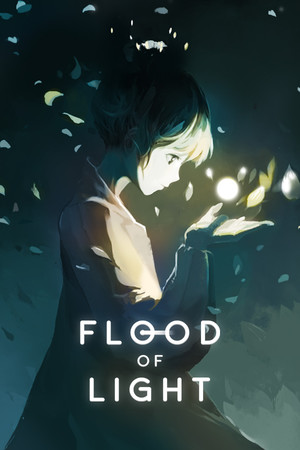
Flood of Light
Quiet, handcrafted, and carrying a rain-soaked secret on its back - Flood of Light is the kind of 4-5 hour puzzle game that 90% of Steam players who tried it walked away recommending.
GamerScout Verdict
Best for puzzle fans who want a quiet, atmospheric 4-5 hour session - collect all 49 wicks or you will miss the actual ending.
Compare Prices(6 stores)
Every store in this table quotes us in euros, so the EUR figure is the price the seller actually set, not our arithmetic — which is why EUR is also the currency we rank in. We only list an offer here when the store gives us its price in euros, so nothing in this table is a number we invented.
Pick USD, PLN, GBP, CAD or AUD in the header and we convert from EUR at the European Central Bank reference rate — converted amounts are prefixed with ~. Your bank or the store may apply a different rate at checkout. We never hide offers based on where you are: everyone sees this whole table.
We may earn a commission when you buy games through links on this page — at no extra cost to you. It never affects our rankings or verdicts.
Price History
Screenshots & Media
About Flood of Light
I kept returning to Flood of Light the way you keep returning to a particular corner of a city during a rainy week - not for thrills, but for the specific feeling it produces. You play as the Guide, a girl in a white raincoat with the power to absorb orbs of light from lamps, carry them across a flooded 2D space, and redistribute them to illuminate switches, stone posts, and sun-monoliths that slowly lower the waterline of drowned Hope City. That single mechanic - pull light in, push it out, but never in partial quantities - is the entire engine. You absorb every orb on a lamp or none at all. You release every orb you hold at once, or use the lamp-to-lamp transfer to split your load one careful step at a time. It sounds minimal until the mid-game floors start demanding you track two colours simultaneously, yellow and blue, each powering different systems including underwater switches that the other colour cannot reach. What looks like a casual puzzle game reveals genuine spatial thinking underneath. The structure traces a descent. You begin on rainy rooftop gardens and hotel corridors, pass through railways and factories, and work down into laboratories deep beneath the waterline. Each of the nine chapters covers a distinct zone of the building-as-city, and the hand-drawn 2D art - cool blues and greys smudged with dim lamplight - builds a convincingly melancholic atmosphere as you go lower. Along the way you repair dormant robots who share fragments of a prophecy about a Guide meant to save their world, and you read terminal logs left behind by a scientist called Dr. S, whose entries unfold the backstory of the flood. Fair warning on those logs: the translation from Chinese is uneven in places, with some early diary entries losing small story details to grammatical drift. Nothing that breaks comprehension of the main thread, but enough to nudge you out of the fiction a few times. The chapter grading system rewards completionists without punishing anyone who just wants a clean playthrough. Each floor scores you on three criteria: lighting every wick lamp on the level, finishing under a step count, and waking every robot. Hit all three and you earn an S-rank. The 49 wicks scattered across the game also unlock a fuller ending - miss even one and the story closes before its final beat. That design decision has divided players. Collecting wicks is optional, but the game frames the ending as a reward rather than hiding the gating behind fine print. Go in knowing you want the complete picture and play accordingly. The piano-led score deserves a specific mention: it is genuinely lovely, sustained and slightly mournful in exactly the register the setting asks for, and it does real atmospheric work. Where the game earns its criticism is in its roots as a mobile title. The PC mouse controls are functional but carry the fingerprints of a touch-oriented origin - the feel of absorbing and releasing orbs never becomes quite as tactile and precise as the puzzle logic deserves. Pacing across some of the middle floors also flattens out before the later chapters reintroduce complexity. Critics noting that the audiovisual experience can feel repetitive are not wrong, though I would argue the monotone quality is partly intentional - this is a game about a drowned, abandoned place, and Irisloft commits to that mood rather than papering over it with variety. The story's final moment, even with the true ending unlocked, resolves quietly rather than dramatically, which will read as anticlimactic to players expecting a payoff that matches the buildup. For me it read as a choice, consistent with a game that has always preferred atmosphere over crescendo. Flood of Light is for the player who finds comfort in small, intentional things: a contained world with a coherent visual language, puzzles that require genuine thought without cruelty, a soundtrack worth keeping on after the credits, and a runtime that knows when to stop. It does not overstay.

Indie & narrative
Tags
System Requirements
Minimum
- OS
- Windows 7 32bit
- Memory
- 2 GB RAM
- Storage
- 1 GB available space
- Graphics
- Intel HD 4000
- Processor
- 2.3 GHz Dual Core CPU
Recommended
- OS
- Windows 8 or 10 64 bit
- Memory
- 4 GB RAM
Keep exploring
Community Discussion
Be the first to comment on Flood of Light.
Reviews & Ratings
No ratings available
Game Info
- Developer
- Irisloft
- Publisher
- Gamirror Games
- Release Date
- Jun 15, 2017