
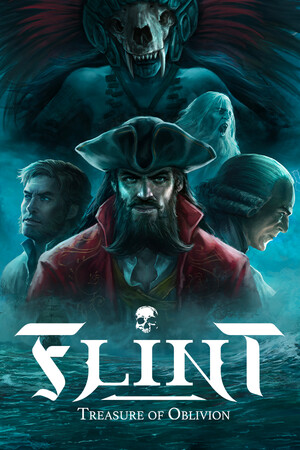
Flint: Treasure of Oblivion
Pirate-themed tactical CRPG with real promise buried under a tutorial that basically tells you to read the manual. Worth the dig if you can stomach the friction.
GamerScout Verdict
Worth the friction only if you read the rules first and prefer atmosphere over mechanical polish.
Compare Prices(5 stores)
Every store in this table quotes us in euros, so the EUR figure is the price the seller actually set, not our arithmetic — which is why EUR is also the currency we rank in. We only list an offer here when the store gives us its price in euros, so nothing in this table is a number we invented.
Pick USD, PLN, GBP, CAD or AUD in the header and we convert from EUR at the European Central Bank reference rate — converted amounts are prefixed with ~. Your bank or the store may apply a different rate at checkout. We never hide offers based on where you are: everyone sees this whole table.
We may earn a commission when you buy games through links on this page — at no extra cost to you. It never affects our rankings or verdicts.
Price History
Screenshots & Media
About Flint: Treasure of Oblivion
My spreadsheet instincts told me to read the rulebook before touching the combat, and for once that was genuinely the right call. Flint: Treasure of Oblivion is a hex-grid tactical RPG from debut studio Savage Level, set during the Golden Age of Piracy and loosely inspired by the world of Treasure Island. You play Captain James Flint alongside first mate Billy Bones, recruiting a growing crew and fighting your way from the mud-soaked streets of Saint-Malo all the way to the jungles of Central America. The moment-to-moment loop is split into three phases: real-time isometric exploration, comic-book-panel storytelling, and turn-based grid combat. All three have something going for them. None of them are fully cooked. The combat is where the strategic interest lives, and it is genuinely more layered than the first hour suggests. Each crew member gets two actions per turn, and the action economy opens up when you start chaining shoves, knockdowns, and trample attacks on grounded enemies. Weapons range from daggers and swords to spears, pistols, and muskets, each carrying different attack arcs and dice profiles. Speaking of dice: outcomes are resolved through a tabletop-style roll system where your profession die and weapon die both need to clear a target number, and as long as one succeeds you still connect. Lucky dice collected during exploration let you reroll bad results, which takes some of the sting out of variance. Crew progression runs through a "Booty" mechanic where you distribute looted gold as shared experience, which means your upgrade decisions are directly competing with your supply budget for tonics and equipment. That is a genuinely interesting resource tension. The problem is that the game communicates almost none of this clearly. The load screen tells you to read the in-menu rules guide. That is not a tutorial. That is a manual. Stat icons during combat have no tooltip, and the target number for any given attack is never displayed on screen. Veterans of XCOM or Divinity will eventually reverse-engineer the systems. Everyone else will bounce off hard. The exploration side is more forgiving but exposes a different set of gaps. Areas are linear, often running point A to point B with items scattered close enough to walls that you will miss them if you do not hug every surface. There is no minimap, and objective descriptions can be vague enough to send you wandering without direction. The environments themselves look impressive, running on Unreal Engine 5 with well-rendered ship decks and jungle canopies, but the lack of any actual sailing or ship combat is a real missed opportunity given the setting. The comic-book narrative panels are visually striking in a Franco-Belgian style, though they play out in silence with no voice acting, which makes the static presentation feel flat over a full playthrough. Flint himself is an interesting protagonist, ruthless and morally grey, but the supporting crew beyond Billy Bones barely registers as characters. For strategy-minded players willing to invest time in systems that refuse to explain themselves, there is a legitimate tactical game here. The hex grid, elevation mechanics, barrel-rolling environmental interactions, and the competing demands of the Booty leveling system give experienced CRPG players enough to work with. But Savage Level's first outing sits at roughly fifty-fifty user sentiment on Steam for a reason. It lacks the polish and onboarding that would make it a confident recommendation. If you are coming from Baldur's Gate 3 and want something lighter in scope, it can serve as a reasonable bridge. If you want the depth of Divinity: Original Sin 2 or the tactical clarity of XCOM, this will frustrate more than it satisfies. Treat it as a promising but unfinished proof of concept from a studio that clearly has ideas worth watching.

Strategy & simulation
Tags
System Requirements
Minimum
- OS
- Windows 10
- Memory
- 8 GB RAM
- Storage
- 12 GB available space
- Graphics
- GeForce GTX 960 / Radeon R9 380
- Processor
- AMD Ryzen 3 1300X / Intel Core i3-9300
Recommended
- OS
- Windows 10
- Memory
- 16 GB RAM
- Storage
- 12 GB available space
- Graphics
- GeForce GTX 1050 / Radeon R9 570
- Processor
- AMD Ryzen 3 1300X / Intel Core i3-9300
Keep exploring
Community Discussion
Be the first to comment on Flint: Treasure of Oblivion.
Reviews & Ratings
No ratings available
Game Info
- Developer
- Savage Level
- Publisher
- Microids
- Release Date
- Dec 17, 2024