Fingerdance
Your fingers will betray you within the first five minutes, and that is exactly the point. A tiny, oddly compelling dexterity puzzle that earns its 97% Steam rating without flashy production values.
GamerScout Verdict
Best for keyboard-native players who want a clean, repeatable dexterity loop and can live without audio or content variety.
Compare Prices(4 stores)
Every store in this table quotes us in euros, so the EUR figure is the price the seller actually set, not our arithmetic — which is why EUR is also the currency we rank in. We only list an offer here when the store gives us its price in euros, so nothing in this table is a number we invented.
Pick USD, PLN, GBP, CAD or AUD in the header and we convert from EUR at the European Central Bank reference rate — converted amounts are prefixed with ~. Your bank or the store may apply a different rate at checkout. We never hide offers based on where you are: everyone sees this whole table.
We may earn a commission when you buy games through links on this page — at no extra cost to you. It never affects our rankings or verdicts.
Price History
Screenshots & Media
About Fingerdance
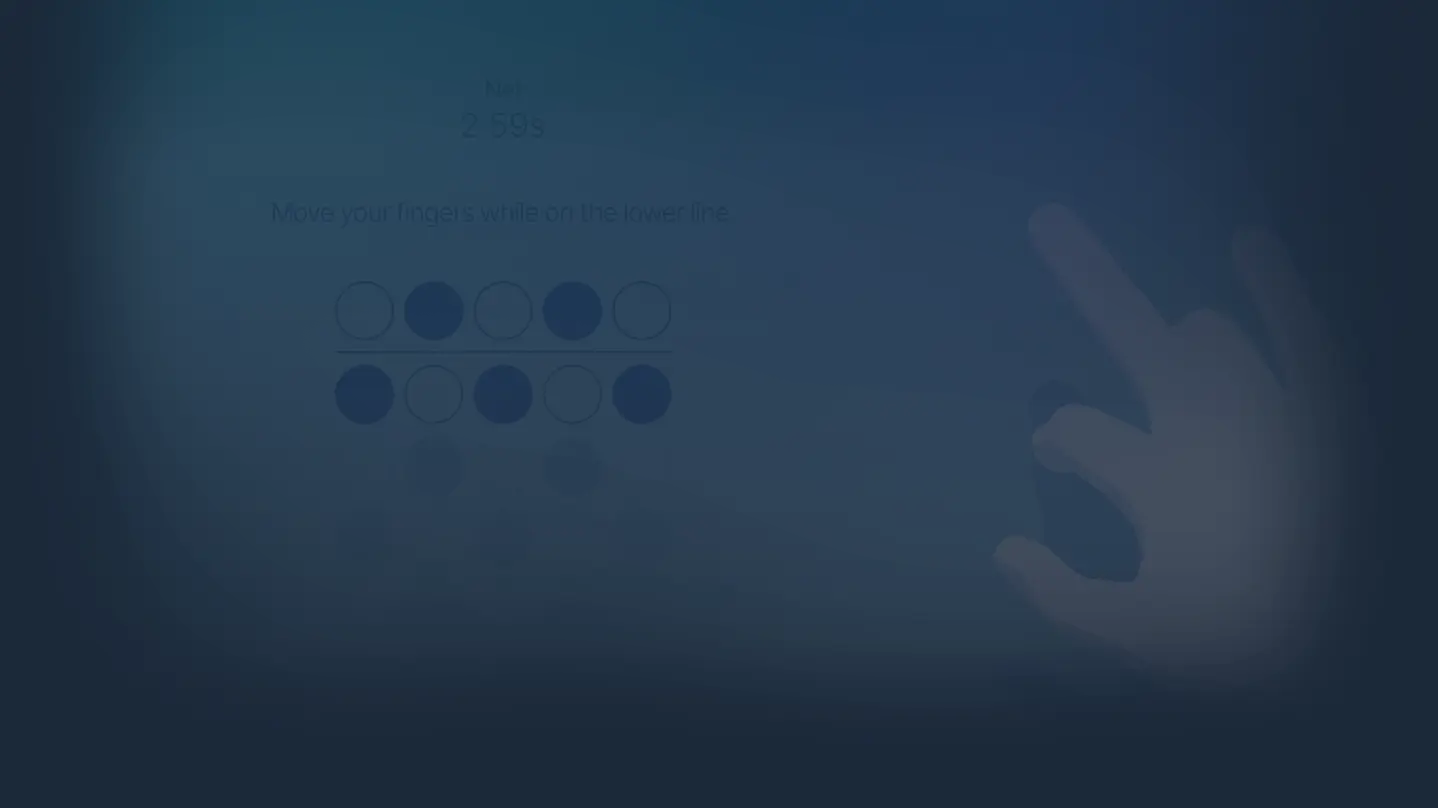
I put Fingerdance in front of myself expecting a rhythm game and got something considerably stranger: a pure motor-skills test that exposes just how badly your brain and fingers miscommunicate. The concept is almost aggressively minimal. You rest five fingers on five keys of your choice, and the game feeds you sequential press-and-release patterns. Your job is to execute them. That sounds trivial until the patterns start crossing fingers over each other and your hand locks up like you are trying to play a jazz chord you have never rehearsed. The mechanical design makes one very smart call: there is no beat-matching requirement. You set the pace yourself, and the ranking system rewards speed rather than punishing slowness. That single decision makes Fingerdance approachable for people who bounce off strict rhythm games, while still giving the competitive crowd something to chase. S-ranking every stage is a real goal, and the gap between a comfortable clear and a full-speed clean run is wide enough to keep you grinding. The game also stores left-hand and right-hand records separately, which is a small but thoughtful detail that effectively doubles the replay loop if you are willing to train your weaker hand. There are legitimate criticisms worth naming. The audio design is essentially absent: you get key-tap sound effects and nothing else. No background music, no dynamic audio feedback tied to combo streaks. That keeps things focused, but it also makes long sessions feel sparse, and the game can start to feel like a productivity drill rather than entertainment. The minimalist visual presentation is a deliberate choice and it mostly works, though variety-hungry players will hit a ceiling where every stage starts to look identical in structure. A stage editor or community pattern sharing would fix this immediately; neither is present at launch. Who is this actually for? Primarily keyboard-native PC players who want a micro-challenge that fits in a ten-minute break. Typing enthusiasts, speedrunners after a low-friction personal-best loop, and anyone who keeps saying they will practice finger independence but never does. One hardware caveat worth flagging: the game depends on simultaneous key registration, so a keyboard that can only handle two or three concurrent inputs will cause missed reads. Any decent gaming board or mechanical keyboard handles this without issue, but older membrane boards may cause phantom failures that feel like the game cheating when it is actually a hardware rollover limit. At its price tier, Fingerdance is not selling you 40 hours of content. It is selling you a very precise, very repeatable challenge that sits somewhere between a Wordle-style daily habit and a serious dexterity trainer. The 97% Steam approval rating from several hundred reviews is not an accident; the game does exactly what it says with no padding and no friction. If that sounds thin, it is not the game for you. If that sounds clean, it absolutely delivers.

Strategy & simulation
Tags
System Requirements
Minimum
- OS
- Windows 10 / 11
- Memory
- 4 GB RAM
- Storage
- 200 MB available space
- Graphics
- CPU-integrated or on-board graphics
- Processor
- Any processor w/ a clock rate of 2 GHz
Recommended
Requires a 64-bit processor and operating system
Keep exploring
Community Discussion
Be the first to comment on Fingerdance.
Reviews & Ratings
No ratings available
Game Info
- Developer
- zniq
- Publisher
- PsychoFlux Entertainment
- Release Date
- Jun 20, 2025