
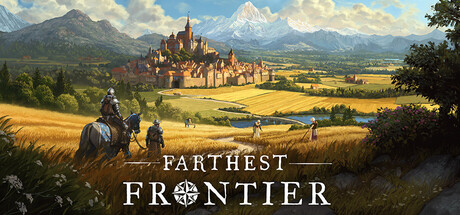
Farthest Frontier
Three years of Early Access forged something rare: a medieval city-builder with genuine teeth, where a mismanaged crop rotation can kill your town just as dead as a raider charge.
GamerScout Verdict
Essential for city-builder fans who want genuine survival stakes and systems deep enough to fill a spreadsheet.
Compare Prices(6 stores)
Every store in this table quotes us in euros, so the EUR figure is the price the seller actually set, not our arithmetic — which is why EUR is also the currency we rank in. We only list an offer here when the store gives us its price in euros, so nothing in this table is a number we invented.
Pick USD, PLN, GBP, CAD or AUD in the header and we convert from EUR at the European Central Bank reference rate — converted amounts are prefixed with ~. Your bank or the store may apply a different rate at checkout. We never hide offers based on where you are: everyone sees this whole table.
We may earn a commission when you buy games through links on this page — at no extra cost to you. It never affects our rankings or verdicts.
Price History
Screenshots & Media
About Farthest Frontier
I keep a running mental list of city-builders that actually respect the logistics of keeping people alive in pre-industrial conditions. Farthest Frontier just jumped near the top of it. Crate Entertainment, the same team behind Grim Dawn, spent three years in Early Access iterating on this thing with their community, and the 1.0 release that landed in October 2025 shows that patience. The systems interlock in ways that most builders in this genre quietly cheat around: soil fertility depletes if you plant the same crop repeatedly, so you are planning a rotation of clover, beans, and grain not for this harvest but for the one five years from now. Rats can spread plague through your granaries. Scurvy is a genuine threat. Dysentery follows from ignoring sewage. These are not flavor text warnings, they are active pressure that shapes every decision about where you place wells, how you zone housing relative to markets, and whether you can afford to divert laborers from firewood stockpiling when the first freeze hits. The production chain logic runs deep. Wood gets split into either planks for construction or firewood for survival, and you are constantly balancing that fork. Stone, metal, iron, and gold each carry their own extraction complexity, with some resources proving genuinely scarce depending on your randomly generated map. The town center sits at the core of a tier-based progression model, with each upgrade unlocking new production buildings and economic systems while simultaneously raising the population's expectations. A 142-point tech tree governs what you can build and research, and the Knowledge tree that arrived at 1.0 drew some early complaints from veterans about legibility, which the v1.1 update has since started addressing alongside the addition of a Guided Journey mode for newcomers. That newcomer question is worth sitting with. The tutorial has historically been thin, and a number of early players report the familiar first-winter death spiral: insufficient firewood, settlers freezing, a wolf finishing off whoever survived. The honest answer is that the game's difficulty slider is wide enough to accommodate almost anyone. Pacifist mode strips out raiders and combat entirely if you want to focus on the simulation side. Dial wildlife aggression down and you get breathing room to understand the resource chains without a bear mauling your woodcutters. At normal difficulty with default settings, expect two or three collapsed settlements before the logic clicks into place. That is not a flaw, that is the teach-by-consequence design philosophy that makes every successful harvest feel earned rather than granted. The military side is intentionally limited. You progress from wood palisades to stone walls, recruit and equip soldiers from barracks and stables, and manage a genuine risk-reward calculation whenever raiders probe your defenses. Losing soldiers costs resources you cannot easily replace in the mid-game. If you come in expecting 4X conquest mechanics, recalibrate. The combat exists to create pressure on your economic engine, not to provide a separate strategic layer. Critics who wanted more offensive variety have a fair point, though the defenders of this approach are equally correct that the survival sim underneath is coherent enough to not need it. Post-launch support has been active. The v1.1 update introduced gridless building mode, which removes the rigid grid constraint and lets you arrange buildings organically, a significant quality-of-life win for anyone who found the grid aesthetically limiting. Steam Workshop support is live, Unity modding tools are available, and Crate has signaled future DLC without locking any current content behind it. At 86% positive across over ten thousand Steam reviews and a Metacritic of 83, the community verdict is consistent: this is one of the more demanding and rewarding builders on PC right now, and it is only getting tighter.

Strategy & simulation
Tags
System Requirements
Minimum
- OS
- Windows 10 or later (64bit versions only)
- Memory
- 8 GB RAM
- DirectX
- Version 11
- Storage
- 11 GB available space
- Graphics
- NVIDIA GeForce GTX 780 | AMD R9 290, with 3 GB VRAM or better
- Processor
- Processor: Intel Core i5 3470 @ 3.2 GHz | AMD FX 8120 @ 3.9 GHz
- Sound Card
- DirectX-compatible using the latest drivers
Recommended
- OS
- Windows 10 or later (64bit versions only)
- Memory
- 16 GB RAM
- DirectX
- Version 11
- Storage
- 11 GB available space
- Graphics
- NVIDIA GeForce GTX 980 | AMD RX 590, with 4GB VRAM or better
- Processor
- Processor: Intel Core i5 7600 @ 3.5 GHz | AMD Ryzen 5 2600 @ 3.4 GHz
- Sound Card
- DirectX-compatible using the latest drivers
Keep exploring
Community Discussion
Be the first to comment on Farthest Frontier.
Reviews & Ratings
Game Info
- Developer
- Crate Entertainment
- Publisher
- Crate Entertainment
- Release Date
- Oct 23, 2025