Faraday Protocol
If the Portal-shaped hole in your puzzle library has gone unfilled for too long, this compact first-person puzzler set inside a black-and-gold alien ziggurat is worth a few quiet evenings of your time, rough edges and all.
GamerScout Verdict
Solid pick for first-person puzzle fans who can forgive a thin story in exchange for a striking setting and clean, satisfying mechanics.
Compare Prices(4 stores)
Every store in this table quotes us in euros, so the EUR figure is the price the seller actually set, not our arithmetic — which is why EUR is also the currency we rank in. We only list an offer here when the store gives us its price in euros, so nothing in this table is a number we invented.
Pick USD, PLN, GBP, CAD or AUD in the header and we convert from EUR at the European Central Bank reference rate — converted amounts are prefixed with ~. Your bank or the store may apply a different rate at checkout. We never hide offers based on where you are: everyone sees this whole table.
We may earn a commission when you buy games through links on this page — at no extra cost to you. It never affects our rankings or verdicts.
Price History
Screenshots & Media
About Faraday Protocol
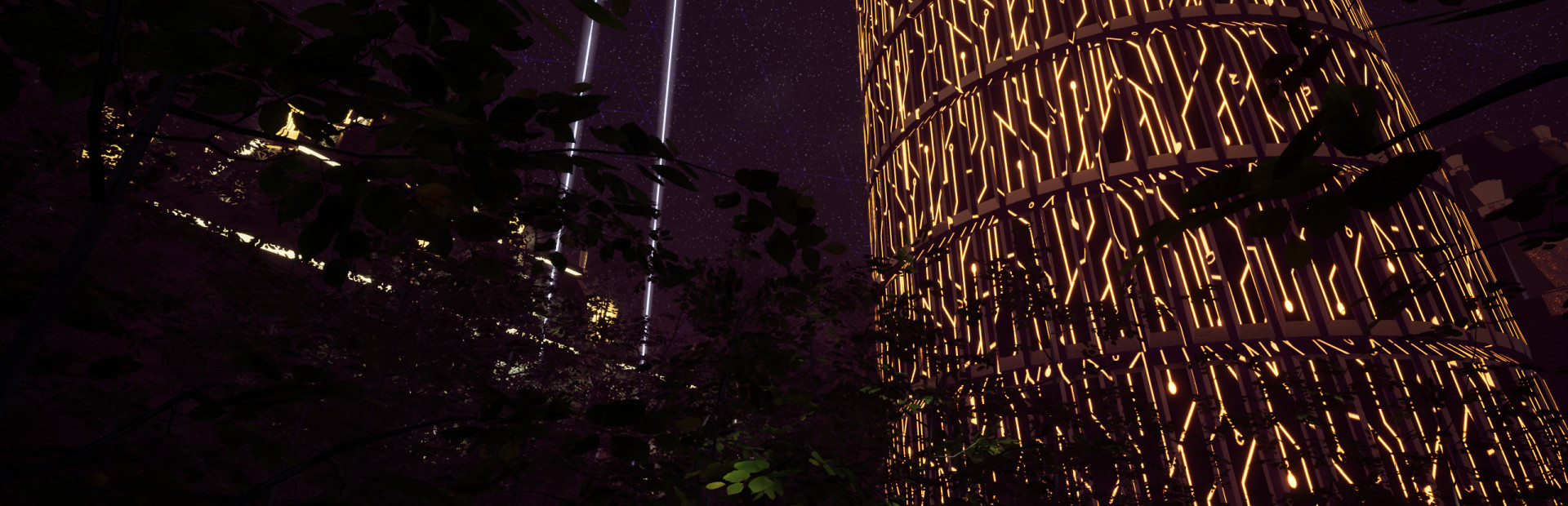
I walked into Faraday Protocol expecting a Portal clone and came out with something a little more complicated to evaluate, which is honestly more interesting. Red Koi Box built a first-person puzzle game around the Bia-Tool, an ancient pistol-like relic you pick up early in the ruins of a place called Opis. The gun holds a single charge of either orange or blue energy. Orange powers statues and machinery; blue links two nodes together, acting like a wire. You absorb, redirect, swap, chain. What sounds mechanical on paper becomes genuinely atmospheric in practice, because the setting does a lot of heavy lifting: the chambers are done in dramatic black-and-gold architecture that reads somewhere between Egyptian ziggurat and retro-futurist Art Deco, and there is real visual care in how those towering statues and hieroglyphic carvings are lit. The ambient soundtrack leans into desolation. You are, unmistakably, alone on a dead world, and the game knows how to make that silence feel intentional rather than empty. The puzzle design is where most of the debate lives. The game drip-feeds new mechanics without a formal tutorial, trusting you to read the environment, and for the most part that works. Smaller sub-puzzles compose larger ones, so you rarely feel like you have lost track of a loose end from three rooms back. Difficulty sits at a comfortable middle register: the puzzles require actual thought, but rarely tip into cruelty. A late-game symbol-matching mechanic, where you spin dials to align glyphs on statues and pedestals, is the most divisive element among players who have reviewed the game. It slows the pacing noticeably compared to the fluid energy-routing puzzles that dominate the earlier half, and if you hit a run of those symbol wheels back-to-back near the end, you will feel it. There is also a mid-game section where Opis's AI strips you of the Bia-Tool entirely, forcing you to escape through a series of environmental puzzles rendered in a completely different visual style. That sequence is a highlight precisely because it breaks the formula at exactly the right moment. The story is the genuine soft spot. You play as Raug Zeekon, a galactic archaeologist sent to investigate a mysterious signal, guided by an AI named Iris who communicates through audio logs scattered across the station. The premise is solid and the voice work is decent, but the narrative is rationed too conservatively. The connection to the characters and the civilization behind Opis never quite lands at the emotional weight the dual-ending finale asks for. Pacing lore beats more generously across the puzzle chambers would have cost nothing and gained a lot. As it stands, the story functions as atmosphere and texture rather than genuine payoff, which is a shame because the bones are good. Playtime lands somewhere between five and eight hours depending on how often you get stuck, with around thirty levels structured into chapters. Collectibles are tucked into each level with real commitment to hiding them well, a genuinely rare quality, and a level-select screen unlocks after completion for completionists who want to hunt achievements without replaying everything. The visual aesthetic does grow slightly repetitive across a full playthrough, and players who come to this genre hungry for narrative richness the way The Talos Principle delivers it will likely finish feeling a little undernourished. But for someone who wants a clean, contemplative puzzler with a genuinely distinctive setting and mechanics that are simple on the surface and satisfying once mastered, Faraday Protocol is the kind of modest, well-made thing I am glad exists.

Indie & narrative
Tags
System Requirements
Minimum
- OS
- Windows 7 64bit or later
- Memory
- 8 GB RAM
- DirectX
- Version 11
- Storage
- 4 GB available space
- Graphics
- NVIDIA GeForce 770 GTX or AMD Radeon HD 7970 or higher
- Processor
- Quad-core Intel or AMD processor, 2.5 GHz or faster
Recommended
- OS
- Windows 10 64bit
- Memory
- 16 GB RAM
- DirectX
- Version 11
- Storage
- 4 GB available space
- Graphics
- NVIDIA GeForce 970 or AMD Radeon R9 290 or higher
- Processor
- Quad-core Intel or AMD processor, 3.0 GHz or faster
Keep exploring
Community Discussion
Be the first to comment on Faraday Protocol.
Reviews & Ratings
No ratings available
Game Info
- Developer
- Red Koi Box
- Publisher
- Deck13
- Release Date
- Aug 12, 2021