Compare Factory Town prices across 50+ stores and find the best deal. Developed by Erik Asmussen. Published by Erik Asmussen. Released on 11/17/2021. Available on PC, Mac. Genres: Indie, Simulation, Strategy.

Closer to Factorio than it first looks, but with all the combat stripped out and a cozy fantasy skin on top. Worth it if your idea of fun is untangling a spaghetti belt network at 2 AM.

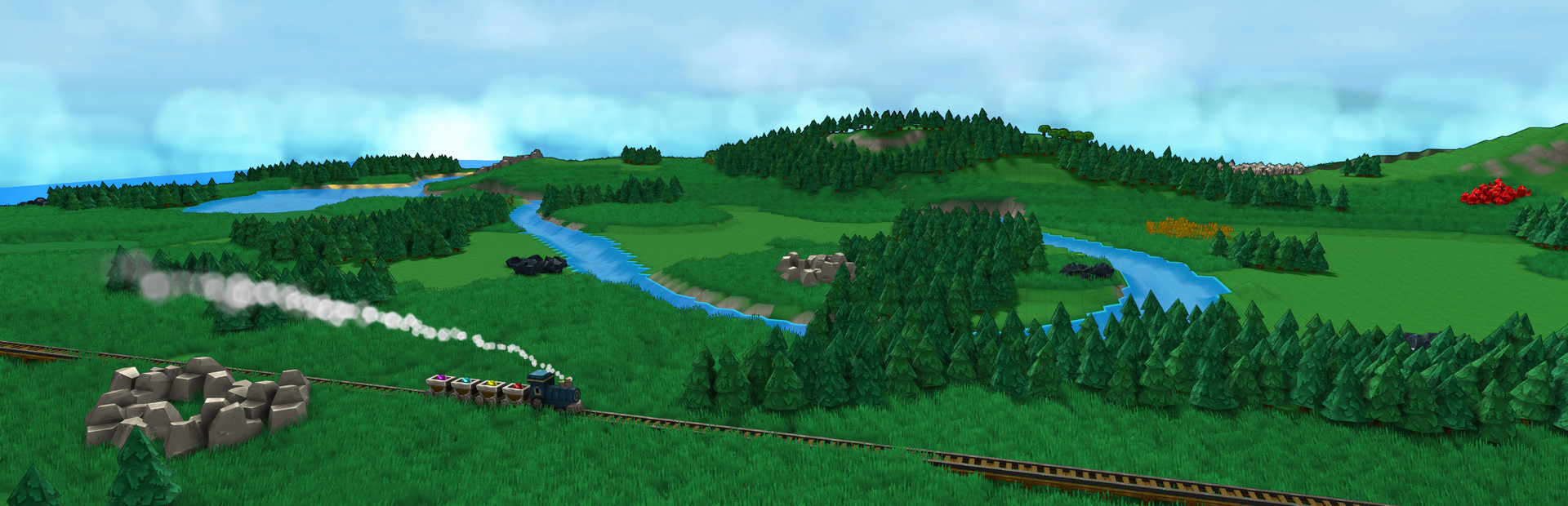
My spreadsheet instincts kicked in about twenty minutes into Factory Town, right around the point I realized my wood-to-plank pipeline was bottlenecking three downstream production buildings simultaneously. That is the loop this game is selling, and for a surprisingly large stretch of play time, it delivers it well. Built entirely by solo developer Erik Asmussen across several years of early access before its 1.0 launch in November 2021, Factory Town carries the DNA of automation classics but wraps it in a low-pressure, comic-style 3D world where nobody starves and nothing explodes. The core progression moves from manual worker-weebles hauling raw resources by hand, through a research tree that gradually unlocks the real toolbox: conveyor belts, gravity-powered chutes, rail networks, pipes, sorters, filters, and eventually airships. The early game pacing is the slowest part of the on-ramp, and that is worth knowing before you buy. You need to grow your town to a certain population threshold before the first research tiers unlock, which means the "factory" part of Factory Town is gated behind a city-builder setup phase that can test patience. Stick with it. Once belts and rails start threading across the 3D terrain, the logistical puzzle becomes genuinely satisfying. The gate, trigger, and filter system is where the depth lives: routing iron ore to one refinery and coal to another without cross-contamination is exactly the kind of quiet optimization problem that strategy players will appreciate. For newcomers to the genre, there is actually a reasonable entry point here. Eight structured campaign maps each set a specific production goal, which functions as a guided tutorial without being hand-holdy about it. The sandbox and creative modes open up once you understand the systems. The Steam Workshop adds community maps and custom rules, which extends the ceiling considerably. The wiki is thin and the in-game documentation can leave you guessing about building interactions, so Discord and YouTube are your real reference tools for anything past the early hours. That is a genuine friction point, not a minor one. The criticism worth taking seriously comes in the mid-game pivot to magical technology. When the production chain shifts toward magic mining, mage towers, and arcane refineries, it feels less like an evolution of what you built and more like a second game starting inside the first. The organic flow of your existing logistics network does not carry forward cleanly into the new systems, and some players will find that break in momentum jarring enough to clock out. Belt speed is also a recurring complaint among veterans of the genre: trains exist as a scaling solution but do not scale as smoothly as comparable transport systems in heavier automation titles. If Factorio is your benchmark, temper expectations on throughput ceiling. What Factory Town does better than most competitors in its price tier is mood. There is no combat, no famine timer, no alien invasion scheduled for hour three. The stress-free framing is a genuine design choice, not a lack of ambition, and it makes the game accessible to players who bounced off survival-factory hybrids. The 91 percent positive rating across roughly 2,400 Steam reviews reflects a community that found exactly what it came for. The caveat is that the game rewards players who plan their spatial layout from the start: building in tight clusters because it looks tidy will strand you when the belts need room to breathe. Diego, Scout Team

Factory Town
IndieSimulationStrategy

Factory Town

Nov 17, 2021Erik Asmussen
GamerScout Says

Closer to Factorio than it first looks, but with all the combat stripped out and a cozy fantasy skin on top. Worth it if your idea of fun is untangling a spaghetti belt network at 2 AM.

PCMac
Best Price Available
0.00
at N/A
Historical low: $3.18

Compare Prices(0 stores)

Loading prices...

We may earn a commission when you buy games through links on this page — at no extra cost to you. It never affects our rankings or verdicts.

Screenshots & Media

Screenshot

About Factory Town

My spreadsheet instincts kicked in about twenty minutes into Factory Town, right around the point I realized my wood-to-plank pipeline was bottlenecking three downstream production buildings simultaneously. That is the loop this game is selling, and for a surprisingly large stretch of play time, it delivers it well. Built entirely by solo developer Erik Asmussen across several years of early access before its 1.0 launch in November 2021, Factory Town carries the DNA of automation classics but wraps it in a low-pressure, comic-style 3D world where nobody starves and nothing explodes. The core progression moves from manual worker-weebles hauling raw resources by hand, through a research tree that gradually unlocks the real toolbox: conveyor belts, gravity-powered chutes, rail networks, pipes, sorters, filters, and eventually airships. The early game pacing is the slowest part of the on-ramp, and that is worth knowing before you buy. You need to grow your town to a certain population threshold before the first research tiers unlock, which means the "factory" part of Factory Town is gated behind a city-builder setup phase that can test patience. Stick with it. Once belts and rails start threading across the 3D terrain, the logistical puzzle becomes genuinely satisfying. The gate, trigger, and filter system is where the depth lives: routing iron ore to one refinery and coal to another without cross-contamination is exactly the kind of quiet optimization problem that strategy players will appreciate. For newcomers to the genre, there is actually a reasonable entry point here. Eight structured campaign maps each set a specific production goal, which functions as a guided tutorial without being hand-holdy about it. The sandbox and creative modes open up once you understand the systems. The Steam Workshop adds community maps and custom rules, which extends the ceiling considerably. The wiki is thin and the in-game documentation can leave you guessing about building interactions, so Discord and YouTube are your real reference tools for anything past the early hours. That is a genuine friction point, not a minor one. The criticism worth taking seriously comes in the mid-game pivot to magical technology. When the production chain shifts toward magic mining, mage towers, and arcane refineries, it feels less like an evolution of what you built and more like a second game starting inside the first. The organic flow of your existing logistics network does not carry forward cleanly into the new systems, and some players will find that break in momentum jarring enough to clock out. Belt speed is also a recurring complaint among veterans of the genre: trains exist as a scaling solution but do not scale as smoothly as comparable transport systems in heavier automation titles. If Factorio is your benchmark, temper expectations on throughput ceiling. What Factory Town does better than most competitors in its price tier is mood. There is no combat, no famine timer, no alien invasion scheduled for hour three. The stress-free framing is a genuine design choice, not a lack of ambition, and it makes the game accessible to players who bounced off survival-factory hybrids. The 91 percent positive rating across roughly 2,400 Steam reviews reflects a community that found exactly what it came for. The caveat is that the game rewards players who plan their spatial layout from the start: building in tight clusters because it looks tidy will strand you when the belts need room to breathe. Diego, Scout Team

Tags

singleplayerachievementscontroller-supportworkshopcloud-savestier:sub-5Automation LogisticsNo CombatTech TreeSolo DeveloperSandbox ModeMagic ProductionCampaign MapsBelt RoutingWorkshop Support

Steam Deck & Linux

Steam Deck VerifiedProtonDB Gold

Valve rates this game Steam Deck Verified. Runs great on Linux after minor tweaks. Based on 42 ProtonDB community reports.

System Requirements

Minimum

OS
Windows 7 64-bit
Memory
1 GB RAM
DirectX
Version 11
Storage
250 MB available space

Recommended

OS
Windows 10 64-bit
Memory
2 GB RAM
DirectX
Version 11
Storage
250 MB available space

Community Discussion

Be the first to comment on Factory Town.

Reviews & Ratings

No ratings available

Game Info

Developer
Erik Asmussen
Publisher
Erik Asmussen
Release Date
Nov 17, 2021

Price Alert

Get notified when the price drops below your target!

Create Alert

Price History

2026-06-103.18(lowest)

Buy smarter: helpful guides

Looking for more? See games like Factory Town

Frequently asked questions about Factory Town

How much does Factory Town cost?

Factory Town pricing changes often and varies by store, edition and region. The live price table on this page compares the cheapest in-stock key and store offers across 50+ verified shops, so you always see the current lowest price before you buy.

Where can I buy Factory Town cheapest?

Compare Factory Town prices across every verified store in the price table on this page. We list the cheapest in-stock key and store offers, updated regularly, so you always see the best current deal before you buy.

What platforms is Factory Town available on?

Factory Town is available on PC, Mac.

When was Factory Town released?

Factory Town was released on 17 November 2021.

Who developed Factory Town?

Factory Town was developed by Erik Asmussen.