
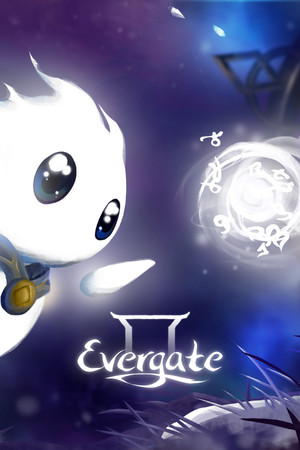
Evergate
Gorgeous afterlife aesthetics and a live orchestral score wrapped around a precision puzzle-platformer that will charm you one moment and wall you the next - know which player you are before stepping through.
GamerScout Verdict
Best for puzzle-platformer fans who want genuine mechanical depth and can tolerate a strict, checkpoint-free retry loop.
Compare Prices(9 stores)
Every store in this table quotes us in euros, so the EUR figure is the price the seller actually set, not our arithmetic — which is why EUR is also the currency we rank in. We only list an offer here when the store gives us its price in euros, so nothing in this table is a number we invented.
Pick USD, PLN, GBP, CAD or AUD in the header and we convert from EUR at the European Central Bank reference rate — converted amounts are prefixed with ~. Your bank or the store may apply a different rate at checkout. We never hide offers based on where you are: everyone sees this whole table.
We may earn a commission when you buy games through links on this page — at no extra cost to you. It never affects our rankings or verdicts.
Price History
Screenshots & Media
About Evergate
I went in expecting something soft and contemplative, the kind of game that lets the art do the heavy lifting. What I got was something far more demanding, and honestly more interesting for it. Evergate is built around the Soulflame, a beam of energy you fire from Ki - a small child-like spirit navigating the afterlife - that must thread through floating crystals and connect to white-painted Source surfaces to activate effects. Hold a shoulder button, time slows, you aim, you fire. Simple to understand, genuinely hard to master across 85 stages spread across ten worlds, each rooted in a different memory from a kindred soul's past life. The crystal variety is where the game earns its complexity. Early worlds introduce yellow crystals that launch Ki skyward. Later chapters pile on crystals that swap Ki's position with a platform, others that generate new ledges mid-air, some that create zero-gravity zones, and hourglasses that teleport outright. Each new world introduces exactly one new type, so the learning curve stays deliberate rather than overwhelming. On top of that, there are 30 unlockable artifacts - collected by spending Essences you earn from optional in-stage objectives - that each meaningfully alter how you approach a run. One grants an extra jump after a Soulflame activation. Another turns all breakable platforms solid. You can only equip one at a time, which keeps experimentation meaningful without trivialising the puzzles beneath. Here is where the split in the community makes complete sense to me. The Soulflame requires you to simultaneously position Ki, aim through the crystal, and land on a Source surface - often while falling, with a restart waiting if your timing is off by a fraction. Some reviewers described specific levels eating an hour each. Others logged over 200 hours and kept finding things to enjoy. The difference seems to come down entirely to whether pixel-precise execution reads as satisfying or punishing to you personally. There are no difficulty options and no mid-level checkpoints, which is a real design choice the game commits to fully. The developer's intent, confirmed in interviews, was that the tranquil orchestral score would make level repetition feel meditative rather than exhausting - and honestly, it mostly works. The soundtrack, recorded by a live orchestra, is one of the most thoughtfully deployed scores I have encountered in a small indie release. It does not rush you. It genuinely cushions the repeated falls. The presentation deserves its own paragraph because it is exceptional for a four-person team. Stone Lantern Games is made up of MIT graduates, each responsible for a discrete discipline - art, music, visual effects, narrative - and that structure shows in how coherent the game feels aesthetically. The hand-drawn visuals shift across locations that range from ancient Chinese cityscapes to Alaskan mountains, all rendered with dreamy softness. Where the game is less successful is in its written narrative: the pictorial storytelling, delivered through illustrated cutscenes between chapters, is genuinely striking, but the more direct dialogue moments lack the same grace. The story works better when it implies than when it explains. If you enjoy games like Celeste or the Ori series but have always wished they leaned harder into the puzzle side, Evergate is a rare match for that preference. If you bounced off precision platformers because the retry loop wore you down, the lack of checkpoints and the strict Soulflame aiming will do the same here. A focused playthrough runs around six hours, but optional objectives, artifact unlocking, bonus challenge stages, and a speed-run mode extend that considerably for completionists. For the right player, this is a small game that knows exactly what it is - and that kind of craft is worth paying attention to.

Indie & narrative
Tags
System Requirements
Minimum
- OS
- 7
- Memory
- 4 GB RAM
- DirectX
- Version 9.0c
- Storage
- 3 GB available space
- Graphics
- GeForce 240 GT or Radeon HD 6570 – 1024 MB (1 gig)
- Processor
- Intel Core 2 Duo E4500 @ 2.2GHz or AMD Athlon 64 X2 5600+ @ 2.8 GHz
Recommended
3 GB available space
Keep exploring
Community Discussion
Be the first to comment on Evergate.
Reviews & Ratings
No ratings available
Game Info
- Developer
- Stone Lantern Games
- Publisher
- PQube
- Release Date
- Sep 1, 2020