
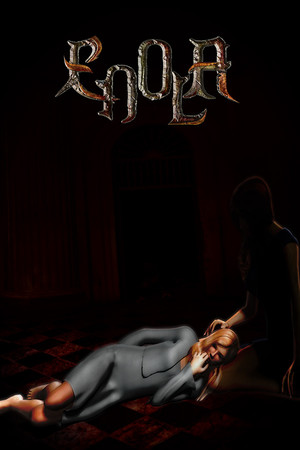
Enola
A deeply uncomfortable walk through one woman's trauma that asks whether love is enough to survive the darkest corridors of someone else's past. Rough around the edges, but the story lingers.
GamerScout Verdict
Worth it for patient horror fans drawn to narrative-first indie games; everyone else will fight the jank too hard to reach the story.
Compare Prices(8 stores)
Every store in this table quotes us in euros, so the EUR figure is the price the seller actually set, not our arithmetic — which is why EUR is also the currency we rank in. We only list an offer here when the store gives us its price in euros, so nothing in this table is a number we invented.
Pick USD, PLN, GBP, CAD or AUD in the header and we convert from EUR at the European Central Bank reference rate — converted amounts are prefixed with ~. Your bank or the store may apply a different rate at checkout. We never hide offers based on where you are: everyone sees this whole table.
We may earn a commission when you buy games through links on this page — at no extra cost to you. It never affects our rankings or verdicts.
Price History
Screenshots & Media
About Enola
I went into Enola expecting a competent little horror curio from a small El Salvadoran studio, and what I got was something messier and more affecting than that - a first-person psychological adventure built almost entirely on emotional weight rather than spectacle. The Domaginarium is a tiny outfit, and every seam in this production shows. But there is a genuine, uncommon seriousness of purpose here that kept me moving through levels I probably should have abandoned on technical grounds alone. The structure is hub-and-spoke: you return repeatedly to a central island after completing discrete chapters, each one a physical manifestation of a traumatic chapter in Angelica's life. A childhood home warped by grief, a nightclub called Midnight Heaven that earns its reputation as the game's most harrowing stretch, a shipyard turned into a maze of deadly traps and torture devices. Collectible voice recordings and environmental fragments dole out the story in pieces you have to assemble yourself, and the game refuses to hold your hand about what any of it means. Moral choices appear throughout - whether to spare or condemn the people who wronged Angelica - and they feed into multiple endings, giving your playthrough a weight that pure walking-sim design would not. The puzzles lean on a familiar rhythm of collecting tarot cards or tokens and slotting them into doors in a sequence drawn from a nearby riddle. It works, though it rarely surprises. Death traps show up with little warning, and a handful of scripted enemies - shadowy figures you cannot fight, only flee from in quick-time escape moments - appear at intervals. The enemy encounters are honestly the weakest mechanical element: too slow and too telegraphed to scare, and too abrupt when they do kill you. The stealth-adjacent moments just before and after them carry more dread than the monsters themselves. The presentation is a clear liability. Textures are low resolution throughout, hub environments feel sparsely populated, and collision glitches will occasionally drop you through geometry and force a reload. The sound design is uneven in ways that hurt atmosphere: most corridors sit in near-silence, broken by distant ambient noise. But then the musical cues arrive - mournful violins and detuned piano woven in at scripted story beats - and the gap between the game's ambition and its budget momentarily closes. Those quieter score moments are quietly lovely. Voice acting is serviceable and occasionally better than that. What holds Enola together, and the reason it picked up a cult following over the years despite mixed critical reception, is the relationship at its center. Angelica's story involves sexual violence and trauma handled with more care and symbolic precision than the engine's limitations might suggest. The horror imagery - posed mannequins, painted walls, allegorical set dressing - functions the way the best Silent Hill sequences do: every uncomfortable thing onscreen is emotionally indexed to a character's specific wound. The game runs around ten hours, and it earns most of that runtime. A Nightmare Mode update added further depth to Angelica's backstory for those willing to revisit. This is not a technically accomplished game, and approaching it as one will produce a bad time. Approach it as a rough, earnest indie horror fable about love and survival, with the content warnings taken seriously, and something in it tends to stick.

Indie & narrative
Tags
System Requirements
Minimum
- OS
- Windows XP, Vista, 7
- Memory
- 1 GB RAM
- DirectX
- Version 9.0c
- Storage
- 1600 MB available space
- Graphics
- Graphics Card with Shader Model 3 support, 512 MB video memory
- Processor
- Dual core CPU @2GHz
- Sound Card
- DirectSound-compatible sound device
Recommended
- OS
- Windows 7 or above
- Memory
- 2 GB RAM
- DirectX
- Version 11
- Storage
- 1600 MB available space
- Graphics
- Graphics Card with Shader Model 3 support, 1024 MB video memory
- Processor
- Dual core CPU @2GHz
- Sound Card
- DirectSound-compatible sound device
Keep exploring
Community Discussion
Be the first to comment on Enola.
Reviews & Ratings
No ratings available
Game Info
- Developer
- The Domaginarium
- Publisher
- Plug In Digital
- Release Date
- Sep 18, 2014