Enemy Mind
Possess your enemies, steal their guns, and piece together a fractured alien war story across 70+ waves of 8-bit space chaos. One of the cleverest shmup concepts you've never heard of.
GamerScout Verdict
Best for shmup fans craving a mechanic twist and narrative breadcrumb hunters who replay for the other faction's ending.
Compare Prices(5 stores)
Every store in this table quotes us in euros, so the EUR figure is the price the seller actually set, not our arithmetic — which is why EUR is also the currency we rank in. We only list an offer here when the store gives us its price in euros, so nothing in this table is a number we invented.
Pick USD, PLN, GBP, CAD or AUD in the header and we convert from EUR at the European Central Bank reference rate — converted amounts are prefixed with ~. Your bank or the store may apply a different rate at checkout. We never hide offers based on where you are: everyone sees this whole table.
We may earn a commission when you buy games through links on this page — at no extra cost to you. It never affects our rankings or verdicts.
Price History
Screenshots & Media
About Enemy Mind
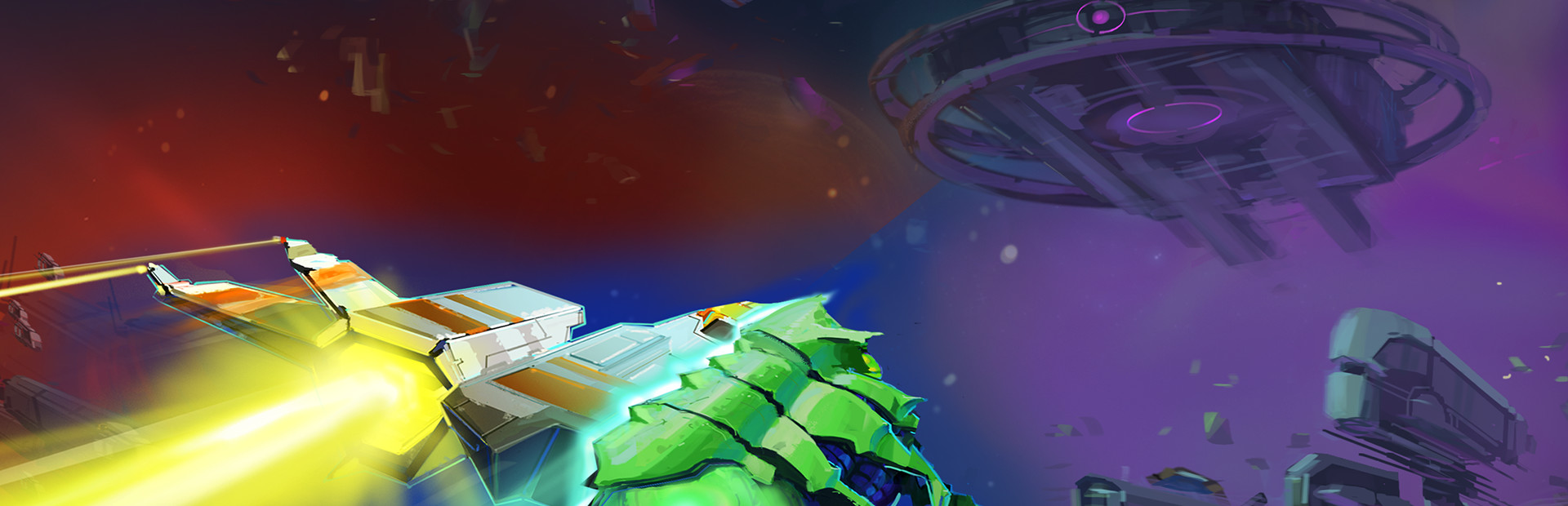
I keep coming back to Enemy Mind as an example of a small game that understood its own idea completely. Schell Games took the most repetitive part of a side-scrolling shooter, the moment where you fire until your cannon runs dry or your hull gives out, and turned it into the entire point. You are not a pilot. You are a psychic parasite leaping between vessels, and every ship you land in changes what you can do, how long you'll survive, and which scraps of a haunted interstellar story will seep into your consciousness between waves. The core loop is tighter than it sounds. Each of the 20-plus ships carries limited ammunition and absorbs only a handful of hits before it disintegrates, so you are constantly reading the battlefield and deciding where to jump next. A slow, heavily armored human cruiser might hold the line against a dense wave. A nimble Aratus organic craft with homing missiles becomes a treasure when the boss surges forward. The Light Pod's wide-beam laser lets you sweep entire formations, but burn through its ammo and you are a ghost again, exposed, hunting the next hull. That rhythm, assess, possess, survive, repeat, gives the game a strategic undertow that most retro shmups never bother with. There are no power-ups to collect, no upgrade trees to climb. The roster of ships IS the upgrade system, and figuring out which vessel fits each situation is quietly satisfying. The story deserves its own sentence. Between waves, fragmentary comms chatter and half-remembered impressions filter in as text. What you receive depends on which faction's ships you've been piloting: human or Aratus. Play through aligned toward humanity and you get one half of the lore. Lean into the alien Aratus faction and their strange Hive Mind called the Song, and you get the other. The two endings are genuinely different, and the whole structure means a single four-hour playthrough cannot reveal everything. It is a small, elegant trick that makes replaying feel purposeful rather than obligatory. A few honest friction points: there is no difficulty selector, and the lives-plus-checkpoint system means a bad run near a boss can erase real progress. Some controller edge cases have caused soft-locks at wave transitions, a minor but irritating bug. The chiptune soundtrack by Rainbow Kitten is the kind of psychoacoustic work that sounds like it was written for midnight headphone sessions, though at least one critic found it tonally mismatched to the pixel visuals. I disagree, but the opinion exists. The backgrounds are deliberately sparse, which helps bullet readability but makes the game feel visually thin in quieter waves. For shmup regulars, Enemy Mind sits in a comfortable tier just below genre landmarks but well above genre filler. For players who normally bounce off shooters, the possession mechanic adds enough tactical texture to hold interest. It knows its runtime, it knows its idea, and it lands the plane cleanly.

Indie & narrative
Tags
System Requirements
Minimum
- OS
- Windows XP
- Memory
- 2 GB RAM
- Storage
- 200 MB available space
- Graphics
- 256 MB Graphics Memory and Directx 9.0c Compatible gpu
- Processor
- Core 2 Duo 2.66Ghz
- Sound Card
- Onboard sound card
Recommended
Windows 7
Keep exploring
Community Discussion
Be the first to comment on Enemy Mind.
Reviews & Ratings
No ratings available
Game Info
- Developer
- Schell Games
- Publisher
- Schell Games
- Release Date
- Jun 6, 2014