Empires in Ruins
A turn-based empire manager that resolves every border dispute with a real-time tower defense battle - janky in spots, but the writing alone is worth the campaign run.
GamerScout Verdict
Best for strategy players who want a narrative-driven tower defense hook without committing to a full-fat 4X - crank the difficulty up.
Compare Prices(5 stores)
Every store in this table quotes us in euros, so the EUR figure is the price the seller actually set, not our arithmetic — which is why EUR is also the currency we rank in. We only list an offer here when the store gives us its price in euros, so nothing in this table is a number we invented.
Pick USD, PLN, GBP, CAD or AUD in the header and we convert from EUR at the European Central Bank reference rate — converted amounts are prefixed with ~. Your bank or the store may apply a different rate at checkout. We never hide offers based on where you are: everyone sees this whole table.
We may earn a commission when you buy games through links on this page — at no extra cost to you. It never affects our rankings or verdicts.
Price History
Screenshots & Media
About Empires in Ruins
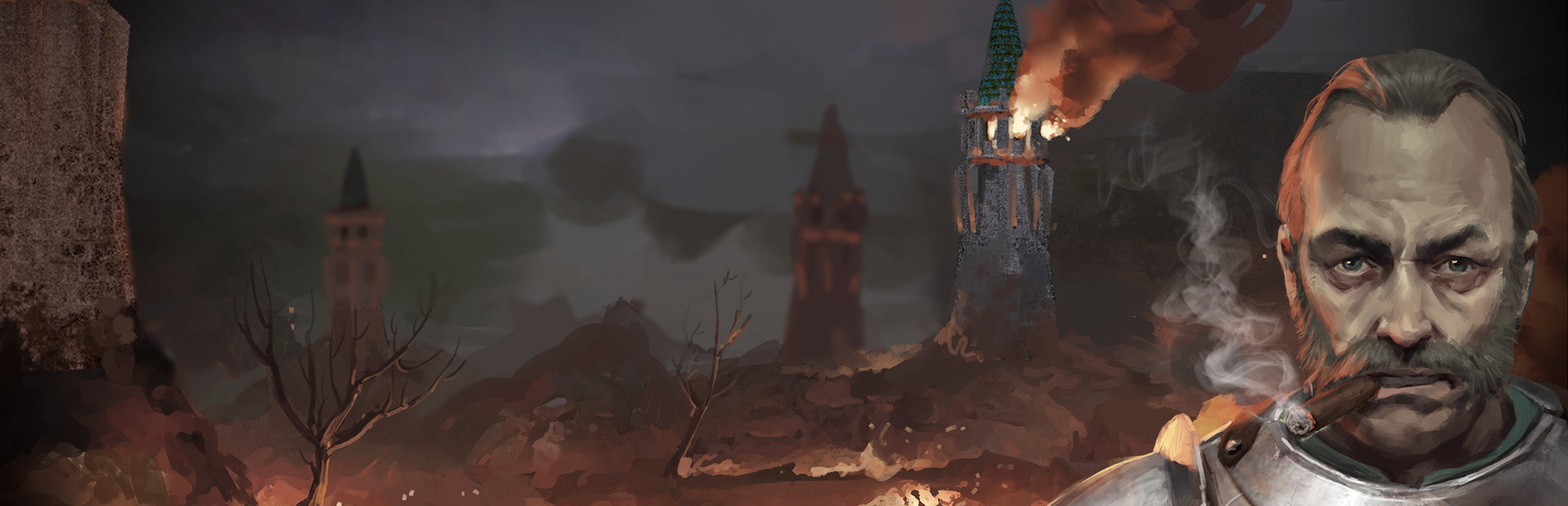
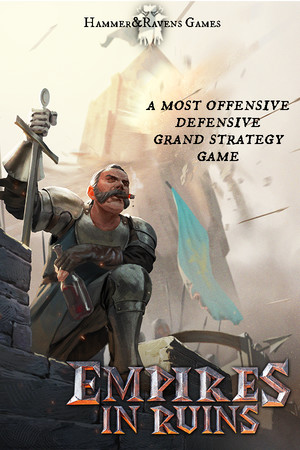
My first instinct when I loaded Empires in Ruins was to check whether the strategy layer and the tower defense layer would actually talk to each other, or just coexist like two roommates who never share the fridge. The short answer is: they talk. The longer answer involves a research tree with over 100 technologies, province happiness stats, officer governors you can assign to free up your micro, and a resource loop where every farm you build in the turn-based map directly determines what towers you can afford to place when the real-time battle starts. That pipeline - macro funding micro - is the structural backbone the game gets right, and strategy players who care about build-order logic will feel it immediately. The turn-based campaign map covers 26 provinces across the fictional Western Marches. You manage food production, garrison strength, authority ratings, and population happiness each turn, then move your headquarters to whichever province needs hands-on construction attention - because you can only queue buildings where Sergeant Hans Heimer is physically camped. That HQ-movement restriction is a real constraint in the early game and the one mechanic most likely to frustrate players used to remote micromanagement. On the flip side, it forces you to prioritize. You cannot develop everywhere at once, which is honest design. The honest critique, though, is that the opposition sits largely passive through the first several chapters, meaning experienced players will bank a resource surplus and map advantage well before the campaign asks anything hard of them. Normal difficulty especially feels more like an extended tutorial than a threat model. Push to hard if you want the game to respect you. Where the game earns genuine goodwill is the tower defense combat layer. The battles are real-time and demand active placement: you erect buildings while enemy waves move, combine tower abilities for synergy effects - flaming arrows on oil-soaked targets, that sort of thing - and deal with enemies who dig tunnels under your walls, send gliders to bomb production buildings, or open entirely new attack paths mid-battle. Ground, air, water, and amphibian threat vectors exist, which means a static defensive line that worked in chapter three can be exposed by chapter six. The tower variety, the officer deployment system, and the multi-resource production on the battlefield itself give this mode more texture than a standard mobile-style TD game. Sandbox and Arcade modes let you isolate the tower defense side without the campaign structure, which is a clean design call for players who just want to drill combat. The wild card is the writing. Sergeant Hans Heimer - a brandy-addicted, insubordinate misanthrope with muttonchops - carries the narrative through chapter screens and pop-up dialogue that lands darker and funnier than the genre average. The tone draws comparisons to military fantasy in the vein of Glen Cook rather than Tolkien, and it is a genuine differentiator in a category where story usually feels bolted on. The random event system adds color: a traveling circus boosts province happiness; rude graffiti stokes rebellion probability. None of it is mechanically deep, but it keeps the turn-based pacing from feeling sterile. The visual style leans on pre-rendered 2D with a deliberately lo-res aesthetic, and the bagpipe-heavy battle soundtrack is either going to cement the atmosphere for you or send you straight to the audio settings. For strategy players, this is a light-to-mid-weight management game with a more engaging combat resolution than most hybrids attempt. It is not a full 4X - exploration is fixed, diplomacy is thin - but the province-management loop is solid enough to reward attention without punishing newcomers who have never color-coded a Paradox save file. If you have bounced off pure tower defense because the genre felt consequence-free, the campaign wrapper here adds enough stakes to change that. Just dial the difficulty up from the start.

Strategy & simulation
Tags
System Requirements
Minimum
- OS
- Windows 7 32bit
- Memory
- 4 GB RAM
- Storage
- 2 GB available space
- Graphics
- NVIDIA® GeForce® GT 420 2GB
- Processor
- i3
Recommended
- OS
- Windows 10 64bit
- Memory
- 8 GB RAM
- Storage
- 2 GB available space
- Graphics
- NVIDIA® GeForce GTX 1050 4 GB
- Processor
- i7
Keep exploring
Community Discussion
Be the first to comment on Empires in Ruins.
Reviews & Ratings
Game Info
- Developer
- Hammer & Ravens
- Publisher
- Hammer & Ravens
- Release Date
- Mar 25, 2021