Compare Egyptian Senet prices across 50+ stores and find the best deal. Developed by Ezzat Studios. Published by EngagingX. Released on 8/20/2015. Available on PC. Genres: Casual, Indie, Simulation, Sports, Strategy.

Luck-heavy but historically grounded, this digital Senet port is a genuinely rare curiosity - a 5,000-year-old race game that plays like a stripped-down backgammon with an ancient Egyptian soul.

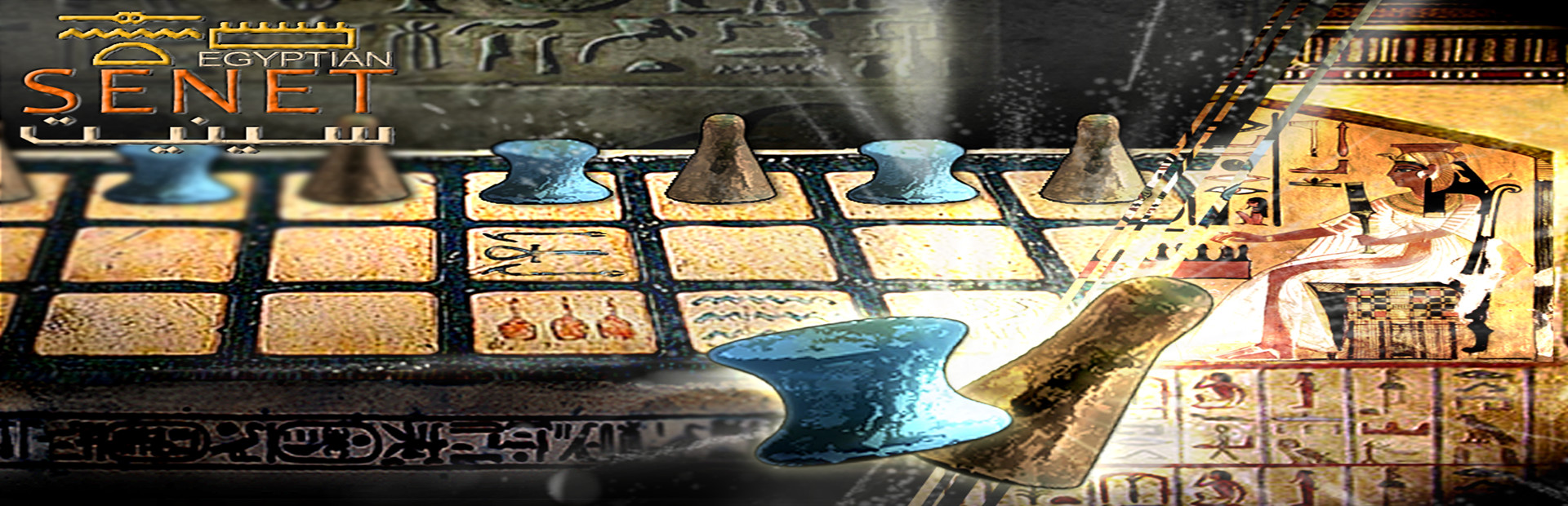
My first instinct when a board game simulator lands on Steam is to ask whether it does anything a browser tab cannot. Egyptian Senet mostly answers that question correctly: it wraps one of humanity's oldest known games in a themed presentation that at least earns its place on a desktop. The base game is Senet, a two-player race across a 30-square grid arranged in three rows of ten. Pawns trace a Z-shaped path - left to right on row one, right to left on row two, left to right again on row three, and then off the board. Movement is determined by throwing casting sticks, a randomiser that produces results between one and five, much like simplified dice. The strategic layer is thinner than backgammon but not trivial: you can capture opponent pawns by landing on their square, form defensive blockades by stacking two or more of your own pieces in sequence, and must navigate five named special squares - the House of Rebirth at square 15, the House of Beauty at 26, the punishing House of Water at 27 (which sends a pawn back to square 15), the House of the Three Truths at 28, and the House of Re-Atum at 29. The ruleset implemented here follows Timothy Kendall's 1978 scholarly reconstruction, which is the closest thing to an authoritative rulebook the game has. From a strategy perspective, the decision space is real but narrow. Each turn you pick which pawn to advance given the stick throw - do you push a lead piece toward the exit, shore up a defensive cluster, or gamble on knocking back an opponent pawn? The luck component is high by modern standards, closer to Ludo than Chess, and anyone expecting Slay the Spire-level decision density should recalibrate. The three difficulty settings - Novice, Egyptian, and Pharaoh - give newcomers room to learn the special-square interactions before the AI starts making tighter choices, which is the right structure for a game that has no existing muscle memory in its player base. The built-in rules screen is present but, based on player feedback, the in-game hints can confuse more than they clarify; reading the rules tab before your first game is the better route. Presentation is modest but thematically committed. The artwork leans into ancient Egyptian visual language with hieroglyphics on the special squares and an atmospheric tomb setting. Music and sound effects reinforce the theme without getting intrusive. Player reviews note that the rough textures and detailed tilework give the board an authentically aged feel, even if the overall production values are clearly indie-budget. The UI has occasionally sluggish menu responsiveness reported by some players, and post-launch support has been limited, meaning minor bugs may persist. There is no online multiplayer - the two-player mode is local hot-seat only, which is accurate to the source material but limits competitive options on a modern PC. Cross-platform availability across PC and mobile at least means the game has been tested across a wider install base than most entries in this price tier. As a strategy sim this is not a depth purchase. There is no mod ecosystem, no campaign with escalating complexity, no AI that will make you feel genuinely outplayed. What Egyptian Senet offers is something different: an accessible, historically grounded curiosity that you can explain to anyone in two minutes and finish a round of in under fifteen. For Egyptology-curious players or anyone who wants to understand what pharaohs were actually doing in their downtime, this is a functional and cheap way to find out. Approach it as a digital board game with educational texture rather than a deep-strategy title, and the value proposition holds. Diego, Scout Team

Egyptian Senet
CasualIndieSimulationSportsStrategy

Egyptian Senet

Aug 20, 2015Ezzat StudiosEngagingX
GamerScout Says

Luck-heavy but historically grounded, this digital Senet port is a genuinely rare curiosity - a 5,000-year-old race game that plays like a stripped-down backgammon with an ancient Egyptian soul.

PC
Best Price Available
0.00
at N/A
Historical low: $0.75

Compare Prices(0 stores)

Loading prices...

We may earn a commission when you buy games through links on this page — at no extra cost to you. It never affects our rankings or verdicts.

Screenshots & Media

Screenshot

About Egyptian Senet

My first instinct when a board game simulator lands on Steam is to ask whether it does anything a browser tab cannot. Egyptian Senet mostly answers that question correctly: it wraps one of humanity's oldest known games in a themed presentation that at least earns its place on a desktop. The base game is Senet, a two-player race across a 30-square grid arranged in three rows of ten. Pawns trace a Z-shaped path - left to right on row one, right to left on row two, left to right again on row three, and then off the board. Movement is determined by throwing casting sticks, a randomiser that produces results between one and five, much like simplified dice. The strategic layer is thinner than backgammon but not trivial: you can capture opponent pawns by landing on their square, form defensive blockades by stacking two or more of your own pieces in sequence, and must navigate five named special squares - the House of Rebirth at square 15, the House of Beauty at 26, the punishing House of Water at 27 (which sends a pawn back to square 15), the House of the Three Truths at 28, and the House of Re-Atum at 29. The ruleset implemented here follows Timothy Kendall's 1978 scholarly reconstruction, which is the closest thing to an authoritative rulebook the game has. From a strategy perspective, the decision space is real but narrow. Each turn you pick which pawn to advance given the stick throw - do you push a lead piece toward the exit, shore up a defensive cluster, or gamble on knocking back an opponent pawn? The luck component is high by modern standards, closer to Ludo than Chess, and anyone expecting Slay the Spire-level decision density should recalibrate. The three difficulty settings - Novice, Egyptian, and Pharaoh - give newcomers room to learn the special-square interactions before the AI starts making tighter choices, which is the right structure for a game that has no existing muscle memory in its player base. The built-in rules screen is present but, based on player feedback, the in-game hints can confuse more than they clarify; reading the rules tab before your first game is the better route. Presentation is modest but thematically committed. The artwork leans into ancient Egyptian visual language with hieroglyphics on the special squares and an atmospheric tomb setting. Music and sound effects reinforce the theme without getting intrusive. Player reviews note that the rough textures and detailed tilework give the board an authentically aged feel, even if the overall production values are clearly indie-budget. The UI has occasionally sluggish menu responsiveness reported by some players, and post-launch support has been limited, meaning minor bugs may persist. There is no online multiplayer - the two-player mode is local hot-seat only, which is accurate to the source material but limits competitive options on a modern PC. Cross-platform availability across PC and mobile at least means the game has been tested across a wider install base than most entries in this price tier. As a strategy sim this is not a depth purchase. There is no mod ecosystem, no campaign with escalating complexity, no AI that will make you feel genuinely outplayed. What Egyptian Senet offers is something different: an accessible, historically grounded curiosity that you can explain to anyone in two minutes and finish a round of in under fifteen. For Egyptology-curious players or anyone who wants to understand what pharaohs were actually doing in their downtime, this is a functional and cheap way to find out. Approach it as a digital board game with educational texture rather than a deep-strategy title, and the value proposition holds. Diego, Scout Team

Tags

singleplayermultiplayerpvplocal-multiplayercross-platformtier:sub-5Historical Board GameAncient EgyptHot-Seat MultiplayerLuck-BasedTurn-Based RaceKendall RulesEducational

Steam Deck & Linux

ProtonDB Platinum

Runs flawlessly on Linux out of the box. Based on 4 ProtonDB community reports.

System Requirements

Minimum

OS
Microsoft® Windows 7
Memory
512 MB RAM
Storage
80 MB available space
Processor
Intel® Core™ Duo 1.83GHz or faster processor

Community Discussion

Be the first to comment on Egyptian Senet.

Reviews & Ratings

No ratings available

Game Info

Developer
Ezzat Studios
Publisher
EngagingX
Release Date
Aug 20, 2015

Price Alert

Get notified when the price drops below your target!

Create Alert

Price History

2026-06-100.75(lowest)

Buy smarter: helpful guides

Looking for more? See games like Egyptian Senet

Frequently asked questions about Egyptian Senet

How much does Egyptian Senet cost?

Egyptian Senet pricing changes often and varies by store, edition and region. The live price table on this page compares the cheapest in-stock key and store offers across 50+ verified shops, so you always see the current lowest price before you buy.

Where can I buy Egyptian Senet cheapest?

Compare Egyptian Senet prices across every verified store in the price table on this page. We list the cheapest in-stock key and store offers, updated regularly, so you always see the best current deal before you buy.

What platforms is Egyptian Senet available on?

Egyptian Senet is available on PC.

When was Egyptian Senet released?

Egyptian Senet was released on 20 August 2015.

Who developed Egyptian Senet?

Egyptian Senet was developed by Ezzat Studios and published by EngagingX.