
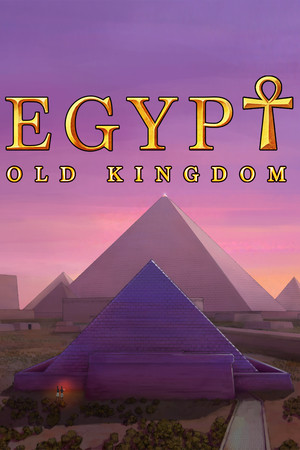
Egypt: Old Kingdom
Closer to an interactive Egyptology course than a traditional 4X, Egypt: Old Kingdom rewards patient resource managers who want their strategy grounded in real dynastic history.
GamerScout Verdict
Best for history-curious players who want Egyptology with resource-management teeth, not a flexible sandbox empire builder.
Compare Prices(3 stores)
Every store in this table quotes us in euros, so the EUR figure is the price the seller actually set, not our arithmetic — which is why EUR is also the currency we rank in. We only list an offer here when the store gives us its price in euros, so nothing in this table is a number we invented.
Pick USD, PLN, GBP, CAD or AUD in the header and we convert from EUR at the European Central Bank reference rate — converted amounts are prefixed with ~. Your bank or the store may apply a different rate at checkout. We never hide offers based on where you are: everyone sees this whole table.
We may earn a commission when you buy games through links on this page — at no extra cost to you. It never affects our rankings or verdicts.
Price History
Screenshots & Media
About Egypt: Old Kingdom
My first instinct when I loaded Egypt: Old Kingdom was to look for the tech tree and start optimizing. What I found instead was something more unusual: a turn-based historical simulator that treats the Old Kingdom period, roughly 3500 to 2140 BCE across six pharaonic dynasties, as something worth understanding on its own terms rather than as window dressing for generic empire-building. That framing is either exactly what you want or a deal-breaker, and you should know which camp you fall into before committing. The loop centers on Memphis as your fixed base, growing from a riverside settlement into an administrative capital capable of funding the Great Pyramids. Resource management is the engine underneath everything. You balance food output from the Nile's flood plains against the labor and materials needed for pyramid construction, and the game treats pyramid-building not as a vanity project but as a political stability mechanism: skimp on it and the kingdom fractures. Expeditions fan out to neighboring cultures, military engagements resolve as net resource swings rather than tactical battles, and patron gods provide unique bonuses that give each playthrough a slightly different feel. What the game does not offer is freeform sandbox flexibility. The map layout in Memphis stays consistent across runs, difficulty settings on easy lean toward hand-holding until the scripted collapse of the First Intermediate Period hits, and higher difficulties pin you to a very narrow resource-management line where over-investing in military or under-investing in religious infrastructure will end a run quietly and brutally. For the strategy crowd that cares about historical fidelity, this is genuinely one of the more rigorous efforts on PC. Clarus Victoria worked with Egyptologists during development, and it shows in how the game models ancient society: farmers, craftsmen, cultural groups, and force-or-diplomacy governance all sit in the simulation. The issue that divides the Steam community, which sits at a strong 86% positive across over a thousand reviews, is that the decision space is narrower than the premise implies. Once you understand that nearly every challenge resolves to "produce enough of resource X," the game can feel more like spreadsheet validation than strategy. Players coming from Civilization or Pharaoh expecting lateral build variety will hit that ceiling and feel the repetition. Where it genuinely shines is as a slow-burn historical experience with modest mechanical complexity, the kind that suits an evening session rather than a 200-hour campaign commitment. The learning curve for newcomers is real but not punishing: easy mode gets you through the early dynasties with reasonable guidance, and the trickiest part is not the mechanics but recognizing that the game's pacing is deliberate rather than broken. If you have never played Clarus Victoria's earlier title Predynastic Egypt, that is actually a useful warm-up for understanding the studio's design philosophy before stepping into Old Kingdom's more complex systems. Replayability is limited by the fixed Memphis starting location, but patron god selection and regional task variation give second runs a different enough texture to justify revisiting. The bottom line: this is a niche pick with a clear target audience. History enthusiasts, Egyptology readers, and players who find satisfaction in tight resource optimization will get genuine value here. Anyone expecting the strategic breadth of a Paradox title or the city-building depth of Pharaoh will leave disappointed.

Strategy & simulation
Tags
System Requirements
Minimum
- OS
- Windows Vista SP2
- Memory
- 4 GB RAM
- DirectX
- Version 9.0c
- Storage
- 2 GB available space
- Graphics
- 1024х768, 1 GB VRAM
- Processor
- Intel Core 2 Duo 1.8 Ghz or AMD Athlon X2 64 2.0 Ghz
Recommended
- OS
- Windows 10
- Memory
- 8 GB RAM
- DirectX
- Version 11
- Storage
- 2 GB available space
- Graphics
- 1920х1080, 2 GB VRAM
- Processor
- Intel i5 or AMD analogues
Keep exploring
Community Discussion
Be the first to comment on Egypt: Old Kingdom.
Reviews & Ratings
No ratings available
Game Info
- Developer
- Clarus Victoria
- Publisher
- Clarus Victoria
- Release Date
- May 24, 2018