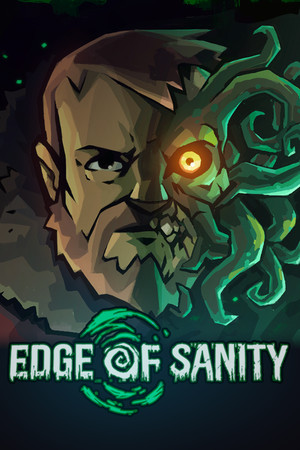
Edge of Sanity
Cold War Alaska, hand-drawn horrors, and a sanity meter that actually changes what you see - compelling when it clicks, frustrating when the resource loop outstays its welcome.
GamerScout Verdict
Worth it for patient Lovecraft fans who can stomach repetitive supply runs to reach the genuinely unsettling set-pieces.
Compare Prices(8 stores)
Every store in this table quotes us in euros, so the EUR figure is the price the seller actually set, not our arithmetic — which is why EUR is also the currency we rank in. We only list an offer here when the store gives us its price in euros, so nothing in this table is a number we invented.
Pick USD, PLN, GBP, CAD or AUD in the header and we convert from EUR at the European Central Bank reference rate — converted amounts are prefixed with ~. Your bank or the store may apply a different rate at checkout. We never hide offers based on where you are: everyone sees this whole table.
We may earn a commission when you buy games through links on this page — at no extra cost to you. It never affects our rankings or verdicts.
Price History
Screenshots & Media
About Edge of Sanity
My first hours with Edge of Sanity had me genuinely unsettled in a way small-team horror games rarely manage. Vixa Games, a Polish studio working under Daedalic's wing, built something with real artistic intention here: a hand-drawn 2D side-scroller set in the frozen wilderness of Cold War-era Alaska, where a sinister corporation called PRISM has been running experiments that have gone very, very wrong. You play as Carter, a resupply worker who stumbles into the aftermath, sets up a provisional camp with his injured companion Frank, and begins piecing together what happened while trying to keep everyone alive. The art direction carries the weight of a graphic novel - thick lines, careful lighting, a palette that shifts from muted cold blues to sickly, otherworldly yellows when the horror creeps in. Karol Sollich, who led the project's graphic design, has given this game a look that holds its own against anything in the genre. The loop pulls in two directions. Out in the field - through hostile caves, forgotten mines, and shadowy forest paths - you are sneaking, scavenging, and rationing. Combat is deliberately fragile: you start by hurling rocks with adjustable arc and limited supply, escalate to a knife, and eventually an axe, but weapon durability means you cannot rely on any single tool. Avoiding detection is almost always the better call, because every close encounter drains your stress meter, and stress accumulates into permanent traumas with names like Night Terrors and Phantom Sight. These traumas are the game's most inventive idea - they distort perception, unlock new dialogue options, and open entirely different crafting paths. When the sanity system fires on all cylinders, you genuinely cannot trust what you are seeing, and that is a rare thing to feel in a 2D game. Back at camp, the loop shifts into management: assign survivors to jobs, produce food and water, upgrade workstations, and balance supply runs against story-critical expeditions. Each day counts; if you die on a run, you lose everything gathered and a full day passes with consequences for anyone on their last rations. Losing a survivor is permanent. Where the game earns real respect from me: it never hides behind jump scares. The dread comes from resource math, from the silence before a creature turns around, from dreams that speak in Lovecraftian riddles. The voice acting holds up throughout, with Carter's performance carrying genuine deterioration as the hours pass. Ironman mode, which restricts saves to the start of each day, is a brutal and appropriate way to play if you want the tension dialed all the way up. Where it stumbles is harder to ignore. Reviewers across the board, and Steam's mixed score, point to the same friction: the mid-game resource grind becomes a loop of revisiting layouts that do not have enough variety to stay interesting. Story missions, which feature unique level design and real narrative momentum, are too sparse between the supply runs. The camp job system does not run very deep, and some conversations feel like filler padding around a leaner horror game that is trying to get out. The sanity mechanic, for all its promise, can punish you in ways that feel arbitrary - stress building from an enemy simply standing near you while you are undetected is a balancing choice that irritates rather than frightens. Critics have noted that the first few hours represent the game at its peak, and that momentum is difficult to sustain. For players who love the atmosphere of Lovecraftian fiction, appreciate hand-crafted 2D art, and can make peace with a repetitive supply loop in exchange for genuinely affecting horror set-pieces, Edge of Sanity has something worth sitting with. It is the kind of small-team project where the ambition outreaches the execution in places, but the ambition itself is real and visible in every panel of that artwork. Go in patient, go in on Normal to learn the systems, and let the first night's dream sequence do its work on you.

Indie & narrative
Tags
System Requirements
Minimum
- OS
- Windows 7
- Memory
- 4 GB RAM
- Storage
- 1 GB available space
- Graphics
- DirectX compatible graphics
- Processor
- 2.0 GHz Processor
Recommended
- OS
- Windows 10
- Memory
- 8 GB RAM
- Storage
- 2 GB available space
- Graphics
- DirectX compatible graphics
- Processor
- 3.0 GHz Processor
Keep exploring
Community Discussion
Be the first to comment on Edge of Sanity.
Reviews & Ratings
No ratings available
Game Info
- Developer
- Vixa Games
- Publisher
- Daedalic Entertainment
- Release Date
- Sep 13, 2024